
Spot it
What is oil-based paint, and where is it in a Toronto home?
Oil-based (alkyd) paint was the standard for trim, doors and woodwork through most of the twentieth century. In a Toronto home it hides on casings, baseboards, railings and doors, rarely on the walls. You cannot tell it by looking, so test it with rubbing alcohol before you recoat. Latex rolled over unprepared oil gloss is why so much trim peels in sheets. Washing plus sanding, or washing plus an adhesion primer, is how you stop it (Sherwin-Williams).
Key Takeaways
- The alcohol test is a clue about the exposed coat: transfer or softening suggests latex; no change suggests conventional oil paint.
- Run it on a hidden spot of trim, doors, or old woodwork. That is where Toronto homes still carry oil paint.
- Latex can go over oil paint after washing and sanding, or after washing and an adhesion primer (Sherwin-Williams).
- You do not need oil paint to recoat oil trim, and you should not assume a self-priming topcoat will stick to old gloss.
- Scrape only what is loose and prime over the rest. Full stripping is a last resort.
- Pre-1990 paint can contain lead. Have it tested before you scrape or sand (Health Canada).
You buy a good waterborne paint, cut in a clean line, and the trim looks sharp the day you finish. A few weeks later the paint near the door handle scrapes off with a fingernail. That is latex that went over oil with no prep, and the paint itself was fine. In 20 years of painting Toronto homes, that two-minute check has decided whether trim held for a decade or peeled by the fall.
Walls in most Toronto homes have been latex for decades, so they rarely need testing. Trim is different: it carries old oil more often and takes constant contact, the worst combination for a coat that isn't gripping. Door edges, handles, baseboards near the vacuum and stair railings are where a latex-over-oil failure starts. A wall can hide a weak bond for years, but a baseboard takes knocks every day and shows it fast. I run the same test before any door painting in Toronto, because a slab that came from the factory in oil will peel a fresh latex coat off the edges by winter.
Spot it
How do you tell if paint is oil or latex?
Rub a cotton ball dampened with 70% isopropyl alcohol on a small, clean, hidden patch. If paint comes off on the cotton, it is likely latex (acrylic); if it does not, it is likely oil-based (alkyd). This is a screening test for the top coat, not proof of what lies beneath or whether old paint contains lead (Benjamin Moore, primer selection).
The rubbing-alcohol test, step by step
- Choose a small hidden area with a sound finish. Clean it and let it dry.
- Dampen a white cotton ball with 70% isopropyl alcohol. Keep the bottle away from flames and heat, and ventilate the space.
- Gently rub the spot and check both the cotton and the coating. Paint on the cotton, or a film that softens, suggests latex; an unchanged film suggests oil paint.
- If the result is unclear, check any labelled leftover can or painting records. Ask a paint dealer or qualified painter for a compatible test patch before coating the whole surface.
Shellac and other finishes can also soften in alcohol, so an amber or sticky result is not a reliable shortcut to identifying the layers (Waterlox, identifying existing finishes). Skip the acetone second test: it can attack several finishes and adds little certainty. A matching primer and topcoat test patch is more useful once the surface is safe to prepare.
Paint age and looks are clues, not proof
Any Toronto home built or last painted before roughly the 1980s is a real candidate for oil on its trim, doors and woodwork. A pre-1960s home with original baseboards and casings is the strongest candidate of all. Recoating that old wood painting and staining in Toronto starts with the same two-minute check.
Looks mislead. Old oil yellows and goes brittle, but modern waterborne enamels copy the hard, smooth, semi-gloss look of oil so well that a glossy white casing could be either. A chalky flat surface can be old oil or a tired flat latex.
Why it happens
Why does latex peel over oil paint?
A glossy or dirty old coating can prevent a new finish from adhering. Latex rolled straight onto unprepared oil gloss can sit on top like a skin, then let go in long strips. Peeling may also involve moisture, loose existing paint or incompatible products. Benjamin Moore puts lost adhesion down to heat and moisture, and lists painting a damp, dirty or hot surface and improper surface preparation among the causes, so the shape of a peeled strip does not prove the old paint was oil-based. Check for moisture and unsound old coating before you plan the repair.
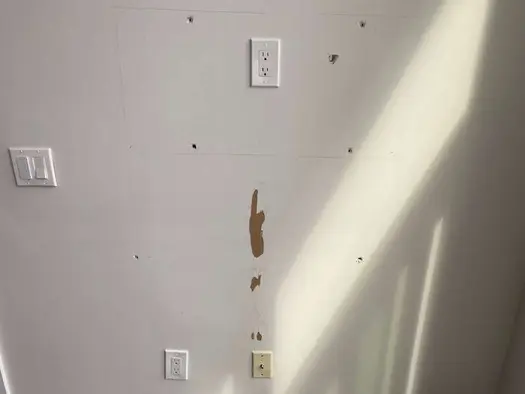
On a Cabbagetown semi a couple of years back, the homeowner had rolled fresh white latex over the original oil baseboards himself. Looked great in the listing photos. By the time I saw it, you could peel a six-inch ribbon off the baseboard with two fingers. We stripped the failed latex, scuffed the oil, primed, and recoated. The test would have told him in two minutes what the strip job cost him in a weekend.
Raised blisters and bubbles are a related failure with their own causes; see paint blistering vs bubbling vs peeling to tell them apart.
Fix it
How do you paint over oil or glossy trim so it holds?
Once you know the trim is oil, the prep changes. Sherwin-Williams gives two routes for latex over oil: wash and sand, then clean off the dust, or wash and apply an adhesion primer. The other direction needs care too. Glidden says oil-based paint will not adhere to latex, so you need a primer between them (Glidden, painting over painted walls), and Benjamin Moore lists oil over latex as a cause of blistering.
Here is the sequence I run on oil trim:
- Wash off grease, hand oils and polish, then let it dry. Primer and paint don't grip dirt.
- Remove loose paint. On older trim, check the lead risk first (below).
- If lead has been ruled out, scuff-sand the gloss as the selected primer sheet directs. The surface must be sound and dull enough for that system.
- Wipe off all the dust with a tack cloth or a damp cloth, then let it dry. Dust under primer is one more weak layer.
- Prime with an adhesion primer. Benjamin Moore recommends its STIX Waterborne Bonding Primer for previously painted surfaces with a high-gloss coating (Benjamin Moore, primer selection). On stained or knotty trim I often use Zinsser B-I-N, a shellac primer, instead. Rust-Oleum lists "excellent adhesion to glossy surfaces without scuff sanding" and says it works with any topcoat (Rust-Oleum Canada, B-I-N product application); on high-gloss oil trim, I still wash it first.
- Topcoat to the data sheet. On trim I often use Benjamin Moore ADVANCE, whose Canadian K793 sheet lists a 16-hour recoat and five to seven days before heavy abrasion or shelf use. Plan doors around those service times.
Can you paint over glossy trim without sanding?
Yes, if the adhesion primer you choose is specified for that surface without sanding. Some products still require abrasion, so read that product's technical sheet. No primer bonds reliably through grease, moisture or loose paint. On detailed trim that is hard to sand evenly, the primer route is often the practical one.
What primer sticks to glossy trim?
Choose an adhesion primer whose data sheet lists the existing coating and intended topcoat. The product instructions, the condition of the surface and a small adhesion test decide which one. For the wider primer choice, see do I need primer and the Kilz vs Zinsser BIN vs Fresh Start comparison.
Do you need oil paint to recoat oil-painted trim?
No. Latex can go on after washing and sanding the oil paint, or after washing and an adhesion primer (Sherwin-Williams). Choose the topcoat and preparation system together, and follow both data sheets. Do not assume a self-priming topcoat is suitable for glossy oil paint.
Why trim needs a harder paint than walls
Baseboards take feet, vacuums and furniture, and door casings and edges take hands all day. Trim chips at edges and corners first, because that's where a knock lands on a thin, exposed profile, and every bump pries a weak bond a little looser. So the topcoat should be a hard, washable enamel, not a soft wall paint. High-traffic baseboards and door edges earn semi-gloss for durability and easy cleaning; quieter rooms can take a softer satin. For sheen choices, see paint finishes explained.
Fix it
How far do you scrape trim that's already peeling?
Remove loose paint until the remaining film is sound, then feather the edge as the product instructions require. If moisture caused the failure, fix that source first. Once the film that is left is sound, the recoat follows the sequence above. Pressing a strip of tape on the paint and pulling it off shows obvious loose paint, but it is a rough check and does not tell you how the whole surface is bonded.
When to strip: Don't strip oil paint just because it's oil. If the film is sound and stuck to the wood, de-gloss it, prime it and recoat. Stripping is slow and messy, and on old Toronto trim it creates a lead-paint problem. Strip only what has failed. I learned that on a Cabbagetown job years ago, where we stripped trim that would have held fine with a bonding primer and lost two days.
DIY or pro
Is it safe to sand or scrape old oil paint?
Not until you know about lead. Health Canada says a home built before 1960 probably contains lead-based paint, and in a home built between 1960 and 1990 the exterior paint may contain it, with smaller amounts possible inside (Health Canada). The alcohol test does not test for lead. To find out, send paint chips to a lab or hire a contractor with x-ray equipment before you scrape or sand. Health Canada also says not to use sanders, heat guns or blowlamps to remove lead-based paint. For extensive failure or uncertain layers, ask a qualified contractor about paint stripping in Toronto and disposal requirements; our stripping work starts with a test patch on pre-1990 trim.
Cost
How much does it cost to fix or recoat oil trim in Toronto?
It costs more than a plain recoat, because most of the cost is prep. Toronto trim painting runs roughly $1 to $3 CAD per linear foot plus HST, and glossy oil trim that needs deglossing and a bonding primer sits at the top of that range. Heavy scraping, stripping, or filling on a failed job pushes it past the top. Failed trim is hand work: scrape, sand, spot-prime, fill, sand again, full prime, then two brushed coats, on every casing, base and door. Guessing wrong on a $400 trim job means stripping it and doing it twice.
For the full breakdown, see trim, baseboard, and door painting cost.
Get your Toronto trim painting done right
Twenty years on Toronto trim, doors, railings, and the original woodwork in century homes, plus plenty of jobs where someone went latex over oil and we got the call after it peeled. Every trim job we touch starts with the same two-minute question: what is already on there? Then we prep for that answer, prime properly, and lay two coats.
Get your free trim painting quote or call (416) 875-8706. Quotes inside 24 hours, fixed CAD pricing, HST disclosed.
We handle trim and woodwork as part of full interior painting projects, and pair it with drywall repair and painting where the walls need work too. For the other ways a fresh job goes wrong, see how to fix a bad paint job.
About the author
Chad Caglak is co-owner of Home Painters Pro Toronto and a 20-year working painter. He's recoated original oil trim in Cabbagetown semis, Riverdale Victorians and Leaside homes, and writes the craft-and-pricing content here so Toronto homeowners can test, prep, and recoat with real method instead of a guess. Read more in the wall prep checklist or the Toronto painter craft hub.
Frequently Asked Questions
How do I tell if my paint is oil or latex?
Dampen a cotton ball with 70% isopropyl alcohol, then gently rub a small, clean, hidden spot of the painted surface. If colour transfers onto the cotton or the film softens, it is likely latex. If nothing changes, it is likely conventional oil-based or alkyd paint. It is a two-minute screening test for the top coat, worth doing before you commit to a recoat.
Can I just look at the paint and tell if it is oil or latex?
Not reliably. Old oil yellows and gets brittle, and chalky flat surfaces can hint at it, but modern waterborne enamels copy the hard, smooth look of oil closely, so a glossy white trim could be either. The rubbing-alcohol test takes two minutes and is a far better clue than the eye.
Can I put latex paint over oil-based paint?
Yes, with the right prep. Sherwin-Williams says to wash the surface and sand it, then clean off the dust, or to wash it and apply an adhesion primer before the latex. Skip both and the latex can sit on the old gloss like a skin and peel off in sheets.
Can I skip sanding when I use an adhesion primer?
Sometimes. Sherwin-Williams gives washing plus an adhesion primer as one of its two routes for latex over oil. Check the chosen primer data sheet because some products still require abrasion.
Will paint-and-primer-in-one stick to glossy oil paint?
Do not assume it will. Follow the chosen topcoat data sheet for glossy existing coatings, including any cleaning, abrasion or adhesion-primer requirement.
Do I need oil paint to repaint oil-based trim?
No. Latex can be used over sound oil paint after a manufacturer-approved preparation route, such as cleaning and sanding or cleaning and using an adhesion primer.