
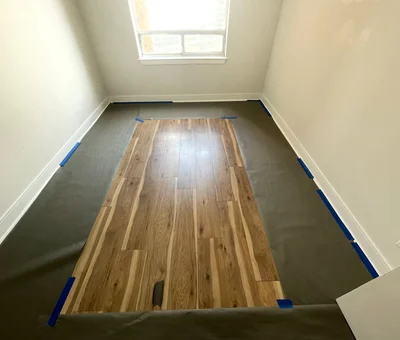







How much does trim, baseboard and door painting cost in Toronto?
Toronto trim and baseboards run roughly $1-$3 CAD per linear foot plus HST, and interior doors $75-$200 each. Whole-house trim on a typical home lands $1,500-$4,000. The price is mostly prep and a hard enamel like BM Advance, not paint volume, because surface prep is the majority of the labour on quality trim work. The enamel and the careful cut-in are what you're paying for.
Key Takeaways
- Trim and baseboards: $1-$3 CAD per linear foot + HST; a single room of trim $150-$400; whole house $1,500-$4,000
- Interior doors: $75-$200 CAD each brushed; more if sprayed off the hinges
- Default paint is Benjamin Moore Advance, an alkyd hybrid that cures to a hard, washable enamel
- For high-traffic trim and doors, Benjamin Moore Scuff-X is the alternative: top scuff resistance and same-day recoat, though it's not a glass-hard enamel
- Wall paint on trim stays soft and marks, trim needs a real enamel
- Two coats minimum, and Advance's 16-hour recoat window means trim spans two days
- The cost is prep and cut-in, not paint volume, a litre of enamel covers a lot of trim
- Glossy old oil or stained trim going to white is the priciest scenario, deglossing plus bonding primer plus extra coats
Trim is what separates a tidy paint job from a sloppy one. Walls are forgiving, you stand back and they read fine, but trim lives at eye level and hand level. People run their fingers along it, kick the baseboards with a vacuum, grab the door edges. Every flaw shows and every shortcut wears through fast, which is the first thing 20 years of interior painting Toronto work drills into you.
Most homeowners are surprised that trim costs what it does given how little paint it uses. The answer is that trim is nearly all labour, prep, caulk, and slow brushwork along two edges, with a hard enamel that has to cure overnight between coats. Here's the real Toronto pricing and what drives it.
For how trim fits the whole-home number, see the full Toronto house painting cost breakdown, and for where it sits in the wider job, how trim fits into residential painting in Toronto.
What does trim and baseboard painting cost by scope?
Trim is priced by linear foot or by room, landing around $1-$3 CAD per linear foot plus HST. The variable inside that range is prep, not length. Smooth trim previously painted in latex, in good shape, refreshed in the same colour, sits at the low end. Detailed profiles, glossy old oil trim, or a colour change to white pushes to the top. Here's how the common scopes price out.
Toronto trim and baseboard painting runs $1-$3 CAD per linear foot plus HST, with a single room of trim at $150-$400 and whole-house trim on a 1,500-2,000 sq ft home at $1,500-$4,000. Interior doors are priced individually at $75-$200 each. The range within each scope is driven by surface preparation and profile complexity, not by trim length or paint volume (Chad Caglak, HomePaintersPro Toronto, 2026). It comes down to hours: a Toronto painter's billed rate runs roughly $40 to $90 an hour, and the prep on a single door or room, removing hardware, cleaning, sanding, scraping and caulking, takes about 1 to 5 hours before any paint goes on (Angi 2026 / Blaze Estimating). That's the labour, not the paint, doing the pricing.
What pushes trim toward the top of the range:
- Glossy old oil or stained trim going to white needs deglossing, a bonding primer, and extra coats for coverage, the priciest scenario.
- Detailed profiles, ornate Victorian or Edwardian trim with deep grooves, slows the brushwork considerably.
- Tight cut-in against a contrasting wall colour, sharp white trim against a dark wall demands slow, precise lines.
- Height and access, high crown moulding, stairwell and two-storey foyer trim, and vaulted ceiling lines that need ladders or scaffolding, all of which slow the cut-in and add setup time.
- Repairs, filling deep gouges, re-caulking long-failed joints, replacing damaged sections.
For the wider picture, see the Toronto interior painting cost overview.
What does it cost to paint interior doors?
Interior doors run $75-$200 CAD each plus HST, brushed in place. A flat slab door is the low end; a six-panel door with profiles, or a door sprayed off its hinges for a factory finish, sits higher. Doing both faces, the edges, and the door frame pushes toward the top. Doors are priced one at a time because each is its own small enamel job: prep, two coats of hard-curing paint, and that 16-hour wait between coats. Exterior doors are a separate problem with a shorter season, covered in front door refinishing.
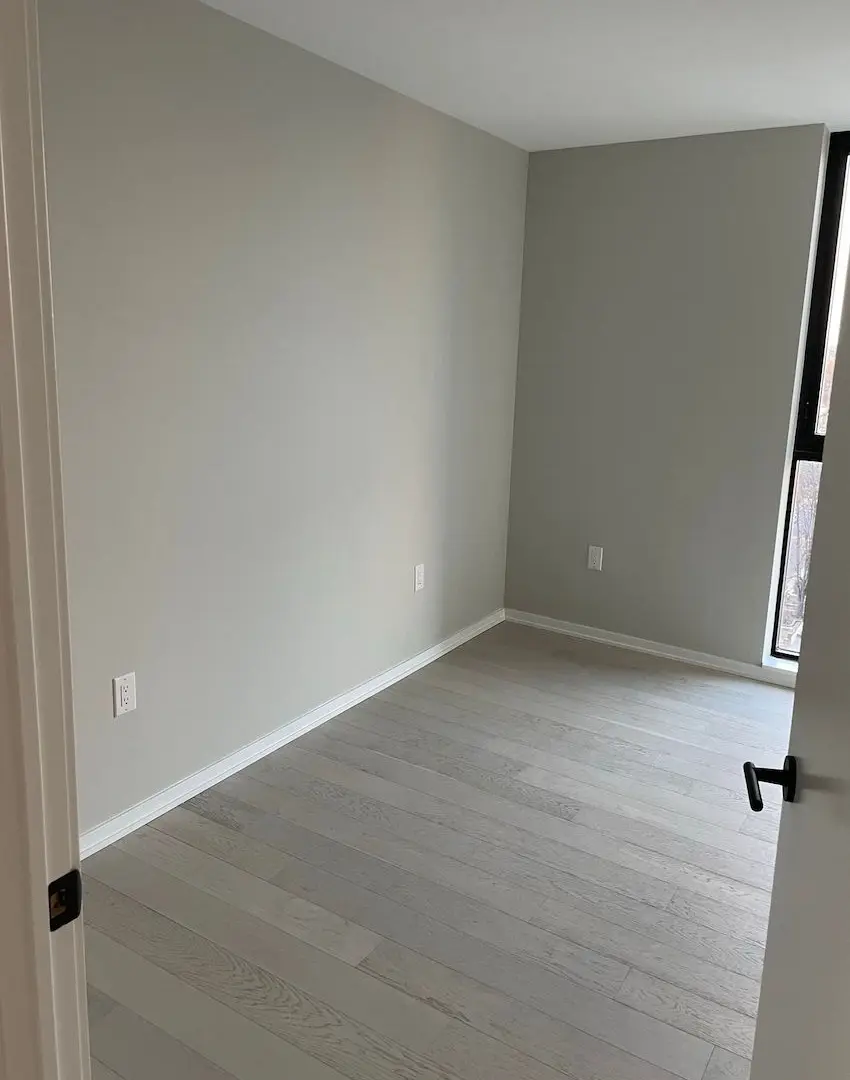
A few door scenarios that change the number:
- Closet and bi-fold doors: often lower per unit, but the panel count and edges add up.
- French and glass-panel doors: more cut-in around the glass, higher labour.
- Front entry door (interior face): usually painted to match interior trim; the exterior face is a separate exterior-grade job.
- Sprayed doors: removed, masked, sprayed in a controlled area for a flawless finish, adds labour and cost.
Here's the per-side logic behind the range: a door priced at the low end is usually one visible face. Painting both faces, all four edges, and the surrounding frame and casing is three to four times the surface, so that full-door scope is what pushes a door to the top of the $75-$200 band. The frame itself is often quoted separately, roughly $40 to $70 per side, or about $1 to $5 per linear foot, because it's fiddly work with lots of edges and hardware to cut around (Homewyse / Countbricks, 2026).
See our dedicated Toronto door painting service for door-only work.
Why BM Advance, and not just wall paint?
Trim and doors need a cabinet-grade enamel, and Benjamin Moore Advance is the Toronto default. It's an alkyd hybrid: it levels like traditional oil paint, smoothing out brush marks, and cures to a hard, washable enamel film, while cleaning up with water and staying low-VOC. That hardness is the entire point on trim and doors, because they get touched, kicked, scuffed and wiped constantly. Wall paint can't do this job.
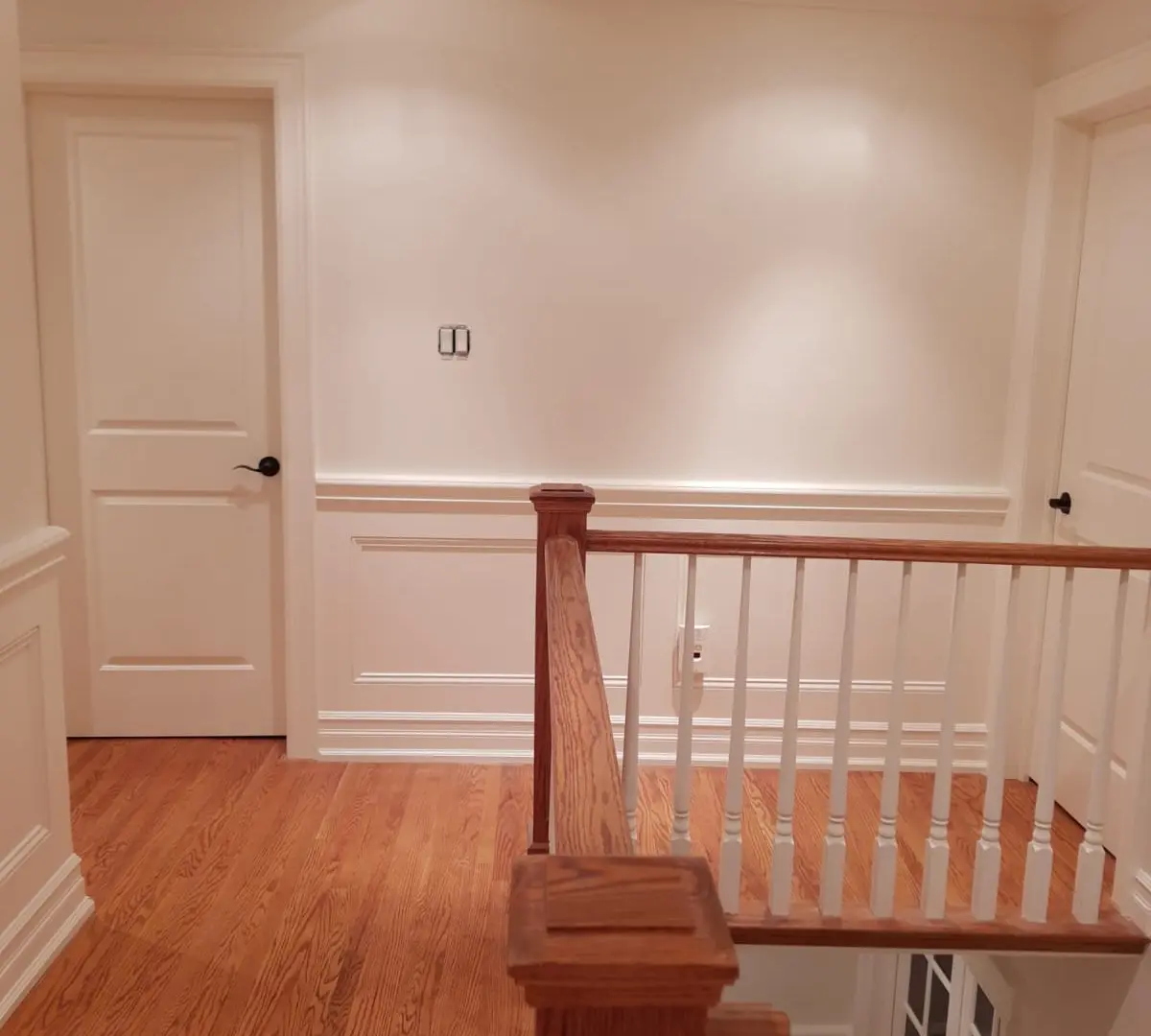
What happens when you put wall paint on trim: I've recoated plenty of baseboards where a previous painter ran the same flat wall paint onto the trim to save a step. It looks okay for about six months. Then it starts: the vacuum leaves black marks that won't wipe off, the dog's nails scratch it, the door edges burnish shiny where hands grab them. Wall paint never hardens enough for trim. Advance cures to a film you can scrub. That difference is why trim gets its own paint and its own line on the quote.
The trade-off with Advance is the 16-hour recoat window. You can't rush a second coat onto trim enamel the way you can on walls, which is why trim work spans two calendar days even in a single room. That cure time is a feature, it's what makes the film hard, but it does shape the schedule and the price.
Advance is the same enamel that defines cabinet work, see why BM Advance is the cabinet and trim standard.
Two coats, always
Trim gets two full coats of enamel minimum, three on a dark-to-white colour change. No paint, premium or self-priming, lays down a proper, even enamel film on trim in a single coat. One-coat trim shows brush ropiness, uneven sheen, and the old colour ghosting at the edges. The smooth, hard, uniform look that makes trim read as crisp comes from two coats over proper prep, full stop.
For more on what makes trim read crisp, see a Toronto painter's craft secrets.
When Benjamin Moore Scuff-X is the better call
Advance is the default, but it isn't the only enamel we reach for. Benjamin Moore Scuff-X is a scuff-resistant interior paint built for exactly the abuse trim and doors take in a busy house. Where Advance wins on hardness and that glassy, levelled finish, Scuff-X wins on two things: it shrugs off scuff marks from shoes, furniture and vacuum heads better than almost anything, and it recoats the same day instead of forcing the overnight wait Advance needs (Benjamin Moore Scuff-X, retrieved 2026).
That makes Scuff-X the smart pick in a few spots: high-traffic hallway and stairwell trim, kids' and pets' rooms, busy household doors that get grabbed and kicked, and rental turnovers where you can't spare two days for Advance to cure. It comes in matte through satin rather than a high-gloss enamel, so it reads a touch softer than a sprayed Advance door. For most homeowners who want the hardest, smoothest trim finish, Advance is still the call. When scuff resistance and a fast turnaround matter more than a furniture-grade enamel, Scuff-X earns its place on the quote.
Spray or brush: what's worth it on trim and doors?
Brushing in place is the standard for most trim and doors, and with the right enamel and a skilled hand it leaves minimal marks, Advance levels itself as it dries. Spraying gives a glassier, factory-smooth finish but requires removing doors or extensively masking the room, plus more setup and cleanup, so it costs 20-30% more on the trim portion.
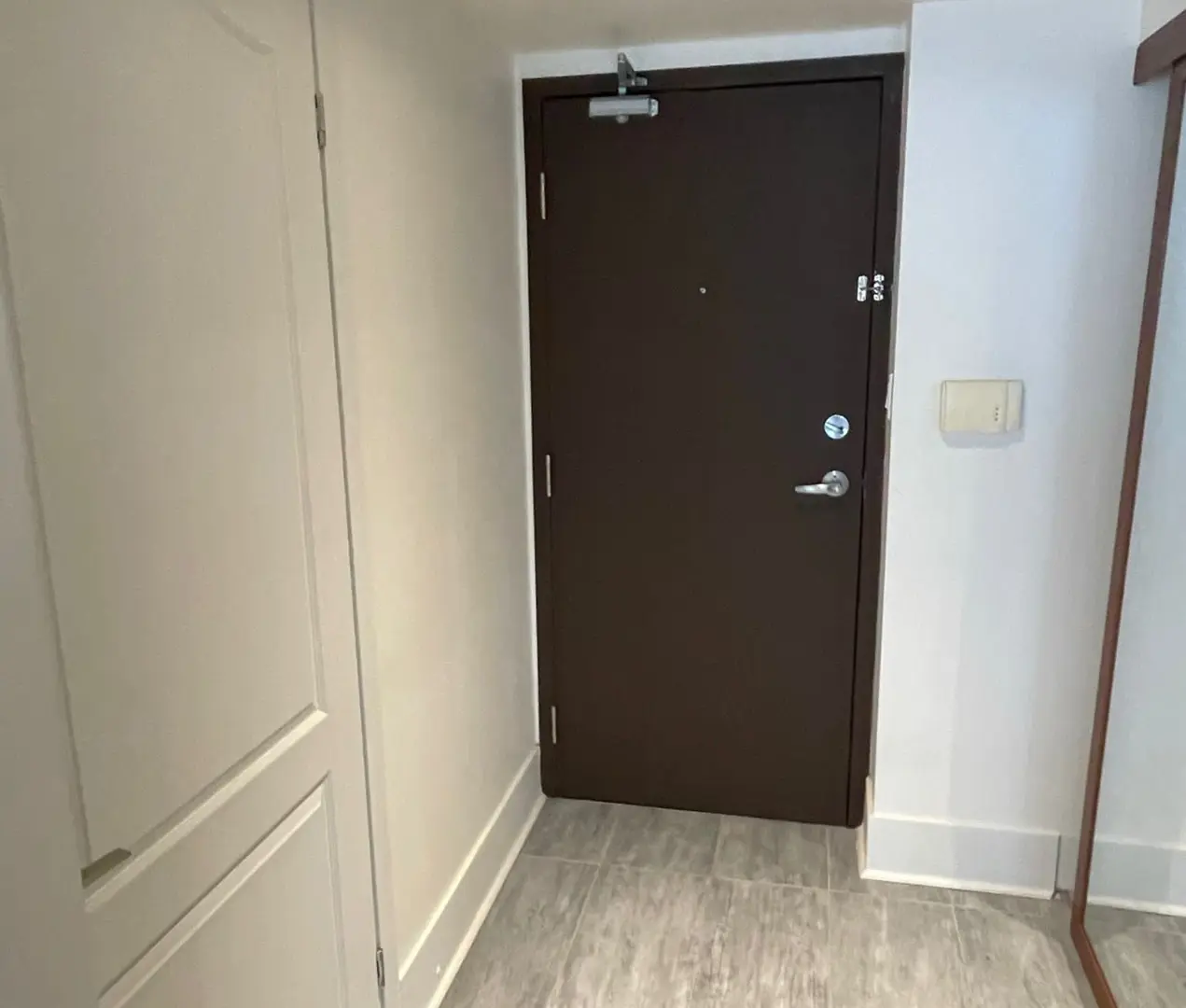
Where spraying earns its premium:
- Highly visible doors, a front entry seen from inside, French doors, a statement interior door.
- New or replacement trim and doors being finished from raw, where a factory look is achievable and worth it.
- A whole-house show finish where the homeowner wants flawless trim throughout and budget allows.
For ordinary bedroom, closet and bathroom doors and standard baseboard, a brushed Advance finish is the sensible, durable call. The spray premium is best spent on the doors people actually look at.
Brushing in place is standard for most Toronto interior trim and doors and produces a durable result with a self-leveling enamel like Benjamin Moore Advance. Spray application adds roughly 20-30% to the trim labour and delivers a factory-smooth finish, justified on highly visible doors and new trim being finished from raw, but rarely necessary on ordinary baseboard and closet doors (Chad Caglak, HomePaintersPro Toronto, 2026).
See our Toronto spray painting service for spray-finished doors and trim.
Real Toronto trim and door projects
Project 1: Leslieville bedroom refresh
Smooth latex-painted baseboards, two door casings, one window casing and a single slab door, all refreshed in the same white. Light fill, caulk, sand, two coats of Advance Semi-Gloss, brushed. Total: $320 CAD + HST. Trim done across two days for the enamel cure.
Project 2: Roncesvalles oil trim to white
1910 home, original glossy oil-based trim throughout the main floor going to a crisp white, the classic Toronto job. Degloss, INSL-X bonding primer over the oil, two coats of Advance. Six-panel doors brushed in place. Total: $3,400 CAD + HST for the main-floor trim and four doors. Five days with the cure windows.
Project 3: North York whole-house trim and doors
1,800 sq ft, all baseboards, casings and twelve interior doors, previously latex, refreshed in Cloud White. Front entry interior face and two French doors sprayed for a show finish, the rest brushed. Total: $3,900 CAD + HST. Worked alongside a full interior repaint.
We also handle trim within a full interior painting project.
Get a Toronto trim and door painting quote
Twenty years of trim and door work across the GTA with our Toronto painting crew, including the classic Toronto job, original oil trim converted to crisp washable white with proper degloss and bonding primer. Every trim job: real prep, BM Advance enamel, two coats minimum, and a finish you can scrub.
Get your free trim and door painting quote or call (416) 875-8706. Quotes inside 24 hours, fixed CAD pricing, HST disclosed, deep-colour upcharges shown up front.
We paint interior doors, crown moulding and trim as standalone work or rolled into a full interior painting project.
About the author
Chad Caglak is co-owner of Home Painters Pro Toronto and a 20-year working painter. He's converted glossy oil trim to crisp washable white in homes from Roncesvalles to North York, and has brushed and sprayed more doors than he can count, and writes the craft-and-pricing content here so Toronto homeowners can see why trim costs what it does and where the spray premium is worth paying. Read more in when to spray, roll, or brush or kitchen cabinet painting costs.
Frequently Asked Questions
Toronto trim and baseboard painting runs roughly $1 to $3 CAD per linear foot plus HST, depending on prep, profile complexity and whether it is brushed or sprayed. A typical room with baseboards, door and window casings lands around $150 to $400. Whole-house trim on a 1,500 to 2,000 sq ft home runs $1,500 to $4,000. The wide range is prep-driven: glossy old oil trim that needs deglossing and a bonding primer costs more than smooth, previously latex-painted trim in good shape.
Interior doors run $75 to $200 CAD each plus HST, brushed in place. A flat slab door is at the low end; a panel door with detailed profiles, or a door sprayed off its hinges for a factory finish, sits higher. Both sides plus the edges and the frame push toward the top of the range. Doors are priced individually because each one is its own small enamel job, with prep, two coats of a hard-curing paint, and 16-hour dry time between coats that spans two days.
Brushing in place is standard and perfectly good for most interior doors, with the right enamel a skilled painter leaves minimal marks. Spraying gives a factory-smooth finish but means removing the door, masking or moving it to a spray area, and more labour, so it costs more. Spray is worth it on highly visible doors, a front entry from inside, French doors, or when you want a flawless show finish. For ordinary bedroom and closet doors, a brushed Advance finish is the sensible call.
Trim is where DIY jobs usually show their seams: brush marks, wavy cut lines, and drips on the floor. If you've got the patience to prep and a steady hand, doors and baseboards are doable. Crisp trim on a whole house is where most people call us.