
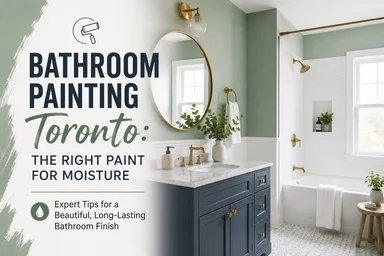




What is the best paint for a Toronto bathroom?
Benjamin Moore Aura Bath & Spa is the default for Toronto bathrooms, engineered for high humidity with mildew resistance built into the film, and it comes in a matte finish that hides wall flaws the old semi-gloss couldn't. Health Canada is blunt that mould will typically grow indoors wherever moisture is present, and names showering and bathing as a daily source of it (Health Canada, Guide to Addressing Moisture and Mould Indoors, 2023). The paint, the prep, and the ventilation have to be built for that, or the finish fails.
Key Takeaways
- Default Toronto bathroom paint: Benjamin Moore Aura Bath & Spa, mildew resistance built in, matte finish
- The old "semi-gloss in bathrooms" rule is outdated, modern moisture paints deliver washability and mildew resistance in matte
- Bathrooms fail for two reasons: wrong paint and poor ventilation, fix both or it recurs
- Never paint over live mildew, clean and kill it, then mildew-block primer, then topcoat
- Two coats over proper prep, no premium paint covers moisture-prone walls in one
- Typical cost: $350-$700 CAD + HST for a standard bathroom, more for ensuites and repairs
- The ceiling takes the worst steam, it needs moisture-resistant paint more than any wall
I'm Chad Caglak, 20 years painting Toronto homes, and bathrooms are the room I get called back to fix most. Not because they're hard to paint, they're small. Because they're the room where the wrong paint and a weak fan punish every shortcut. A bedroom forgives a mediocre paint job for years. A bathroom exposes it in months: peeling near the shower, mildew speckling the ceiling, paint lifting off the wall above the tile.
The good news is the fix is well understood. The right paint, real prep, and ventilation that works. Here's how I paint a Toronto bathroom so it still looks clean five years out.
For how a bathroom fits a wider budget, see the Toronto interior painting cost overview.
Why do Toronto bathrooms peel and grow mildew?
Two causes, almost every time: the wrong paint and poor ventilation. Standard wall paint has little built-in mildew resistance, so in a warm, damp bathroom, mildew colonizes the film and the surface fails. Add an exhaust fan that doesn't actually move air outside, and steam saturates the walls and ceiling after every shower. That constant moisture lifts any paint that wasn't formulated and primed for it.
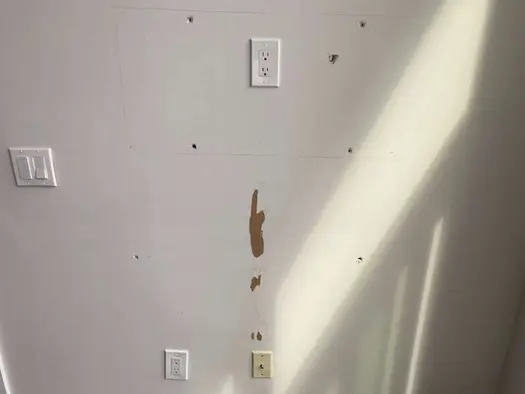
Toronto bathroom paint fails for two combined reasons, a coating with insufficient mildew resistance and inadequate ventilation that leaves walls and ceiling saturated with steam after each shower. Mould and mildew establish readily in warm, humid conditions, so a bathroom requires both a moisture-built paint film and an exhaust fan that vents outdoors, not just into the ceiling cavity, to prevent recurring failure (Chad Caglak, HomePaintersPro Toronto, 2026).
The ventilation half is the one homeowners miss. A surprising number of Toronto bathroom fans vent into the attic or ceiling cavity instead of outside, which just relocates the moisture problem. Before I repaint a recurring-mildew bathroom, I check that the fan actually exhausts outdoors and that it's run during and after every shower. Paint can resist mildew. It can't out-run a room that never dries.
If steam has already done damage, see our water and moisture damage repair service. For the full diagnosis, see why paint peels off a bathroom ceiling and how to fix it for good.
Why Aura Bath & Spa, and why matte?
Aura Bath & Spa is built specifically for spa-like, high-moisture rooms. It carries strong mildew resistance in the film and is formulated to hold up to the humidity cycling a bathroom puts a wall through. What makes it the easy call for Toronto bathrooms, though, is that it delivers that performance in a matte finish. You no longer pick between a paint that survives and a paint that looks good.
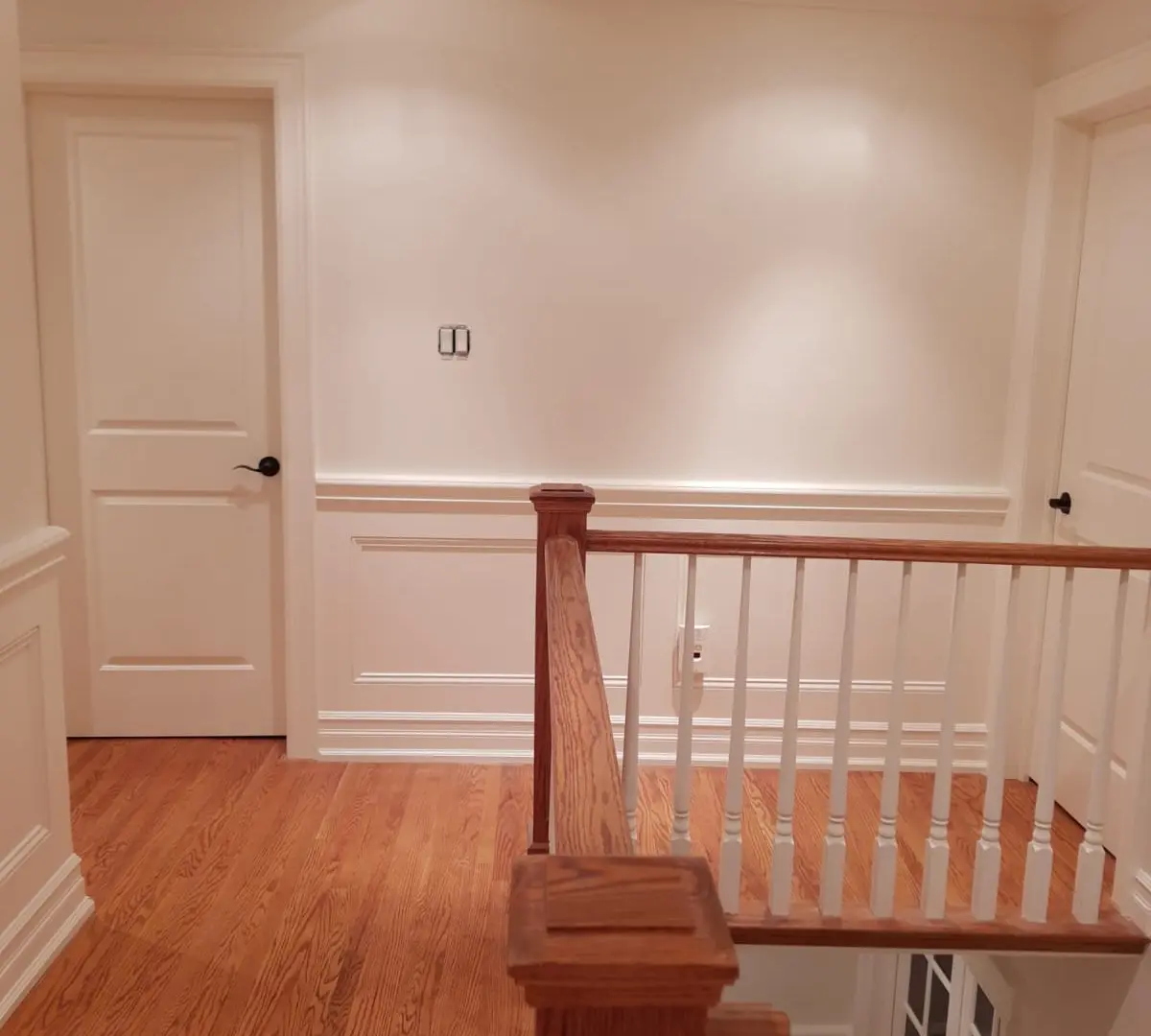
That matters more than it sounds, because matte hides imperfections. Older Toronto bathrooms, and there are a lot of them, have walls that have been patched, re-patched, and lived a hard humid life. A high-sheen semi-gloss lights up every one of those flaws under bathroom vanity lighting. Matte settles the surface down and reads clean.
If you're searching "what sheen for a bathroom," the honest answer is that satin and semi-gloss were the old default, picked because high-sheen films shed water and wiped clean. A washable, moisture-built matte now matches that wipe-clean and mildew performance, so it holds up just as well while hiding far more. Save the semi-gloss for the trim and doors.
Here's how I match surface to product and finish across a Toronto bathroom:
| Surface | Recommended product | Finish |
|---|---|---|
| Walls | Benjamin Moore Aura Bath & Spa | Matte |
| Ceiling | Aura Bath & Spa tinted to a ceiling white, or a moisture-resistant ceiling paint | Matte / flat |
| Trim and doors | Semi-gloss enamel | Semi-gloss |
| Stained or previously affected areas (prep) | Mildew-blocking primer | Primer, under topcoat |
The semi-gloss rule is dead, here's why it existed: For decades the trade defaulted to semi-gloss in bathrooms because old flat paints had zero mildew resistance and couldn't be wiped, so the only protection was a high, slick sheen that shed water. Moisture-built mattes like Bath & Spa changed the math. Now the mildew resistance and washability live in the chemistry, not the shine. So you can finally have a matte bathroom that resists mould and wipes clean. The shiny-bathroom era was a workaround for a paint problem that's been solved.
For sheen choices room by room, see paint finishes and the best sheen for every room.
Whites versus colour: what's the deep-base upcharge?
Most bathrooms get painted white or a pale spa tone, and for those, Bath & Spa earns its premium purely on the moisture and mildew side. If you want a saturated bathroom colour, deep teal, moody navy, charcoal, two things to know. First, those come out of a deep base, which costs about $5-7 CAD more per gallon across every Benjamin Moore line, and deep tones often need a third coat for even coverage. We disclose that on the quote, not at the invoice.
Second, if you're going pale and the only reason you'd reach for Aura is the colour-locking, save your money on that front, there's no saturated pigment to lock in a soft white. For a white or near-white bathroom, Bath & Spa is still the right pick because of moisture and mildew performance, not colour retention. That's the distinction: in a bathroom you're buying the mildew resistance, in a saturated accent you're also buying pigment stability.
For picking a shade that holds up, see how to choose paint colours that last.
How do I prep a bathroom so the paint actually lasts?
Prep is where a bathroom job is won, more so than any other room, because moisture finds every weak spot. The sequence I run:
- Kill mildew first. Any existing mildew gets cleaned and killed with an appropriate solution, then the surface dries fully. Painting over live mildew traps it and it grows back through the new film.
- Repair moisture damage. Soft drywall, lifted tape, or stained areas around the shower and tub get cut out and patched. Bathrooms are where hidden water damage hides.
- Mildew-block stained areas. Previously affected or stained spots get a mildew-blocking primer so nothing ghosts or re-colonizes through the topcoat. If you're buying it yourself, reach for a kitchen-and-bath primer-sealer or a shellac- or oil-based stain blocker like Zinsser BIN. Those seal water and mildew stains so they don't bleed through, which a standard latex wall primer won't do reliably in a bathroom.
- Caulk and seal. Fresh caulk at the tub, backsplash and trim gaps keeps water out of the wall behind the paint.
- Two full coats. Bath & Spa goes on in two coats over the prepped, primed surface. No moisture paint covers a repaired or colour-changed bathroom wall properly in one.
For the full surface routine, see our complete wall prep checklist.
What about the bathroom ceiling?
The bathroom ceiling is the surface that fails first, because steam rises and sits there longest. It needs mildew resistance more than any wall in the room, yet it's the surface most often painted with a bargain flat ceiling paint that has no moisture rating at all. That's why the speckled-mildew ceiling is such a common Toronto bathroom complaint. For the full walkthrough on how to stop a bathroom ceiling from growing mould, read our dedicated guide.
Use a moisture-resistant ceiling paint, or Bath & Spa tinted to a ceiling white. Flat or matte hides imperfections and reads clean. If the ceiling is already stained from past steam or a roof leak, prime those areas with a mildew-blocking primer before the topcoat, or the stain ghosts straight back through.
For lap-mark-free ceilings, see how to paint a ceiling properly.
How much does bathroom painting cost in Toronto?
A standard Toronto bathroom runs roughly $350-$700 CAD plus HST for walls and ceiling in two coats of a quality moisture paint. A small powder room with no shower can be $250-$450. A large ensuite with extensive trim, a tray or coffered ceiling, or moisture-damage repair can reach $800-$1,200. Bathrooms cost more per square foot than bedrooms despite their size.
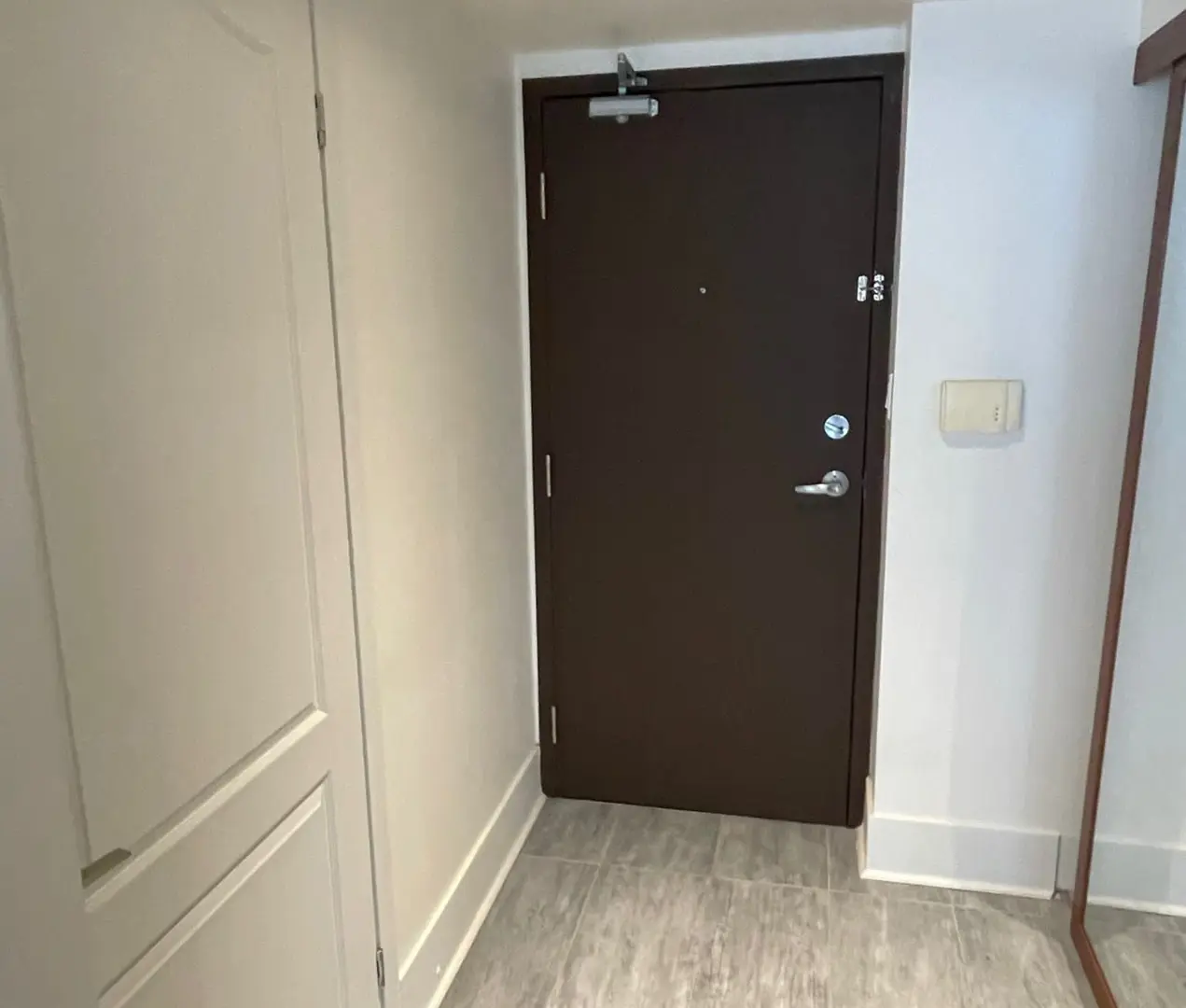
The cut-in work is the cost driver. A bathroom is mostly edges: around tile, the vanity, the mirror, fixtures, the tub surround, the window. That's slow, careful brushwork, not fast roller area. Add the premium moisture paint and any repair, and a small room carries a higher per-foot number than an open bedroom. Moisture or mildew damage behind the paint is the wildcard that moves the price most.
For how a bathroom sits within a whole-home budget, see the full Toronto house painting cost breakdown.
Get a Toronto bathroom painting quote
Twenty years painting Toronto bathrooms, ensuites, powder rooms, and the recurring-mildew jobs other crews gave up on. Every bathroom we do gets the same treatment: mildew killed before paint, moisture damage repaired, mildew-blocking primer where it's needed, and two coats of a moisture-built paint like Aura Bath & Spa in a matte that hides the flaws.
Get your free bathroom painting quote or call (416) 875-8706. Quotes inside 24 hours, fixed CAD pricing, HST disclosed.
We handle bathrooms as a standalone job or as part of a full interior painting project. See the bathroom painting Toronto page for the full scope.
Article by Chad Caglak, Co-Owner and Lead Painter at HomePaintersPro Toronto. 20 years specifying moisture-resistant coatings for Toronto bathrooms.
Frequently Asked Questions
Benjamin Moore Aura Bath & Spa is the default for Toronto bathrooms. It is engineered for high-humidity rooms, with strong mildew resistance built into the film, and it comes in a matte finish that hides wall imperfections far better than the old semi-gloss bathroom standard. Most premium acrylics will survive a powder room, but a busy family bathroom or an ensuite with a steam shower needs a paint actually formulated for moisture. Bath & Spa is that paint, applied in two coats over a properly primed surface.
No, that rule is outdated. The old logic was that high-sheen semi-gloss shed moisture and wiped clean, so bathrooms had to be shiny. Modern moisture-built paints like Aura Bath & Spa deliver mildew resistance and washability in a matte finish, so you no longer trade looks for performance. Matte also hides the lumps and patches common on older Toronto bathroom walls. Semi-gloss still has a place on trim and doors, but the walls and ceiling no longer need to be glossy to survive a bathroom.
Almost always two causes: wrong paint and poor ventilation. Standard wall paint has little mildew resistance, so in a warm, damp bathroom mildew colonizes the film and the surface fails. Without a working exhaust fan, steam saturates the walls and ceiling after every shower, and that constant moisture lifts paint that was not formulated or primed for it. The fix is a moisture-built paint, a mildew-blocking primer on any stained areas, and a fan that actually moves air outside, not into the ceiling cavity.
A standard Toronto bathroom runs roughly $350 to $700 CAD plus HST for walls and ceiling in two coats with a quality moisture paint. A small powder room can be $250 to $450; a large ensuite with extensive trim, a tray ceiling or heavy repairs can reach $800 to $1,200. Bathrooms cost more per square foot than bedrooms because of the cut-in work around tile, vanities, fixtures and mirrors, plus the premium paint. Moisture or mildew damage repair adds to the number.
A matte or flat moisture-resistant ceiling paint, ideally one rated for high humidity, or Aura Bath & Spa itself tinted to a ceiling white. Bathroom ceilings take the worst of the steam, so they need mildew resistance more than any other surface in the room. Flat hides imperfections and reads clean. Avoid a standard flat ceiling paint with no moisture rating, that is the surface most likely to spot with mildew first. If the ceiling is already stained, prime with a mildew-blocking primer before painting.
No. Painting over live mildew traps it, and it grows right back through the new film within months. The surface must be cleaned and killed first, typically with an appropriate cleaning solution, then dried fully. Stained or previously affected areas get a mildew-blocking primer before the topcoat. Only then does the moisture-resistant paint go on. Skipping the kill-and-prime step is the single most common reason a freshly painted bathroom mildews again fast. Treat the cause, then paint.
Give the paint at least 48 hours, longer if you can, before exposing it to shower steam. Latex paint is dry to the touch in hours but hasn''t begun to cure, and hitting an uncured film with heavy moisture is how bathroom paint fails early. Even a moisture-built paint like Aura Bath & Spa needs time to set before its first hot shower. Run the exhaust fan and keep the door cracked for the first few days. The wait protects years of finish life.
For a bathroom, yes. Standard Aura is an excellent wall paint but isn''t engineered for the humidity cycling and mildew pressure of a bathroom. Bath & Spa adds the moisture and mildew performance specifically for these rooms, and gives it to you in a matte finish. The price difference over a single small bathroom is modest because you only need a gallon or two. Spending the premium on the one room that punishes the wrong paint is exactly where it makes sense.
You can, but it''s a false economy. Standard bedroom wall paint has minimal mildew resistance, so in a bathroom it tends to spot, peel near the shower, or grow mildew within a year or two. You''ll repaint sooner and possibly deal with damage. A bathroom is small, so the cost to do it right with a moisture-built paint is low in absolute dollars. Save the leftover for touch-ups in the room it came from and buy the right paint for the bathroom.
Bubbling above the tile line is moisture trapped behind the film, usually from steam getting into the wall or insufficient sealing at the tile edge. The fix is to address the source: caulk the tile-to-wall joint, confirm the exhaust fan vents outside and gets used, then scrape the bubbled paint, let the wall dry fully, prime and repaint with a moisture-resistant product. Painting over bubbles without solving the moisture path just reproduces them. The bubble is a symptom, the trapped water is the disease.
Yes. Bare drywall and fresh joint compound are porous and will drink up topcoat unevenly, and in a bathroom you want a sealed, moisture-ready base. Use a quality primer on the new drywall, a mildew-resistant or moisture-tolerant primer is ideal in a bathroom, then two coats of your moisture paint. Self-priming claims don''t replace real primer over new drywall, especially in a high-humidity room. Prime it properly and the topcoat performs the way it''s supposed to.