




What is the difference between paint blistering, bubbling, and peeling?
Blistering and bubbling are the same thing: the paint film lifting off the surface into a raised pocket, driven by moisture or heat trapped underneath. Peeling is different. That is an adhesion failure, where the film never bonded and now lets go in sheets. Painting in direct sun and high heat is one of the leading causes of blistering (Benjamin Moore). Different defect, different cause, different fix.
Key Takeaways
- Blistering and bubbling are the film lifting off the wall, usually from trapped moisture or heat, not a paint quality problem
- Peeling and flaking are adhesion failures: paint over a dirty, glossy, chalky, or wet surface, or latex over oil with no bonding primer
- Alligatoring is old, brittle paint cracking like reptile skin, often layers of aged oil or a topcoat rushed over an uncured undercoat
- Painting in direct sun and high heat is a leading blistering cause (Benjamin Moore)
- Every fix is the same shape: identify the cause, fix the cause, scrape to a sound edge, prime correctly, two coats
- One wall failing while the others hold is good news, it narrows the cause to whatever makes that wall different
- Popping a bubble and repainting over it just reproduces the same defect within weeks
I'm Chad Caglak, 20 years painting Toronto homes, and "my paint is bubbling" is one of the most common calls I get. The trouble is, three different defects get called the same thing. A homeowner says bubbling and means a heat blister, a moisture blister, peeling, or paint cracking like a dried lakebed. They're not the same problem, and they don't have the same fix.
So this guide is a defect dictionary. Look at what's actually happening on your wall, match it to the right name, and you'll know the real cause. That's the whole game. Fix the cause, not the symptom, and the repair holds. Chase the symptom and you'll be back on a ladder next spring.
For the craft thinking behind all of it, see our Toronto painter craft hub.
How do you tell paint defects apart? (the decision matrix)
Most paint failures sort into four families, and you can name yours in about ten seconds by looking at the shape, the location, and what's under it when you pop or scrape it. In 20 years of repaint callbacks, the great majority of premature failures I trace back come down to surface prep and conditions, not the paint in the can. That means the diagnosis matters more than the brand.
This is the matrix I run in my head on every callback. Match the symptom, read across to the likely cause, then the fix.
When you diagnose a Toronto paint defect, the shape tells you the family. A raised pocket is a blister or bubble from trapped heat or moisture; sheets or chips lifting away is peeling from adhesion failure; and reptile-skin cracking is alligatoring from aged, brittle paint. Painting in direct sun and high heat is among the most common blistering causes, so location and conditions matter as much as the paint (Benjamin Moore, 2026).
What causes paint to blister or bubble?
A blister is the paint film lifting off the surface into a raised pocket, and the two usual culprits are heat and moisture. Benjamin Moore names painting in direct sunlight, painting a hot surface, applying over a damp or dirty surface, and moisture seeping into the wall as the core causes of blistering (Benjamin Moore). The film either skins over before it can breathe, or water pushes it off from behind.
Think of it this way. Paint needs the surface under it to be dry, cool enough, and clean. Paint a wall that's baking in afternoon sun and the top of the film sets while the layer underneath is still releasing water vapour. That vapour has nowhere to go, so it pushes the film up into a dome. That's a heat blister, and it shows up fast, usually the same day or week.
A moisture blister is the slower, meaner version. Water gets behind the paint from a leak, from steam in a poorly vented bathroom, or from damp masonry, and it lifts the film from the back. These show up weeks or months later and they come back every time the moisture returns. I've cut into "mystery" exterior blisters and found a drip from a failed window flashing that had been feeding the wall for a year.
[PERSONAL EXPERIENCE] The damp-surface blister nobody expects: Some of the worst bubbling I see isn't from a leak at all. It's from someone painting a basement or exterior wall the morning after rain, when the surface looked dry but still held moisture an inch in. The film traps it, and a week later the wall is covered in tiny domes. If you're not sure a surface is dry, it isn't. Give it another day.
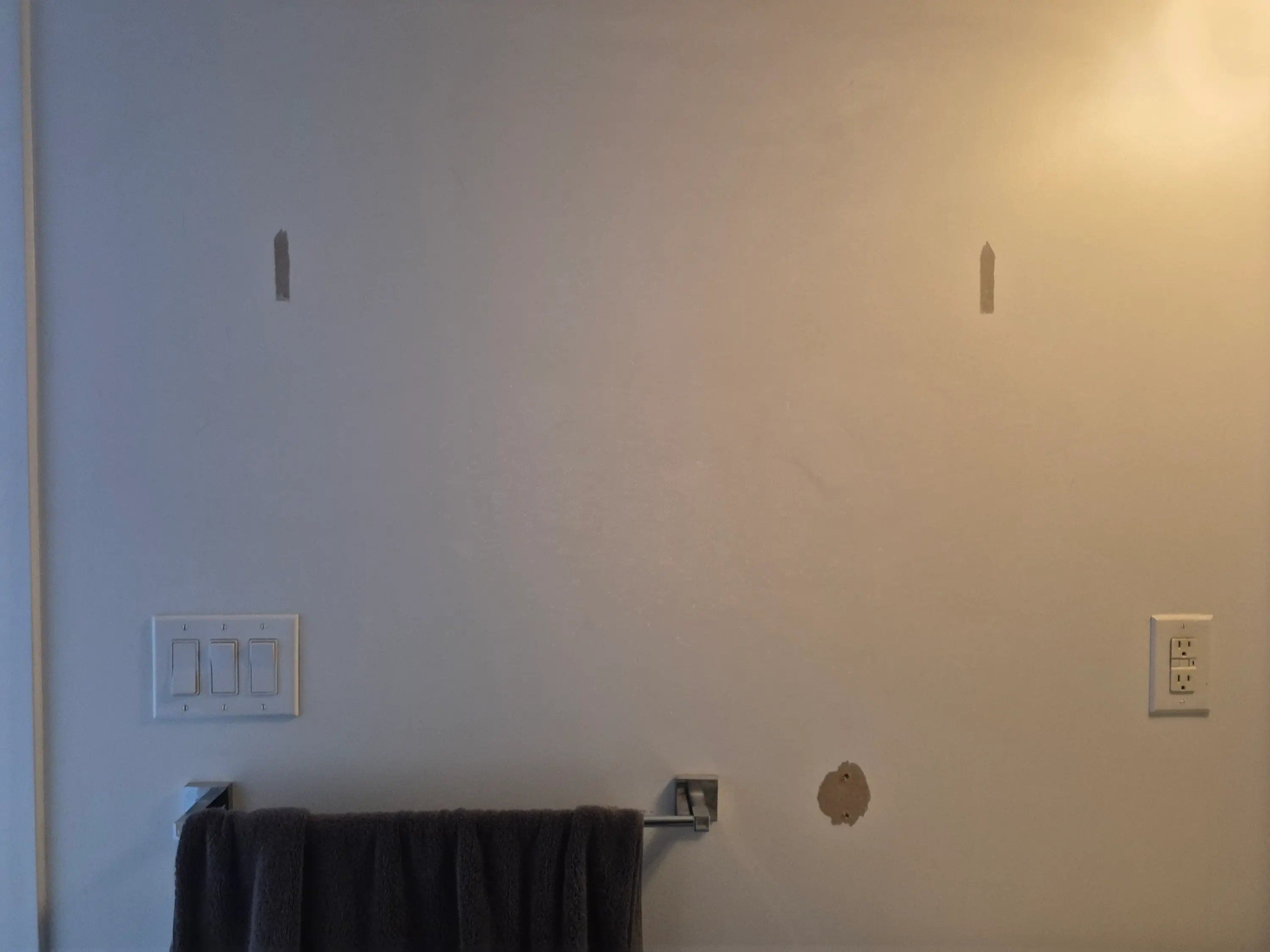
A blister or bubble is the paint film lifting off the substrate into a raised pocket, caused by moisture or heat trapped under the film rather than by paint quality. Benjamin Moore lists painting in direct sun, painting a damp or dirty surface, and moisture intrusion as the leading causes, which is why a sun-baked or leak-fed wall blisters while clean, shaded, dry walls hold (Benjamin Moore, 2026).
Heat blister vs moisture blister: telling them apart
Pop one and look underneath. That's the test. A heat blister bottoms out on primer or an earlier coat of paint that's still attached, because only the top film lifted before it set. A moisture blister goes all the way down to bare substrate, and the back of the lifted paint often feels damp or shows a water stain. The substrate at the bottom tells you which problem you have.
Location and timing confirm it. Heat blisters cluster on the sunny side of the house, near radiators, or above a wood stove, and they appear right after painting. Moisture blisters track water: under a window, along a chimney chase, on a bathroom ceiling, at the base of a basement wall, and they keep returning after rain or showers no matter how many times you repaint.
| Clue | Heat blister | Moisture blister |
|---|---|---|
| Under the blister | Primer or earlier paint, still attached | Bare substrate, often damp or stained |
| When it appeared | During or right after painting | Weeks or months later |
| Where it shows | Sunny wall, near a heat source | Near a leak, steam, or damp |
| Does it come back? | No, once you repaint correctly | Yes, until you stop the water |
| The fix | Repaint in shade on a mild day | Find and stop the moisture first |
[UNIQUE INSIGHT] Why "it's a moisture problem" is the lazy diagnosis: Plenty of painters call every blister a moisture blister because it sounds thorough. But if the film bottoms out on attached primer and it's on the south wall and it showed up the afternoon you painted, that's heat, full stop. Calling it moisture sends the homeowner hunting for a leak that doesn't exist. The under-the-blister test settles the argument in two seconds, and getting it right means you fix the actual cause.
What causes paint to peel or flake?
Peeling is an adhesion failure: the paint film simply never bonded to what's beneath it, so it lets go in sheets and strips, then dries brittle and flakes into chips. The classic causes are painting over a dirty, greasy, glossy, or chalky surface, painting over a wet surface, and the Toronto special, latex applied straight over old oil-based paint with no bonding primer. The paint had nothing to grip.
Glossy surfaces are the sneaky one. Old oil trim, a semi-gloss wall, or anything slick gives fresh paint nothing to key into. It can look fine for a few weeks while it dries, then peel off in satisfying, awful sheets the first time someone leans on it. Dulling the gloss with a scuff-sand and a bonding primer is the difference between a coat that holds for fifteen years and one that fails in three.
Latex over oil deserves its own warning because so many Toronto homes have oil-painted trim and doors from earlier decades. Modern latex doesn't chemically bond to cured oil. Put it on without a bonding primer and it peels like a sticker. The tell is a clean, glossy back on the peeled film and a glossy oil surface underneath, with no torn substrate.
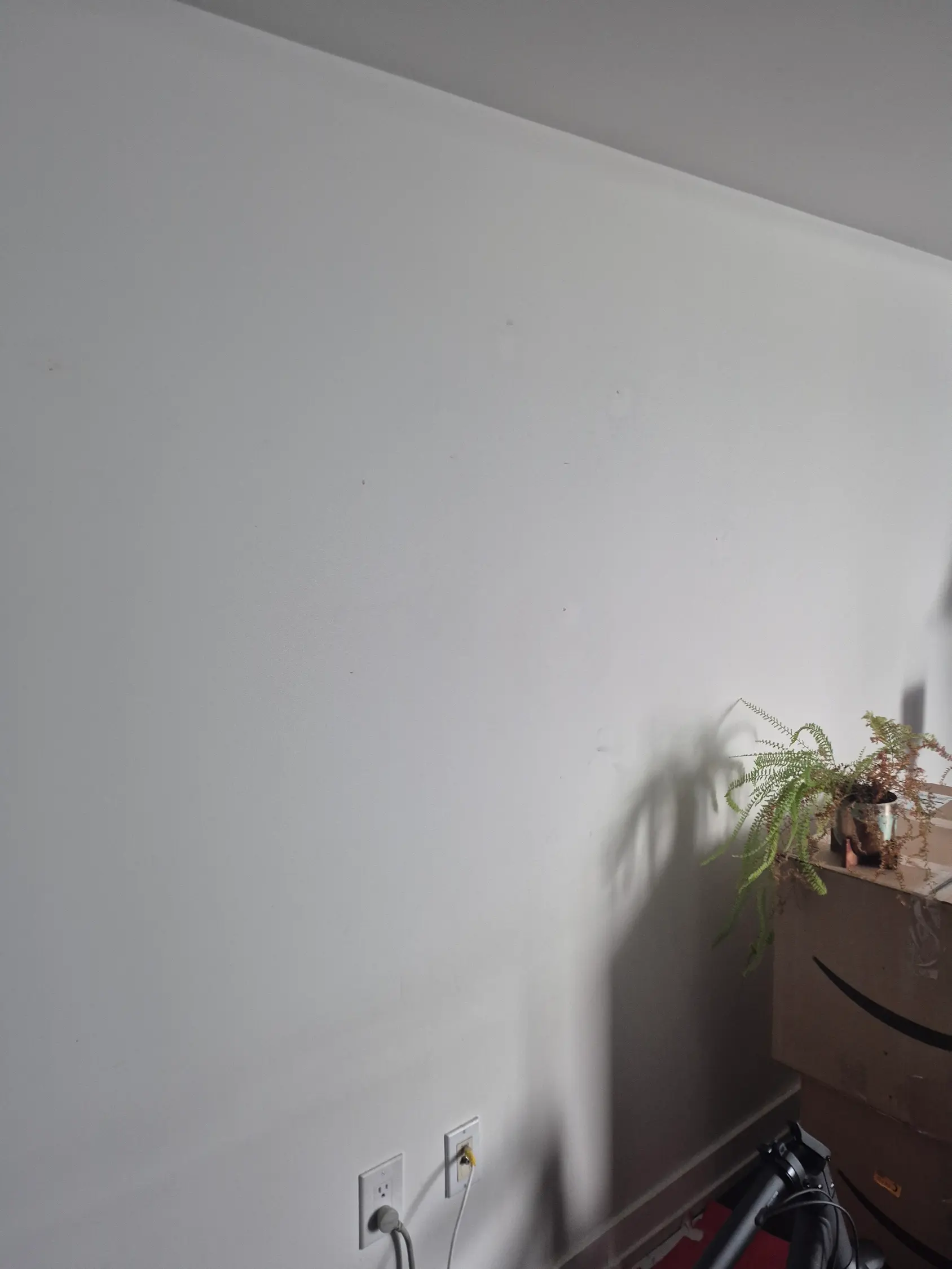
Peeling and flaking are adhesion failures where the paint film never bonded to the surface and lifts away in sheets, then breaks into chips. The common causes I see are painting over glossy, dirty, chalky, or wet surfaces and applying latex over old oil paint with no bonding primer, all of which leave the film nothing to grip.
For the trim-and-door angle specifically, see our guide on latex over oil paint peeling. And bathroom ceilings have their own peeling pattern, covered in why bathroom ceiling paint peels.
Alligatoring and cracking, and what causes them
Alligatoring is a network of cracks across the paint surface that looks like reptile skin, and it almost always means the paint has gone old, hard, and brittle, or a rigid topcoat was rushed over an undercoat that hadn't fully cured. Oil-based paint keeps hardening with age, layer over layer, until it can no longer flex with the wall's normal movement and it cracks across the whole surface. It's a sign of an aged paint system, not a fresh mistake.
The second cause is impatience. Lay a hard topcoat over an undercoat that's still curing underneath, and the two layers shrink and harden at different rates. The top cracks into that alligator pattern as the layers fight each other. This is why drying and recoat times on the can matter, especially with oil and alkyd products that take real time to cure, not just to dry to the touch.
Simple cracking and checking, the finer lines you sometimes see, are the early warning before full alligatoring. They show paint that's losing flexibility or was applied too thick. Caught early, a scuff-sand and a fresh flexible coat can buy years. Left to go full alligator, you're scraping or stripping back to a stable layer before anything new will hold.
Alligatoring is a reptile-skin crack pattern caused by paint that has aged into a hard, brittle state or by a rigid topcoat applied over an undercoat that had not cured, so the layers can no longer flex together. Multiple coats of old oil-based paint are the classic source I find, and the repair runs from scrape-and-recoat to a full strip when the cracking is deep.
Flashing and picture-framing (boxing), the application defects
These two aren't film failures, they're application defects, but homeowners lump them in because the wall looks wrong. Flashing is uneven sheen or colour, often where a patch or a porous spot soaked up paint differently than the wall around it, or where a glossy area shows through. Picture-framing, what we call boxing, is a darker frame around the edges of a wall or ceiling. Both are about how the coats went on, not whether they're sticking.
Boxing happens when the painter cuts in the perimeter band with a brush but only rolls the field once, so the edges end up with two coats of paint while the centre got one. Two coats over one reads darker, and you get a permanent frame that's visible from across the room. It's one of the most common avoidable defects in Toronto repaints, and the fix is simple discipline: cut in twice and roll twice, so every square inch gets the same two coats.
Flashing usually comes from skipping primer over patches and porous repairs. Bare drywall, fresh joint compound, and spot repairs drink paint at a different rate than the sealed wall around them, so they dry to a different sheen. Spot-priming those areas before the topcoat evens the absorption and the flashing disappears. Paint-and-primer-in-one won't fix this on a real repair, it only spot-covers minor touch-ups. Patches and bare areas need actual primer.
[ORIGINAL DATA] What our callback log shows on application defects: Across the repaint callbacks we logged through 2023 to early 2026, boxing and flashing together accounted for nearly one in five complaints where the paint was sticking fine but the wall "looked off." Almost every boxing case traced to the same thing: cut in once, rolled the field once. The cut-twice, roll-twice rule would have prevented all of them.
For how sheen choice changes how visible flashing is, see paint finishes explained. The boxing defect gets a full breakdown in our Toronto painter craft hub.
How do you fix blistering, bubbling, peeling, and alligatoring?
Every one of these defects gets the same five-step shape, and the first step matters most: find and fix the cause before you touch a paint can. In my experience the vast majority of premature paint failures come from prep and surface conditions, not the paint itself. Repaint without fixing the cause and you've spent money reproducing the same defect on schedule.
This is the sequence I run on a defect repair, whatever the family.
- Diagnose and fix the cause. Moisture blister? Find and stop the water, then let the wall dry fully. Heat blister? Plan to repaint in shade on a mild day. Peeling over gloss or oil? You'll be priming for adhesion. Alligatoring? Decide scrape versus strip. No paint goes on until the cause is handled.
- Scrape back to a sound edge. Remove every bit of loose, lifted, or cracked film with a scraper. Whatever stays down tight after firm scraping is sound and can stay. Don't strip what's holding.
- Sand and feather. Sand the transitions so the edge of the old paint blends smooth into the bare area. A hard scrape ridge will telegraph through the new coats, so feather it flat.
- Prime correctly for the cause. Bare drywall or wood gets a real primer like Fresh Start. Stains and water marks get a shellac stain blocker like Zinsser BIN. Old oil or glossy surfaces get a bonding primer so latex can grip. Paint-and-primer-in-one is not primer here, it only spot-covers minor patches.
- Two coats, right conditions. Two full coats over the prepped, primed surface, on a dry surface, out of direct sun, on a mild day. No premium paint covers a repaired or colour-changed wall properly in one coat.
The single mistake that turns a small repair into a recurring headache is skipping step one. I've been called to the same blistered exterior wall twice by two different homeowners who each "fixed" it by scraping and repainting, because nobody chased down the failed flashing feeding water behind it. Fix the water, and the third paint job is the one that lasts.
For the complete surface routine, see our wall prep checklist. If a previous job already failed across a whole room, our guide on how to fix a bad paint job walks through the full reset. Lap marks and stipple on the field are a separate application issue, well covered in PPG's surface-defect notes (PPG).
Get a Toronto paint defect repair quote
Twenty years diagnosing why Toronto paint fails: heat blisters on south walls, moisture blisters fed by leaks and steam, latex peeling off old oil trim, and ceilings alligatoring under decades of paint. Every defect repair we do starts the same way, finding the cause and fixing that first, then scraping to a sound edge, priming for the actual problem, and laying down two full coats that hold.
Get your free defect repair quote or call (416) 875-8706. Quotes inside 24 hours, fixed CAD pricing, HST disclosed.
We handle defect repairs on their own or as part of a full interior painting project, with drywall and moisture-damage repair when the wall behind the paint needs work too.
About the author
Chad Caglak is co-owner of HomePaintersPro Toronto and a 20-year working painter. He's diagnosed and fixed paint failures on everything from CityPlace condos to century homes in Leaside, and writes the craft-and-pricing content here so Toronto homeowners can tell a heat blister from a leak before they spend a dollar. Read more from Chad in the Toronto painter craft hub or the wall prep checklist.
Frequently Asked Questions
Pop the blister and look underneath. A heat blister shows bare substrate or primer at the bottom, because the top film lifted before it set and there is paint below it still attached. A moisture blister goes all the way down to bare surface and the back of the lifted paint often feels damp or shows a stain. Heat blisters cluster on the sunny side or near a heat source and appear soon after painting. Moisture blisters show up later, after rain, steam, or a leak, and they keep coming back until you fix the water source.
No, and this is the most common mistake I see. Popping and painting hides the symptom for a few weeks, then the same blister returns in the same spot. The bubble is telling you something is wrong underneath: trapped moisture, a heat problem, or a contaminated surface. You have to scrape the loose film back to a sound edge, find and fix the cause, sand and spot-prime, then apply two coats. Skip the cause and you are just repainting the same defect on a loop.
It can, especially when you paint in direct sun or on a hot, humid afternoon. Painting a surface that is already warm makes the top of the film skin over before the solvent or water below can escape, and that trapped vapour lifts the film into a blister. High humidity also slows the cure and can leave moisture in the film. Benjamin Moore lists painting in direct sunlight and high heat among the top causes of blistering ([Benjamin Moore](https://www.benjaminmoore.com/en-us/contractors/job-solutions/troubleshooting/paint-blistering)). Paint in the shade, on a mild day, on a dry surface.
They are the same failure at two stages. Peeling is the paint film lifting away from the surface or from the coat below it in sheets or strips, usually because it never bonded properly. Flaking is the later stage, when that peeled film dries out, gets brittle, and breaks into small chips that fall off. Flaking is just old peeling. Both come from an adhesion failure: paint over a dirty, glossy, chalky, or wet surface, or latex applied over oil with no bonding primer. The fix is the same for either.
Alligatoring is a pattern of cracks that looks like reptile skin, and it usually means the paint is old, brittle, and has lost its flexibility, or a hard topcoat went over an undercoat that had not fully cured. Multiple thick layers of old oil-based paint are the classic cause, because oil keeps getting harder and more rigid with age until it can no longer flex with the wall. The repair is to scrape or sand back to a sound, stable layer, prime, and recoat. Severe alligatoring sometimes means stripping the surface completely.
Because that one wall has a different condition the others do not. The most common reasons are sun exposure (a south or west wall heats up and blisters while shaded walls stay fine), a moisture path (a plumbing wall, a chimney, a roof or window leak feeding water behind that one surface), or a different substrate or prep history. One wall failing is actually good news, it narrows the cause down fast. Find what makes that wall different and you have found your problem.
Often, yes, particularly on ceilings and exterior walls. A cluster of bubbles that feels soft or damp, or that returns after every rain or shower, points to water getting behind the film from a leak, poor ventilation, or rising damp. Not every bubble is water, heat and trapped solvent cause them too. But a bubble that keeps coming back in the same place is almost always moisture, and you need to find and stop the water before any paint will hold.
You scrape off everything that is loose, not necessarily everything that is painted. Run a scraper over the area and remove any film that lifts. Whatever stays down tight after firm scraping is sound and can be feathered, sanded, primed, and painted over. Painting over loose, peeling paint just glues your new coat to a layer that is already letting go, so it peels with it. Scrape to a sound edge, feather the transition smooth, spot-prime bare areas, then two coats.
Fresh bubbles that appear during or just after rolling usually come from rolling too fast, a foamy or over-shaken paint, painting over a glossy surface that was not dulled, or painting in heat. Fast rolling whips air into the film and into a porous surface, and those air bubbles get trapped as it sets ([PPG](https://www.ppgpaints.com/pro-tips/how-to-fix-roller-marks-or-excessive-stipple-in-paint)). Slow your roller down, do not over-shake the can, scuff-sand any gloss, and avoid painting in direct sun. Most application bubbles settle if the surface and conditions are right.
The right primer prevents adhesion peeling and helps with some blistering, but it is not a cure for a moisture problem. A bonding primer is what lets latex grip an old oil or glossy surface so it does not peel, and a sealing primer locks down chalky or porous areas. What primer cannot do is stop water that is coming from a leak or steam. If the cause is moisture, primer over a wet wall just blisters along with everything else. Fix the water first, then the right primer does its job.
A single problem wall or ceiling area runs roughly $300 to $700 CAD plus HST in Toronto, depending on how much scraping, sanding, and priming the repair needs and whether moisture damage has to be cut out and patched. Whole rooms with widespread failure cost more because the prep is the job, not the painting. The wildcard is always the cause: a leak or ventilation fix happens before paint, and that is separate work. We diagnose the cause on the quote so the repair holds.