
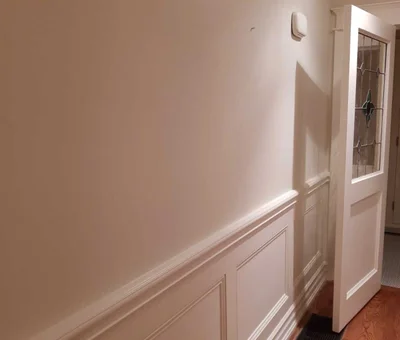




What are the main types of painters?
Most painting work falls into three types: custom home and residential, commercial, and rental turnover. They share a brush, but they are genuinely different trades with different skill sets, finish standards, scheduling models, and pricing logic. Construction is one of Ontario's largest employment sectors at over 600,000 jobs (Statistics Canada, 2025), and painters inside it specialize hard. Hiring the wrong one is a common, costly mistake.
Key Takeaways
- Three core types of painters: custom home / residential, commercial, and rental turnover. Each is built for a different job.
- These are not just market labels. Each runs a different playbook on prep, finish, scheduling, and price.
- Custom home painters chase finish quality and trust in a lived-in home. Priced per project on quality.
- Commercial painters run on speed and scale, working around a live business. Priced per square foot or by contract.
- Rental turnover painters go fast and cheap: rent-ready recoats between tenants. The corners they cut are the point.
- The quality bar drops by design: custom home pleases a picky owner, commercial is good enough to pass spec, turnover just needs to look clean and rent.
- Hiring the wrong type is where it goes sideways: a turnover crew on a custom home, or a solo painter on a 40,000 sq ft job.
- Match the painter to the job, not just to the lowest quote. Prep and craft decide how the finish ages.
I'm Chad Caglak, 20 years painting in Toronto, and I co-own a painting company. In that time I've done all three kinds of work, and I've been called in to fix what happens when a homeowner hires the wrong type. The brush looks the same in every photo. The job underneath it is not.
Nobody explains this part before you start collecting quotes. When three painters hand you three very different numbers, it's usually because they're three different types of painter, each quoting the way their daily work trained them to. Knowing which is which saves you money and a redo.
For the questions that sort a good painter from a bad one, see our questions to ask before hiring a painter.
The custom home and residential painter, explained
A custom home or residential painter works in occupied, lived-in homes and optimizes for finish quality and trust. The job is careful prep, colour consultation, protecting your furniture and floors, real cut-in craft, and two coats over proper prep. About two-thirds of Canadian households own their home (Statistics Canada, 2021 Census), so this is the work most homeowners actually picture when they say "painter."
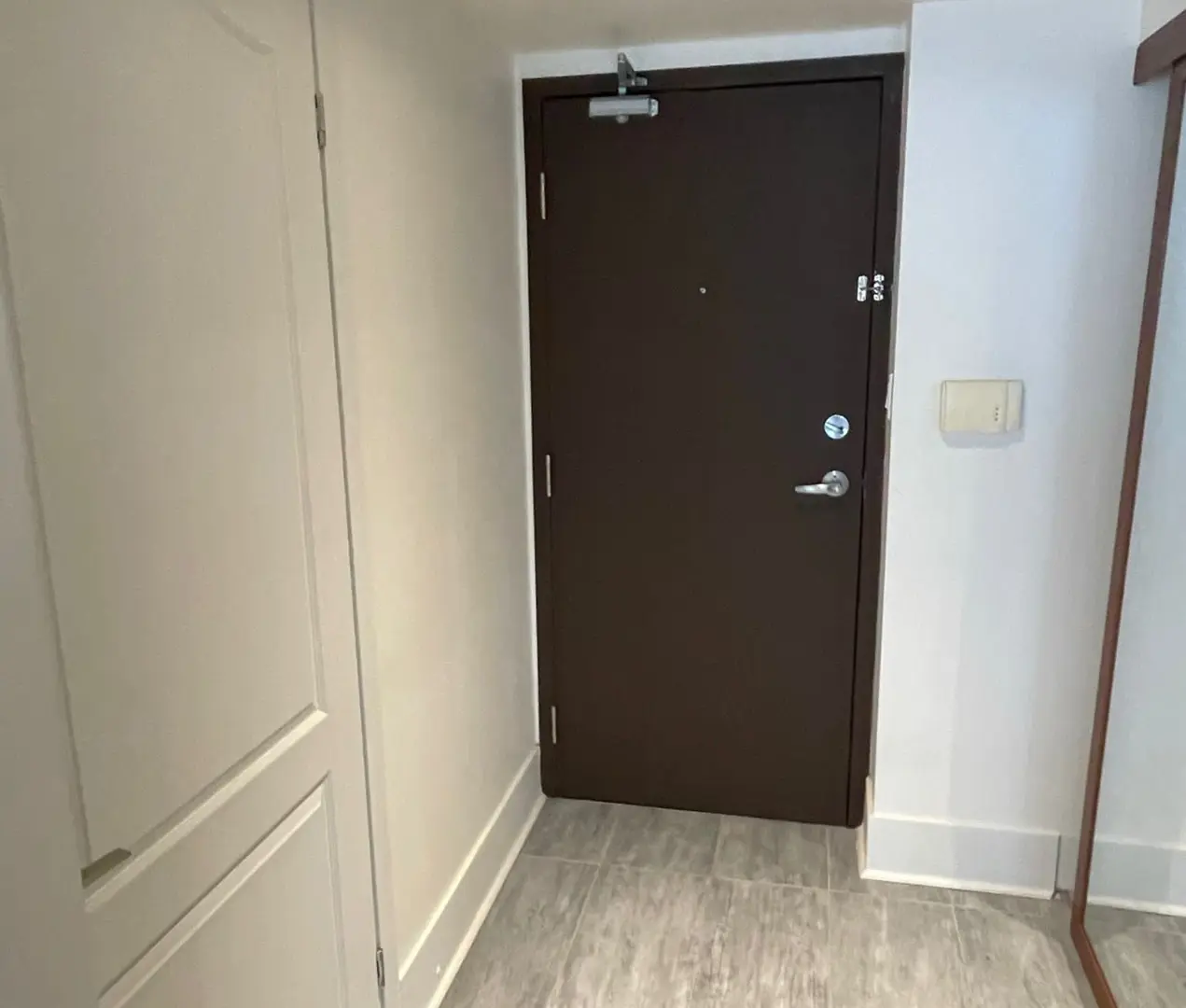
This is the trade I live in most days. The defining constraint is that you are in the house while we work. So the job is half painting and half respect for the home: moving and covering furniture, masking floors, keeping dust down, cleaning up each day, and cutting clean lines around the trim and details an older Toronto home is full of. A custom home painter asks what colours, what sheens, what rooms, and what your week looks like before quoting.
A residential painter who knows what they are doing optimizes for the finish you'll look at for the next decade, in critical light, from your couch. That is careful prep, real primer where the surface needs it, two coats, and cut-in craft. None of that is fast. It isn't supposed to be (Chad Caglak, HomePaintersPro Toronto, 2026).
Pricing follows the model. Custom home work is priced per project on quality and scope, not by raw square footage, because the cost is in the prep, the detail, and the care, not the open wall area. For how those numbers land, see our cost to paint a house in Toronto breakdown.
The commercial painter, explained
A commercial painter works on offices, retail, warehouses, and condo common areas, and optimizes for speed, scale, and scheduling around a running business. Large crews, spray equipment, durable spec-driven coatings, and after-hours or weekend access are the norm. Ontario's roughly 1.1 million businesses (Statistics Canada, 2023) all occupy painted space, and keeping that space open during the repaint is what the client is really paying for.
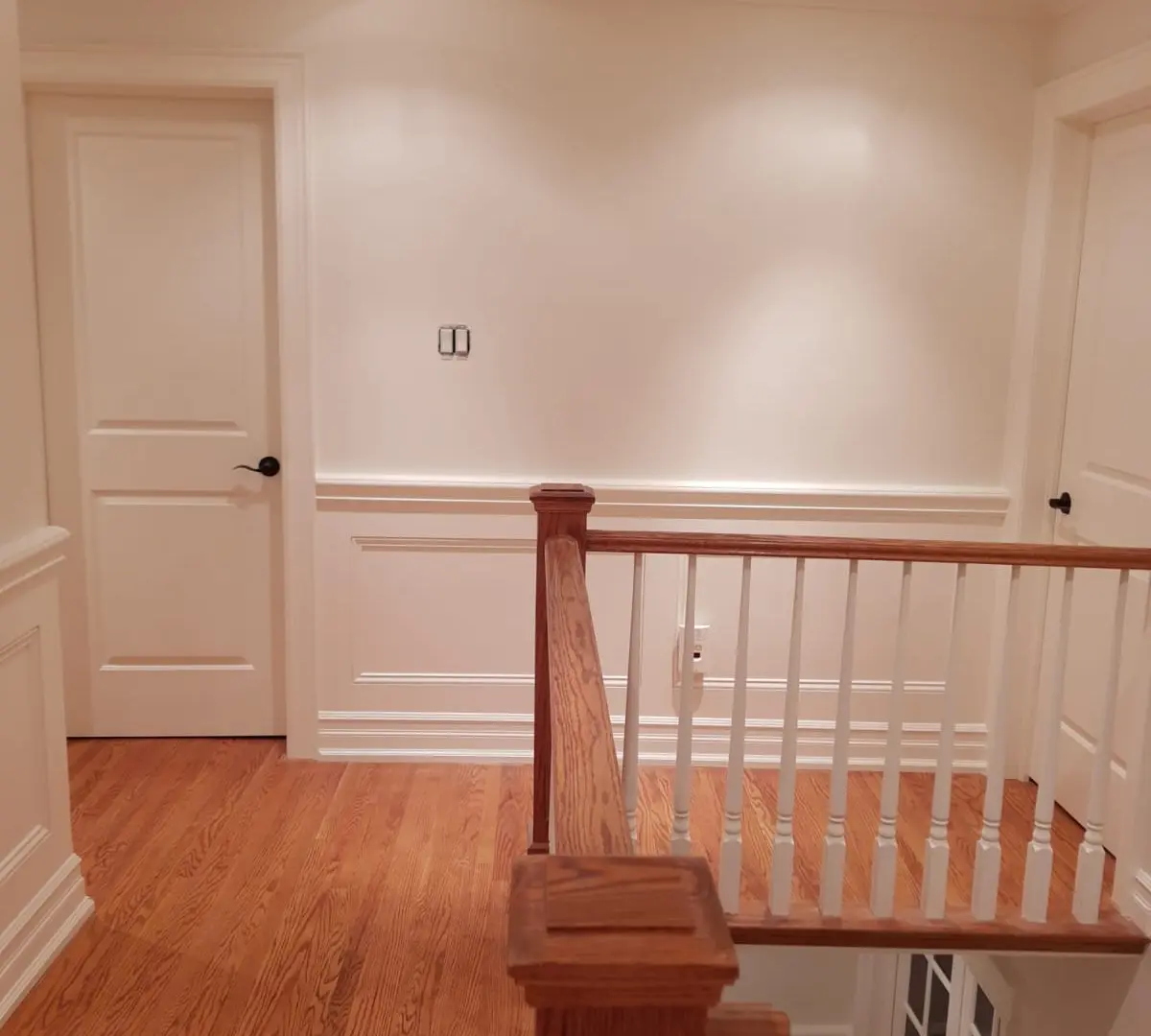
The constraint flips here. In a home, the priority is the finish. In commercial work, the priority is the schedule and the scale, because a closed business loses money every hour. So commercial crews work nights and weekends, run big teams to cover ground fast, and spray large open surfaces instead of brushing and rolling them. The finish standard is durable and uniform, not heirloom-detailed.
Commercial work also lives by spec. The coating, the prep, the dry-film thickness, fire and code requirements, and site safety rules are often written into a contract before a brush moves. That is a different muscle than residential. A commercial painter reads a spec sheet the way a residential painter reads a room.
Pricing is per square foot or by contract, built around volume and schedule. That per-foot number can look cheap next to a residential quote, but it assumes commercial-style open surfaces and access. We run that side of the business too, see our commercial painting service. Condo corridors and lobbies sit right on the line, which is why we treat condo painting as its own specialty.
What is a rental turnover painter?
A rental turnover painter repaints units in the gap between tenants, and optimizes for fast turnaround and low cost. Usually a single landlord-spec colour, minimal prep, and a quick recoat so the unit re-lists fast. Renters make up roughly a third of Canadian households (Statistics Canada, 2021 Census), and every one of those units gets repainted on turnover, often in a hurry.
This is the model most people don't know exists as its own thing, and it explains a lot of surprisingly cheap quotes. Turnover painting is built around one number: days the unit sits empty. Every empty day costs the landlord rent. So the work strips down to what makes a unit rent-ready and nothing more. One flat off-white colour across everything. Light prep. Quick coats. Re-list.
Be straight about what that is. The corners a turnover crew cuts aren't a flaw in the model. They are the model. For a budget rental on a deadline, minimal prep and a fast single colour can be the right economic call. The owner is buying clean and rentable, not heirloom finish, and the price reflects it. I respect good turnover painters. They're fast and disciplined at exactly what they do.
The trouble is purely a matching problem. Those same habits, minimal prep, thin coats, move fast, one colour, are wrong for a home you live in and look at every day. More on that mismatch below. For the tenant side of unit condition, see our Toronto tenant's guide to drywall repair.
The three types of painters, compared side by side
The three types diverge most on prep depth, finish standard, speed, scheduling, and pricing model. Custom home work runs deepest on prep and finish and slowest on speed. Commercial runs fastest at scale on a flexible after-hours schedule. Turnover runs cheapest and quickest with the lightest prep. Choosing well means matching those traits to your actual project, not chasing the lowest line on a quote.
| Trait | Custom home / residential | Commercial | Rental turnover |
|---|---|---|---|
| Finish standard | Highest, pleases a picky owner | Good enough to pass spec | Clean enough to rent |
| Prep depth | Deep (repair, prime, sand) | Spec-driven | Minimal |
| Coats | Two over proper prep | Two, per spec | Often one, sometimes two |
| Speed | Slow and careful | Fast at scale | Fastest |
| Scheduling | Around your daily life | After-hours / weekends | Tight empty-unit window |
| Crew size | Small | Large | Small and quick |
| Pricing model | Per project, on quality | Per sq ft / by contract | Cheap flat per unit |
| Best-fit project | Owner-occupied homes | Offices, retail, condo common areas | Rentals between tenants |
Notice there's no "best" column. Each type wins its own job and loses the other two. So a single price comparison across three different painter types tells you almost nothing on its own.
Each type paints to a different definition of "done"
The real gap between the three types isn't the brush, it's who judges the finished wall and how picky they are. That decides how high the bar sits, and it's the thing homeowners feel but can't name when a cheap job looks "off." The standard genuinely drops from one type to the next, by design, not by laziness.
A custom home painter paints to please you, the owner, studying the wall in raking light from your couch for the next ten years. That's the pickiest judge in painting. Straight cut lines, even sheen, no roller texture, no missed spots. If you'd notice it, it isn't done yet.
A commercial painter paints to pass. The judge is a spec sheet and a property manager's walkthrough, and the bar is uniform, durable, and signed off. It has to look right from standing height across a big room, not survive a magnifying glass on the trim. On a 40,000 sq ft job, good enough to pass is the correct goal, not a knock.
A turnover painter paints to look clean and rent. The judge is a prospective tenant on a five-minute walk-through of an empty unit. If the walls read fresh and bright, it's done. Nobody checks cut lines at a rental showing. Clean enough to lease is the whole bar, and the price reflects it.
So why does this matter when you're collecting quotes? Because each bar fits its own job, and the only real mistake is buying the clean-and-rent bar for a home where you'll be the picky judge every single day.
How do you tell which type of painter you need?
Start with the setting, not the price. The space you're painting and who's using it during the job decide the type of painter you need, and the right answer is rarely the cheapest quote. An owner-occupied home wants a residential painter. A running business wants a commercial crew. A rental between tenants wants a turnover painter. Get the setting right and the rest follows.
Run your job through three quick questions.
Who is in the space while we paint? If it's you and your family in a home you own, you want a custom home painter who works around your life and protects your stuff. If it's a business that has to keep operating, you want a commercial crew that works after-hours. If the unit is empty between tenants, turnover work fits.
What matters more, the finish or the schedule? If you'll be staring at these walls for ten years, finish wins, hire residential. If the priority is reopening a business or re-listing a rental fast, schedule wins, hire commercial or turnover.
How big and how open is the surface? A detailed, furnished home is slow cut-in work, that's residential. A 40,000 sq ft open warehouse or a high-rise corridor is a crew-and-spray job, that's commercial. Match the operation to the square footage.
For the broader hiring checklist, see questions to ask before hiring a painter, and for unit-turnaround timing, our one-day condo painting guide.
What goes wrong when you hire the wrong type?
The wrong type technically paints your job, then fails it for the setting. The two classic mismatches are a turnover crew on a custom home and a solo residential painter on a large commercial job. Both leave you paying twice: once for the bad job, once to fix it. After 20 years, this is the single most common avoidable mistake I see homeowners and property owners make.
Picture a turnover crew on a custom home repaint. They bring the habits that make rentals profitable: skip the prep, one colour everywhere, thin or single coats, move fast. In a rental that's fine. In your living room it shows up within a year as flashing, visible patches, sloppy cut lines, roller texture, and paint on your baseboards and hardwood. The crew did exactly what they're trained to do. It was just the wrong training for your job.
To be clear, this isn't good painters versus bad ones. Skill varies in every lane, and some turnover painters are genuinely excellent at their own work. The issue is habit. A painter who turns units every day builds muscle memory for speed, and that muscle memory doesn't switch off when they walk into a home you live in. We see the same tells time after time: unsanded patches you can feel with your hand, dried drips down the trim, and thick roller lines standing proud where the paint went on fast and heavy. None of it reads on a quick rental showing. All of it reads in your living room at golden hour.
Now flip it. A solo residential painter takes on a 40,000 sq ft commercial space because the per-foot math looked good. They don't have the crew to hit the tight after-hours window, the lift experience for the high open walls, or the spray setup to cover that ground. The schedule blows, the business stays disrupted, and the budget runs over. Great painter, wrong job. Scale is its own skill.
What I see on call-backs: The most common repaint-the-whole-thing job I get isn't a hard surface or an exotic colour. It's a homeowner who hired on price alone and got a turnover-grade job in a home they live in. The fix is always more expensive than hiring the right type the first time, because now I'm undoing thin coats and bad cut lines before I even start painting.
No type of painter is the bad guy. Fit is what decides the outcome. For more on judging quality before it fails, see how to fix a bad paint job and the truth about painting warranties.
Does the type of painter change how spray, roll, and brush get used?
Yes, application method tracks the type as much as the surface does. Commercial work leans heavily on spray for speed across big open areas. Custom home work leans on brush-and-roll for control around detail and occupied rooms. Turnover work uses whatever is fastest for an empty unit, often spray on a vacant space, roll where masking would cost time. The method is a clue to the model.
This is why a homeowner sometimes gets a quote built around spraying their whole interior and it feels off. Spray is brilliant in an empty commercial shell. In a furnished, occupied home it means masking everything for hours to save rolling time, and it's usually the wrong call. A custom home painter reaches for spray selectively, on cabinets, trim, or empty rooms, and brushes and rolls the rest for control.
A turnover painter in an empty unit will often spray the whole thing, because there's nothing to mask and speed is the goal. Same tool, different logic, driven entirely by the model the painter runs. For the full breakdown of when each method wins, see our spray vs roll vs brush guide and our dedicated spray painting service.
The paint matters less than the painter and the prep
The paint tier matters less than the painter and the prep, across all three types. A skilled custom painter gets a better result from a mid-tier paint than a rushed crew gets from a premium one. Two coats over proper prep beats one coat of expensive paint every time, and no paint, at any price, covers a real repaint in a single coat over builder flat or bare repairs.
One thing worth knowing, since it cuts across all three types: "paint-and-primer-in-one" only spot-covers minor patches on an already-painted surface. New drywall, bare wood, stains, and big repairs still need a real primer, like Benjamin Moore Fresh Start or Zinsser BIN (Rust-Oleum, 2025). A custom crew primes those properly. A turnover crew often skips it. That skipped primer is where a cheap job starts failing.
So when you compare painters, don't get anchored on the paint brand on the quote. Ask about the prep and the number of coats. That tells you far more about how the job will age than the label on the can. Twenty years in, prep and craft decide the outcome more than the product. For the line-by-line paint comparison, see Aura vs Regal vs Ben vs Ultra Spec.
One standard, whatever the job
When we paint, we paint for quality. House, condo, or commercial, the standard doesn't drop with the job. We treat every place we work like it's our own home, because you're the one who has to live with the wall long after we've packed up the truck.
That means one bar across all three lanes, the picky-owner bar. We don't keep a fast turnover standard in one pocket and a careful one in the other. The prep gets done, the patches get sanded flush, the cut lines stay clean, and it gets two coats over proper prep. Is that slower? Yes. We're fine with that.
Twenty years has taught me one thing about that choice. When the market slows and suddenly every painter in the city is free, we still get the calls. Not because we're the cheapest, we never are. It's because the last homeowner we did right by hands our number to the next one. Quality is what keeps the phone ringing when quantity dries up. That bet has paid out every time. Quality beats quantity.
Get the right type of painter for your Toronto job
We run all three sides of this: custom home and residential, commercial, and condo and unit work, so I'll tell you straight which one your job needs, even when it isn't us. A home you live in gets the careful, occupied-home treatment: real prep, protected floors and furniture, primer where it's needed, and two coats. A commercial space gets the crew, the schedule, and the spec it requires.
Get your free 24-hour Toronto painting quote or call (416) 875-8706. Fixed CAD pricing, HST disclosed, and an honest read on which type of work your project actually is.
For homes, start with our interior painting and house painting pages. For business spaces, see commercial painting.
About the author
Chad Caglak is co-owner of HomePaintersPro Toronto and a 20-year working painter. He's run custom home repaints, commercial after-hours jobs, and condo and unit turnovers across the city, and writes the craft-and-pricing content here so Toronto homeowners and property owners can hire the right type of painter with real numbers instead of a guess. Read more in the Toronto painter craft hub or the questions to ask before hiring a painter guide.
Frequently Asked Questions
Three types cover most of the market. Custom home and residential painters work in lived-in houses and optimize for finish quality, careful prep, and trust around your furniture and family. Commercial painters handle offices, retail, warehouses, and condo common areas, optimizing for speed, scale, durability, and scheduling around a running business. Rental turnover painters repaint units fast between tenants to a rent-ready standard at the lowest cost. They share a brush, but the skill sets and pricing logic are genuinely different.
Residential painters work small and careful, one home at a time, around your life and belongings, with finish quality as the goal. Commercial painters work big and fast, often after-hours or on weekends so a business can keep running, with large crews, spray equipment, and spec or code compliance driving the job. Residential is priced per project on quality. Commercial is priced per square foot or by contract on schedule and scale. A great residential painter can be the wrong fit for a 40,000 sq ft warehouse, and the reverse is just as true.
A rental turnover painter repaints rental units in the gap between one tenant moving out and the next moving in. The job optimizes for speed and low cost, usually a single landlord-spec colour, minimal prep, and a fast recoat so the unit can re-list quickly. It is rent-ready work, not custom-finish work. That is fine for its purpose. The problem starts when a turnover crew gets hired for a custom home repaint and brings the same minimal-prep, one-colour, move-fast habits into a job that needs the opposite.
For an owner-occupied home you live in, you want a custom home or residential painter. That is the crew built for careful prep, colour consultation, protecting your floors and furniture, real cut-in craft, and two coats over proper prep. If you are a landlord turning a unit between tenants on a budget and a deadline, a turnover painter fits. If you own or manage an office, retail space, or condo common area, you want a commercial crew. Match the painter to the job, not just to the lowest quote.
Per square foot, often yes, because commercial work is high-volume and priced for scale, with big open surfaces and spray application that move fast. But that price assumes a commercial-style surface and schedule. Hire a commercial crew for a detailed, occupied custom home and the per-foot logic breaks down, because a lived-in house is slow cut-in work around trim, furniture, and fixtures, not fast open footage. Cheaper per foot does not mean cheaper or better for your specific job. The surface and setting decide the real cost.
Sometimes, on a small commercial job, like a single office suite or a boutique storefront. But a solo or small residential crew on a large commercial project usually struggles. They lack the crew size to hit a tight after-hours window, the spray gear and lift experience for big open spaces, and familiarity with commercial specs and site rules. A 40,000 sq ft job is a scheduling and logistics problem as much as a painting one. That is a different operation, not just more square footage.
The mismatch shows up in the finish and the schedule. A turnover crew on a custom home brings minimal-prep, move-fast habits to a job that needs slow craft, so you get thin coats, sloppy cut lines, and paint on your hardwood. A residential solo painter on a big commercial job blows the schedule and the budget because the work needs a crew, lifts, and spray. Both jobs technically get painted. Neither gets painted right for its setting, and you usually pay twice.
By design, turnover work trims the things a custom job would never skip, and that is the trade-off you are paying for. Minimal prep, one flat landlord colour, thin or single coats in spots, and quick recoats over whatever was there. For a low-rent unit on a deadline, that math can make sense. It becomes a problem when the same shortcuts land in a home you actually live in, where the lack of prep and the thin coverage show up within a year as peeling, flashing, and visible patches.
Read the quote and listen to the questions. A custom home painter asks about colours, sheens, your timeline around the family, and writes prep into the scope. A commercial painter talks square footage, after-hours access, crew size, and spec. A turnover painter quotes fast, cheap, and light on prep, often a flat per-unit number. None of these is bad. They are built for different jobs. The red flag is a turnover-style quote on a custom home, or a single residential painter promising a huge commercial space on a tight deadline.
No. Price tells you which model the painter runs, not whether they are good at it. A skilled turnover painter doing rent-ready work cheaply is the right call for a rental on a deadline. A premium custom crew on that same rental is overspend. The goal is fit. After 20 years I will say the same thing I tell every homeowner: prep and craft decide how a paint job ages far more than the paint or the price, so match the right type of painter to the job and judge them on their prep.