
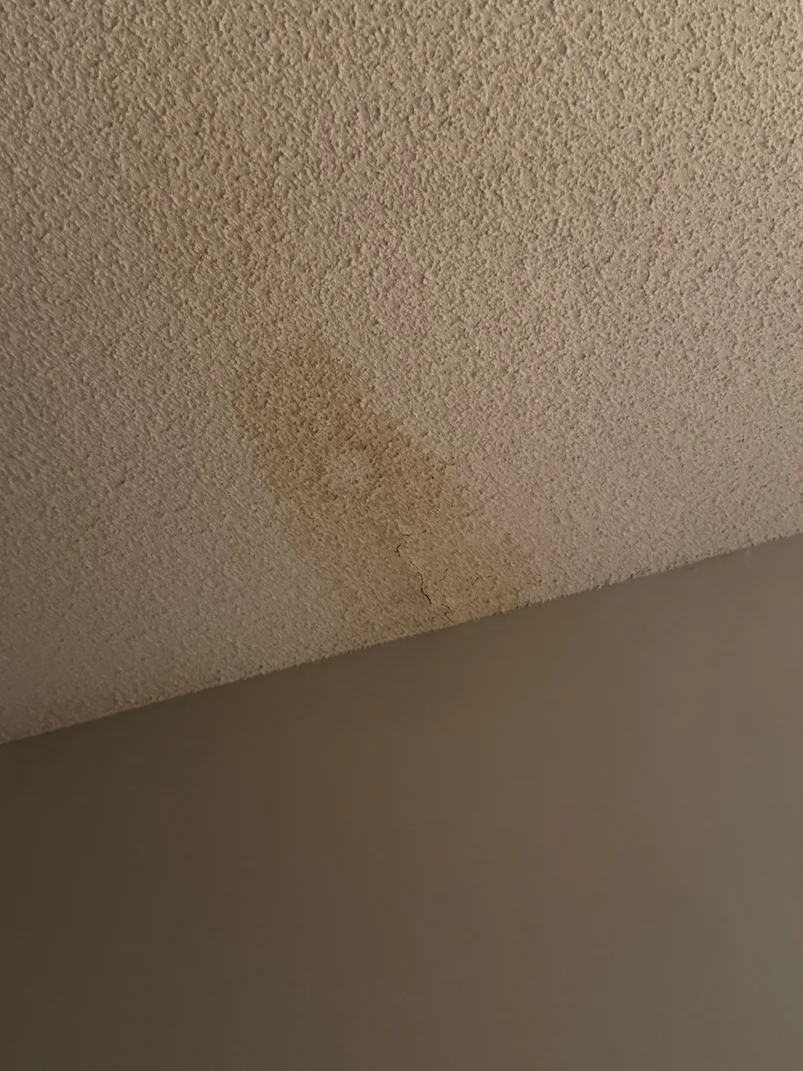




Should you repair or replace a stained popcorn ceiling?
A dry, stable, stained popcorn ceiling can be spot-sealed with a shellac stain blocker and repainted, but sagging or flaking texture means the drywall is compromised and that section needs cutting out, not painting. First fix the leak: Health Canada says you control moisture damage by removing the source, not covering it (Health Canada, 2024).
Key Takeaways
- A water stain means water got in, so fix the leak or moisture source first, before any ceiling work
- Health Canada is clear: control moisture and mould by removing the source, not by painting over it (Health Canada, 2024)
- Dry, firm, stained popcorn: spot-seal with a shellac stain blocker, then repaint in two coats
- Sagging, soft, or flaking popcorn: the drywall has failed, cut that section out and replace it
- Never roll waterborne primer on raw popcorn, the moisture pulls the texture off; spray it or use aerosol shellac
- Pre-1990 Toronto popcorn may contain asbestos, test before you scrape, sand, or cut it
- Painting over intact popcorn is generally fine; disturbing it is the risk
I'm Chad Caglak, 20 years of interior painting Toronto work on ceilings and walls, and the stained popcorn ceiling is one of the most common calls I get. Someone sees a brown halo spreading overhead and assumes it's a paint job. Sometimes it is. Often it isn't.
Here's the thing people get backwards. A water stain is not the problem. It's the receipt. Water got in somewhere, left its mark, and the question is whether the ceiling survived the trip. That's the call we're really making here: repair the stain, or replace the substrate.
For the general ceiling method behind all of this, see how to paint a ceiling properly.
Why do you have to fix the leak before touching the ceiling?
A stain is evidence that water entered from somewhere, and until that source is gone, anything you do to the ceiling is temporary. Health Canada's guidance on moisture and mould is blunt: you manage it by finding and removing the water source, then drying the area, not by sealing over it (Health Canada, 2024).
So before I quote a stained ceiling, I want to know where the water came from. A roof leak. A failed tub seal or shower pan above. A burst or weeping supply line. Condensation from a bathroom fan venting into the attic instead of outside. Ice damming over a Toronto winter. Each one leaves the same brown halo, and each one will keep feeding it if you ignore it.
Health Canada advises homeowners to find and remove the moisture source first, then dry the affected materials fully, before any repair or repainting, because covering an active leak traps moisture and risks hidden mould growth in the cavity above the ceiling (Health Canada, 2024).
[PERSONAL EXPERIENCE] I've sealed and painted a stain for a homeowner who swore the leak was old and fixed, only to get a call six weeks later with the brown halo back and bigger. The roof flashing was still open. We wasted a day and a can of shellac because nobody checked the source. Now I won't seal a ceiling until I'm satisfied the water is actually stopped.
If your stain keeps coming back through fresh paint, that's the leak talking. See why a water stain keeps bleeding through ceiling paint.
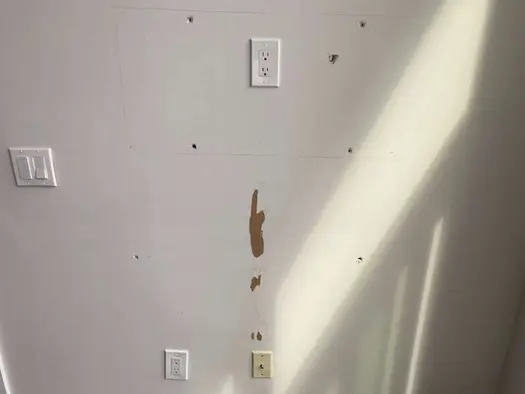
The repair-or-replace decision flow for a stained popcorn ceiling
The deciding factor is the condition of the substrate, not the colour of the stain. A dry, firm ceiling that holds its texture is a seal-and-paint job. A soft, sagging, or shedding ceiling is a drywall job, because waterlogged gypsum loses its bond to the paper face and cannot be restored by coating it (Health Canada, 2024).
Press the area gently with your fingertips. If it's firm and dry and the popcorn stays put, you're in repair territory. If it gives, feels spongy, sags, or rains texture flakes when you touch it, the drywall behind it has failed and that section comes out. No coating brings strength back to wet, crumbling gypsum.
[UNIQUE INSIGHT] Most homeowners fixate on how dark the stain is, as if a deeper brown means worse damage. It doesn't, really. A light stain over saturated, sagging drywall is a replace job, while a dark old stain over bone-dry firm texture is just a paint job. Touch decides, not colour. The ceiling that scares you on sight is often the easy one, and the faint stain that "barely shows" can be hiding rotten gypsum.
Can you paint over a dry, stained popcorn ceiling?
Yes, when the texture is dry and stable, but only after you seal the stain with a dedicated blocker. A brown water stain carries tannins and minerals that dissolve into waterborne paint and bleed back through within days, even under two coats. Shellac-based primers lock those stains down permanently, which ordinary ceiling paint and self-priming products cannot do (Rust-Oleum, 2025).
For a dry, stable, stained popcorn ceiling, the correct repair is to spot-seal the discoloured area with a shellac stain blocker such as Zinsser BIN, then repaint, because shellac permanently locks water stains, smoke, and rust that bleed through waterborne ceiling paint and paint-and-primer-in-one products within days (Rust-Oleum, 2025).
Don't trust a paint-and-primer-in-one here. Those spot-cover minor blemishes on sound surfaces, nothing more. A real water stain needs a real shellac or oil stain blocker. I've watched homeowners roll two coats of premium ceiling paint over a stain and call me a week later when the brown ghost came back grinning.
One narrow exception on surface mildew. If the ceiling has tested clear for asbestos, the texture is dry and intact, and what you're seeing is light surface mildew discolouration rather than a structural problem, a light mist of diluted household bleach can treat that surface staining before you shellac. The word that matters is mist. Never soak raw popcorn, the moisture pulls the texture off the drywall the same way a wet roller does, and a heavy bleach wash carries the same risk. For anything past surface discolouration, this stays inside the Health Canada rule from earlier: you control mould and moisture damage by removing the source, not by spraying or coating over it (Health Canada, 2024).
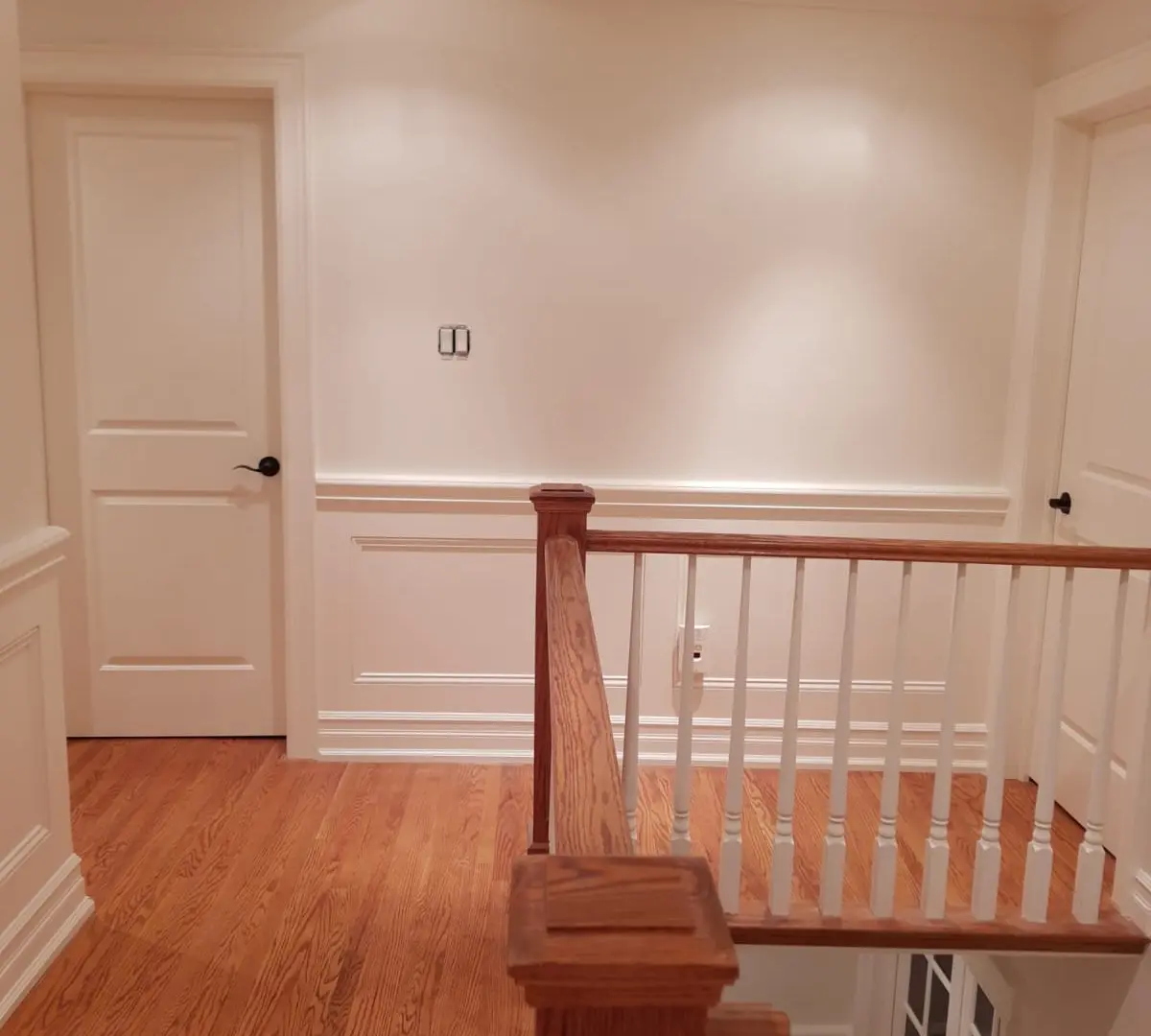
Why you can't roll primer on raw popcorn
Here's the trap that gets DIYers. You buy a can of stain blocker, load a roller, and the first pass peels popcorn off the ceiling in wet clumps. The water in the primer softens the texture compound, and the roller nap grabs it. Now you've got bald patches on top of the stain.
On raw, unpainted popcorn you spray the stain blocker or use an aerosol shellac, so nothing touches and drags the surface. Aerosol Zinsser BIN sprayed onto a stain, then a sprayed topcoat, is the clean way through. If the popcorn was painted at some point already, a gentle roll can survive, but spraying is still safer. When in doubt, spray.
For how this fits the broader ceiling workflow, see painting a Toronto condo ceiling.
When does the ceiling need cutting out and replacing?
When the texture sags, feels soft, or sheds, the drywall has lost its structural bond and coating it solves nothing. A popcorn ceiling is a thin texture compound stuck to paper-faced gypsum board. Once water saturates that assembly, the paper swells, the gypsum core softens, and the bond fails. Health Canada advises removing and replacing water-damaged porous materials that can't be dried and cleaned, rather than sealing them in place (Health Canada, 2024).
A sagging popcorn ceiling means the gypsum substrate behind the texture has absorbed water and lost its bond to the paper face, so the failed section must be cut out and the drywall replaced, not painted, because no coating restores strength to softened gypsum and trapped moisture risks mould in the cavity above (Health Canada, 2024).
What replacement actually looks like: we cut back to firm, dry drywall and the nearest joists, check the cavity above for wet insulation or mould, let everything dry, then install a new piece of drywall, tape and mud the seams, and re-texture or skim. It's a drywall repair with a paint finish, not a paint job. Trying to paint a sagging ceiling just hides material that keeps dropping.
For the underlying repair, see our water damage repair service, and the deeper dive in why a bathroom ceiling keeps peeling. For every other Toronto paint defect and its fix, see our paint problems hub.
Is it safe to scrape popcorn in a pre-1990 Toronto home?
Not without testing first. Popcorn texture installed from the 1960s through the 1980s frequently contained asbestos, and Canada didn't finalize a comprehensive asbestos ban until 2018 (Health Canada, 2024). Painting over intact popcorn is generally fine because you're not releasing fibres. Scraping, sanding, or cutting it is the dangerous part, and a stained ceiling that needs cut-out work is exactly that kind of disturbance. The testing itself is simpler than people expect: a lab collects a small sample of the texture, runs the analysis, and can return results as fast as the next day, so asbestos testing rarely holds a project up for long (Germ Masters Environmental, 2026).
In pre-1990 Toronto homes, popcorn ceiling texture may contain asbestos, so any repair that disturbs it, scraping, sanding, or cutting out a sagging section, requires a tested sample from an accredited lab first, because intact popcorn is low-risk to paint over but releasing fibres during removal is a recognized health hazard (Health Canada, 2024).
So the asbestos question intersects directly with the repair-or-replace call. If your ceiling is a dry, firm, seal-and-paint job, you're painting over intact texture and the risk is low. If it's a sagging, cut-out-and-replace job in a pre-1990 home, you test before anyone touches it with a knife or sander. Testing runs roughly $250 to $850 CAD, and a positive result means licensed abatement, not a DIY afternoon. The regulatory side, including how many samples Ontario expects and why covering a ceiling is treated differently from removing it, is in our guide to popcorn ceiling removal and asbestos.
The Toronto caveat that catches people: A leak forces the decision. You can't leave a sagging asbestos-era ceiling alone, but you also can't legally or safely scrape it without testing. That's the spot where homeowners try to DIY their way out and end up spreading fibres through the house. If your home predates 1990 and the texture has to come out, test first and hire it out. This is the one corner I never tell a homeowner to cut.
Should you patch-match the popcorn or skim it flat?
After cutting out a failed section, you either re-texture the patch to blend with the existing popcorn or skim the whole ceiling flat. Patch-matching with aerosol popcorn texture is cheaper up front but never a perfect match, the new texture rarely reads identical to decades-old original. Skimming flat costs more now but ends the popcorn problem for good and modernizes the room.
[PERSONAL EXPERIENCE] Nine times out of ten, when a homeowner is already staring at a stained, cut-up popcorn ceiling, they'd rather just be done with the popcorn. A water stain is a good excuse to skim the whole thing flat. You're already paying for drywall work, the room's already covered in plastic, and you walk away with a clean modern ceiling instead of a patched-up textured one. If you genuinely love the popcorn, patch-match. Otherwise, skim.
One more honest point. Painting over intact popcorn, instead of removing it, locks the texture in and makes future removal two to three times more expensive. So if popcorn removal is anywhere on your five-year list, a stained section is the moment to deal with it, not paint over it.
For the full removal scope and pricing, see our popcorn ceiling removal service.
How much does popcorn ceiling water-damage repair cost in Toronto?
A dry stain you only need to seal and repaint runs roughly $250 to $500 CAD plus HST for a spot-seal and ceiling refresh. Cutting out and replacing a failed section, then patch-matching texture or skimming flat, typically runs $600 to $1,500 plus HST depending on size and access. Pre-1990 homes add asbestos testing at $250 to $850, and licensed abatement if the sample comes back positive (Health Canada, 2024).
[ORIGINAL DATA] Across the stained-ceiling jobs we quoted in Toronto over the past two seasons, the split landed roughly two-thirds repair, one-third replace. Most stains, once the leak was fixed and the texture had dried, turned out firm enough to seal and repaint. The replace jobs were almost always the ones the homeowner had ignored for months while the leak kept running. Waiting turns a $400 paint job into a $1,400 drywall job. That's the real cost of putting it off.
The leak repair itself is separate from the ceiling work, and the cavity above is the wildcard. Water travels along joists and lands far from where it entered, so the dry-looking stain in the bedroom can trace back to a problem two rooms over. We always check the source before pricing the finish.
For prepping the surrounding surfaces, see our wall prep checklist.
Get a Toronto popcorn ceiling repair quote
Twenty years of stained, sagging, and flaking Toronto ceilings, including the asbestos-era ones other crews won't touch. Every stained-ceiling job we take starts the same way: confirm the leak is fixed, judge whether the texture is firm enough to seal or failed enough to replace, test before disturbing any pre-1990 popcorn, then shellac-block the stain and spray two clean coats. No one-coat shortcuts, no painting over sagging drywall.
Get your free popcorn ceiling repair quote or call (416) 875-8706. Quotes inside 24 hours, fixed CAD pricing, HST disclosed.
We handle stained and damaged ceilings through our popcorn ceiling removal and water damage repair work, or as part of a full interior painting project.
About the author
Chad Caglak is co-owner of HomePaintersPro Toronto and a 20-year working painter. He's sealed, patched, and replaced more water-stained ceilings than he can count, from CityPlace condos to pre-war homes with asbestos-era texture, and writes the craft-and-pricing content here so Toronto homeowners can decide with real numbers instead of a guess. Read more in how to paint a ceiling properly or the Toronto condo ceiling guide.
Frequently Asked Questions
Yes, if the texture is dry, stable, and the leak is fixed. A brown water stain bleeds straight through ordinary ceiling paint, so you have to seal it first with a shellac or oil stain blocker like Zinsser BIN, then repaint in two coats. The catch on raw popcorn is application. A wet roller drags the texture off the drywall, so spray the primer or use an aerosol shellac instead. Never paint over a ceiling that is still damp, sagging, or crumbling. Stabilize the substrate first.
Water. A popcorn ceiling is a thin texture compound stuck to paper-faced drywall, and once water saturates it the bond to the paper lets go. The paper swells, the gypsum core softens, and the whole section starts to sag or shed in flakes. By the time it sags, the drywall behind it is usually compromised too. That is not a paint problem, it is a substrate problem. Sealing and painting a sagging section just hides failing material that will keep dropping. It needs cutting out and replacing.
Not without testing first if your home was built before 1990. Popcorn texture from the 1960s through the 1980s often contained asbestos, and Canada did not finalize a comprehensive asbestos ban until 2018 (Health Canada, 2024). Painting over intact popcorn is generally fine because you are not releasing fibres. Scraping, sanding, or cutting it out releases dust, and that is the dangerous part. Get a sample tested by an accredited lab before any abrasive work. Testing runs roughly $250 to $850 CAD and is cheap next to the alternative.
A small dry stain you only need to seal and repaint runs roughly $250 to $500 CAD plus HST for a spot-seal and ceiling refresh. Cutting out and replacing a failed section, then patch-matching popcorn or skimming it flat, runs more, often $600 to $1,500 plus HST depending on the size and access. Pre-1990 homes add asbestos testing at $250 to $850, and abatement if positive. The leak repair itself is separate. The wildcard is always how far the water travelled behind the ceiling.