
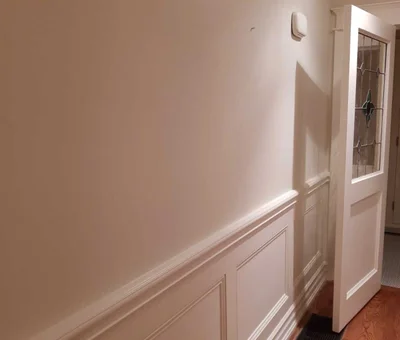




Why does latex peel off oil-based paint in sheets?
Latex peels off oil paint in sheets because there's no mechanical bond between them. Acrylic latex needs a porous or scuffed surface to grip, and a cured oil or alkyd film is hard, slick, and non-porous, so the new coat sits on top instead of locking in. Adhesion failure like this traces to surface and prep problems, not paint defects (Benjamin Moore, 2026). The whole latex coat cures into one continuous film, so when it lets go, it releases as a sheet.
Key Takeaways
- Latex peels off old oil paint because acrylic can't bond to a hard, glossy, non-porous alkyd film. There's no grip.
- It comes off in sheets or strips, not flakes, because the latex cures as one continuous film over a surface it never grabbed.
- Test first: rub a hidden spot with rubbing alcohol or denatured alcohol. Colour on the rag means latex. Clean rag means oil.
- Most original Toronto trim in pre-1990 homes is oil-based. Assume oil until the test proves otherwise.
- The fix is prep, not a better paint: clean, de-gloss and scuff-sand, then a bonding primer or Zinsser BIN shellac, then two coats.
- Adhesion failure is a surface-prep problem, not a paint defect (Benjamin Moore, 2026).
I'm Chad Caglak, 20 years painting Toronto homes, and peeling trim is one of the most satisfying call-backs I take. Not my call-backs. Somebody else's. A homeowner paints their living room trim, it looks great for a year, then the kid drags a toy down the baseboard and a six-inch ribbon of paint lifts off like packing tape. They think they bought bad paint. They didn't. They painted latex over oil and skipped the one step that makes it stick.
This happens most on the original woodwork in older Toronto houses. The Victorians, the wartime semis, the century homes in Riverdale and the Junction. That trim was painted in oil for decades, and oil is murder to recoat if you don't know it's there.
Here's how the failure works, how to test what you've got, and the real fix. For the prep-and-craft thinking behind all of it, read our Toronto painter craft hub.
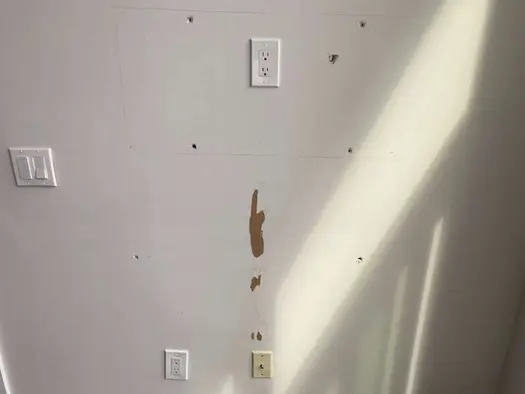
Latex peels off oil-based paint in sheets because acrylic latex has no mechanical bond to a cured, glossy alkyd film. The latex dries into one continuous coat sitting on a slick, non-porous surface, so any stress (heat, humidity, a fingernail, a door rubbing) releases the whole film at once as a sheet or strip rather than small flakes. In my experience this is adhesion failure from missed prep, not a paint defect.
There's a second contributor worth naming. Latex film passes water vapour, while the cured oil under it does not. Vapour moving out from the wall reaches that oil layer and stops, and the moisture that collects behind a film with no real bond adds to the cracking and lifting. The missed mechanical bond is the main cause, but trapped vapour pushing from behind makes a weak bond fail faster.
Where latex-over-oil peeling shows up most in Toronto homes
It shows up first on trim, doors, and original woodwork, because that's where oil paint lived longest. Oil-based (alkyd) enamel was the trade standard for trim and doors until the 1990s because it levelled glass-smooth and dried hard. So in a pre-1990 Toronto home, the base layers on baseboards, casings, doors, and window trim are very often oil. That's the slick surface latex can't grab.
The classic spots I see fail, in order:
- Door edges and door faces. Doors flex, get touched, and rub the jamb. The peel starts at the latch edge and lifts in long strips.
- Baseboards. Vacuum bumps, kid traffic, and floor washing peel the bottom inch right off.
- Window casings and stools. Condensation and sun cycle the surface hard, and the latex lets go at the corners.
- Stair stringers and handrails. High touch, high friction. Handrails are notorious.
- Radiator-adjacent trim. Heat speeds adhesion failure. Trim near a Toronto rad goes early.
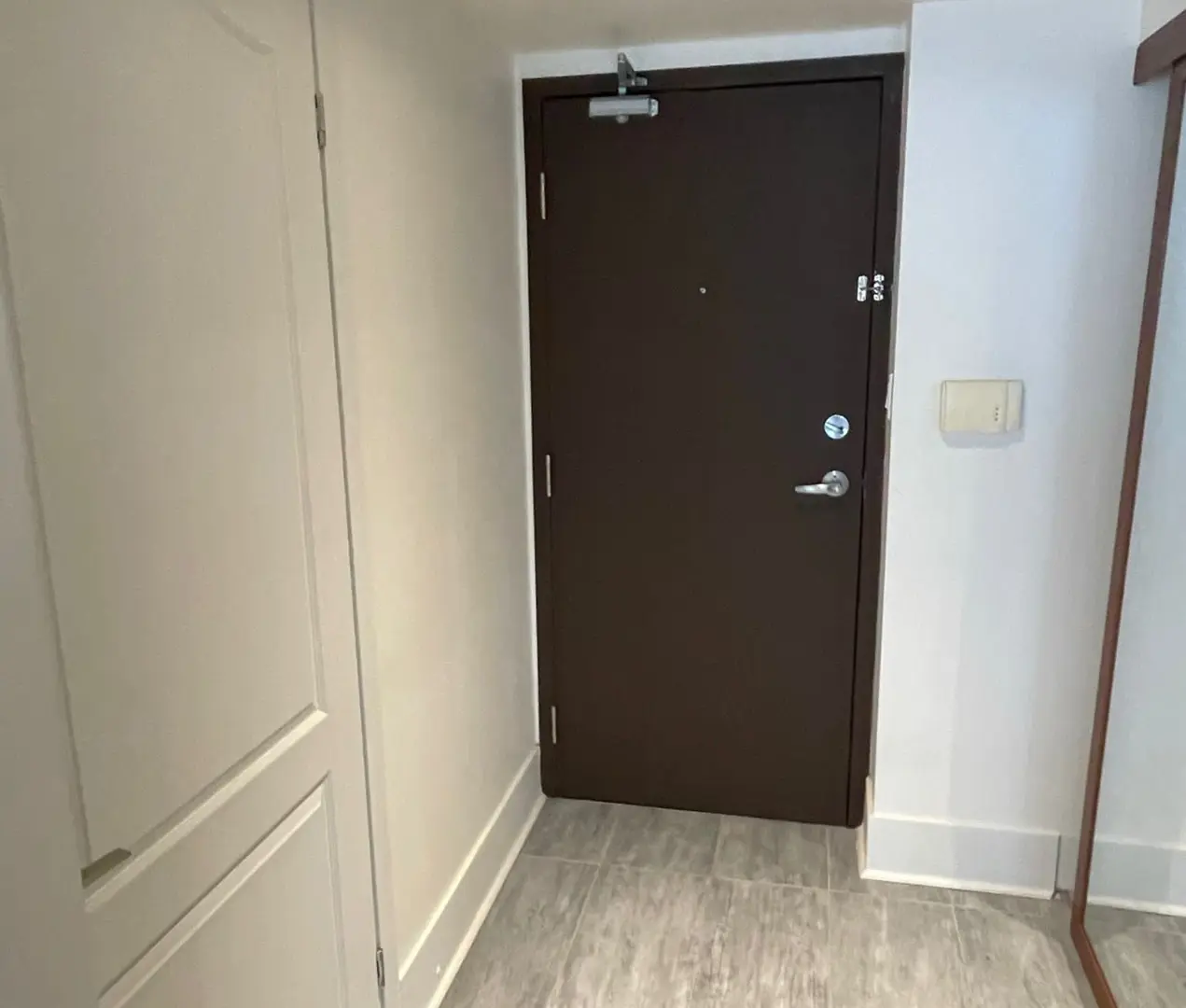
In a pre-1990 Toronto home, latex-over-oil peeling concentrates on trim, doors, and original woodwork, because oil-based alkyd enamel was the standard for those surfaces until the 1990s. Door edges, baseboards, window casings, handrails, and trim near radiators fail first, since heat, humidity, and friction accelerate adhesion failure on a film that never bonded to the slick oil underneath. That is the pattern I see on these jobs year after year.
Want the full trim picture, including pricing? See our trim, baseboard, and door painting cost guide.
How do I test whether the old paint is oil or latex?
Use the rubbing-alcohol test, and do it before you buy paint. Dampen a clean white rag or cotton ball with rubbing alcohol or denatured alcohol, then rub a hidden patch of the old paint hard for about 20 seconds. If colour transfers to the rag, the paint is latex. If the rag stays clean and the paint doesn't soften, it's oil-based or alkyd. This simple solvent test is the standard way painters identify a coating before recoating it.
Latex re-dissolves slightly under alcohol because it stays a touch thermoplastic. Cured oil doesn't, it's chemically set and shrugs the alcohol off. So a clean rag plus a hard, glossy, slightly yellowed surface is your oil signal. A pre-1990 Toronto house? Assume oil on the original trim until the rag says otherwise.
A couple of test tips
Test in a spot that won't show, like the back edge of a door or behind a radiator. And test the actual layer you'll be painting. On old trim you can have latex over oil over older oil, three layers deep. The top layer is what your new paint touches first, but if the top layer is thin or worn through, you're priming for the oil under it too. When in doubt, bond-prime. It costs nothing to be safe and a repaint to be wrong.
For a deeper walkthrough of identifying what you're dealing with, see how to tell if paint is oil or latex.
What's the real fix for painting latex over oil paint?
The real fix is prep, in a fixed order: clean the surface, de-gloss and scuff-sand to kill the shine, then prime with a bonding primer or shellac-based BIN before two coats of latex. In 20 years of fixing peeling trim, almost every failure I've scraped off traced back to skipped prep, not a bad can of paint. Over glossy oil, the primer is the bond. Skip it and the best latex on the market still peels.
Here's the sequence I run on oil trim and doors:
- Clean. Wash off hand grease, dust, and grime. A bonding primer can't grip a greasy or waxy surface, no matter how well you sand. Degreaser or a strong cleaner first, rinse, dry.
- De-gloss and scuff-sand. Dull every glossy face with a liquid deglosser and a scuff-sand (180 to 220 grit on flats, a sanding sponge into the profiles). The goal is zero shine left.
- Bonding or shellac primer. This is the step that makes it stick. Zinsser BIN shellac for the most reliable grip over slick oil, or a dedicated high-adhesion bonding primer after de-glossing.
- Two full coats of trim enamel. Over the primed surface, two coats of a waterborne alkyd or urethane trim enamel, the class built for trim and doors. Benjamin Moore Advance is the one I reach for: it levels close to old oil, dries hard, and takes the daily contact trim sees. No topcoat covers a primed, colour-changed trim run properly in one coat.
The honest part nobody likes: sanding alone is not enough on detailed Toronto trim. You can scuff every flat face and still miss the bead, the cove, and the inside corner of a casing. The latex peels exactly where you missed. So I de-gloss and scuff to give the primer the best possible surface, and then I still prime. Sanding plus a bonding primer is belt and suspenders. Sanding by itself is hope, and hope peels.
Why shellac primer wins over slick oil: Zinsser BIN is a shellac-base primer, and shellac grips hard, glossy, non-porous surfaces that water-based primers slide off. It bites into cured alkyd, dries in minutes, and leaves a slightly toothy surface latex can hold (Rust-Oleum, 2025). It's also a stain and odour blocker, so it earns its place twice. The catch is it stinks while wet and cleans up with ammonia or alcohol, not water. Ventilate, and don't fight it with soap.
For the surface-prep philosophy across every surface, see our wall prep checklist and the glossy oil trim how-to.
Do I need a bonding primer, or can I just sand?
You need the primer. Scuff-sanding helps, but on trim and doors it isn't reliable on its own. Sanding dulls gloss and adds tooth, which improves adhesion, but a hand-sand rarely reaches every profile and edge on Toronto woodwork. Miss a glossy patch and the latex lifts there. The dependable path is to de-gloss and scuff and then prime with a bonding or shellac product. Primer is what guarantees the bond.
Think about what a sand actually does versus what a primer does. Sanding mechanically roughens the top of the oil film. A bonding primer chemically and physically locks to that film and presents a fresh, paint-ready face to your topcoat. One is preparation. The other is the bridge. You want both, and on detailed trim the bridge is the part you can't skip.
The contrarian bit: Plenty of DIYers online will tell you to "just sand it good and paint." On a flat slab door in a dry room, you might get away with it for a while. On profiled century-home trim near a radiator, you won't. The failures I get called to fix are almost always the sand-only jobs. The ones that hold are the ones that primed. I've stopped arguing about it. The peel argues for me.
Not sure whether your job even needs a primer at all? Walk through it in do I need primer.
How is peeling different from blistering and bubbling?
Peeling, blistering, and bubbling are different failures with different causes, and the fix changes with the cause. Peeling over oil is an adhesion problem, the film never bonded. Blistering and bubbling are usually moisture or heat trapped under the film, lifting it from behind. Adhesion and blistering failures both trace to surface conditions and application, not paint quality (Benjamin Moore, 2026). Naming the defect correctly is how you avoid fixing the wrong thing.
Quick field read: peeling lifts in sheets or strips and the back of the paint is clean, you'll see bare oil or bare wood under it. Blisters are domed bubbles that often hold moisture or show a stain when popped. If your "peeling" trim is actually blistering near a leak or a steamy bathroom, no primer fixes that until the moisture source is handled. Diagnose first, then prep.
For the full side-by-side, read paint blistering vs bubbling vs peeling. And remember the bigger truth: the paint product matters far less than the hands and the prep behind it. I've watched premium latex peel off un-primed oil and seen mid-tier latex hold for a decade over a proper bonding primer. Prep and craft decide the outcome, not the can.
For how sheen choice plays into trim durability, see paint finishes explained.
The cost to fix peeling latex-over-oil trim in Toronto
It costs more than a plain recoat, because the prep is the job. Straightforward trim-and-door painting in Toronto runs roughly $3 to $7 CAD per linear foot plus HST, with heavy scraping, stripping, or filling pushing the number up. The labour to scrape failed paint, clean, de-gloss, prime, and lay two finish coats is where the money goes. The peel itself is the cheap part to find. The hours to fix it right are what you're paying for.
Why so much hand work? Failed trim isn't a roller job. It's scrape, sand, spot-prime, fill, sand again, full prime, then two brushed coats, on every casing, base, and door. Strip only what's loose or failed; bond to what's sound. And on pre-1990 woodwork, any scraping or sanding raises a lead-paint question you handle carefully, which is one more reason I'd rather de-gloss and bond over a sound film than strip it down to wood.
My honest take on stripping: Don't strip oil paint just because it's oil. If the film is sound and well-stuck to the wood, you de-gloss it, prime it, and recoat. Stripping is slow, messy, and on old Toronto trim it's a lead-paint problem you don't want to create. Strip what's failed. Bond to what holds. Full stripping is a last resort, never a default. (That's a lesson learned the hard way on a Cabbagetown job years ago, where we stripped trim that would've held fine with a bond coat and burned two days for nothing.)
For the full trim breakdown, see trim, baseboard, and door painting cost.
Get a Toronto trim and repaint quote
Twenty years painting Toronto interiors, and a good chunk of that is fixing peeling latex-over-oil trim in century homes, semis, and lofts. Every job gets the same treatment: test what's underneath, clean it, de-gloss and scuff, bond-prime the oil, then two finish coats that actually stick. No mystery product. Just the prep that makes paint hold.
Get your free Toronto painting quote or call (416) 875-8706. Quotes inside 24 hours, fixed CAD pricing, HST disclosed.
We handle peeling trim as part of a full interior painting project, and pair it with drywall repair and painting where the walls need work too.
About the author
Chad Caglak is co-owner of Home Painters Pro Toronto and a 20-year working painter. He's recoated original oil trim in Riverdale Victorians, Leaside semis, and downtown lofts, and he writes the craft-and-pricing content here so Toronto homeowners can decide with real numbers instead of a guess. Read more from Chad in the Toronto painter craft hub.
Frequently Asked Questions
Run the rubbing-alcohol test. Dampen a white rag or cotton ball with rubbing alcohol or denatured alcohol and rub a hidden spot of the old paint hard for 20 seconds. If colour comes off onto the rag, it''s latex. If the rag stays clean and the paint stays put, it''s oil-based or alkyd. Oil paint also tends to be hard, glossy, slightly yellowed, and brittle. On 100-year-old Toronto trim and doors, assume oil until the test proves otherwise. Test before you buy a drop of paint.
Because there''s no mechanical bond. Latex (acrylic) needs a slightly porous or scuffed surface to grip. A cured oil or alkyd film is hard, slick, and non-porous, so the latex dries on top like a sticker instead of bonding into it. The whole new coat cures into one continuous film, so when it lets go, it releases as a sheet or a long strip, not little flakes. You can often peel a foot of it off a door edge with your fingernail. That sheet peel is the signature of a missed bonding step.
For interior trim and doors, Zinsser BIN shellac-base primer is the most reliable bond over glossy oil ([Rust-Oleum](https://www.rustoleum.com/product-catalog/consumer-brands/zinsser/primers/bin-shellac-base-primer), 2025). It grips slick alkyd that water-based primers struggle with, dries fast, and gives latex a surface it can hold. A dedicated bonding primer (a high-adhesion acrylic or a urethane-modified bonding product) also works well after de-glossing. The primer is what makes the topcoat stick. Skip it over glossy oil and the best paint on the market still peels.
Sanding alone is a gamble, and I don''t recommend it on trim and doors. Scuff-sanding knocks the gloss off and gives latex something to grab, which helps, but a hand-sand rarely reaches every profile, edge, and detail on Toronto woodwork. Miss a glossy spot and the latex peels there. The honest answer: de-gloss and scuff-sand to kill the shine, then still use a bonding or shellac primer. Sanding plus primer is belt and suspenders. Sanding alone is hope.
No, but a lot of it is, especially on original woodwork. Until the 1990s, oil-based (alkyd) enamel was the standard for trim, doors, and windows because it levelled glassy-smooth and dried hard. So in a pre-1990 Toronto home with original trim, assume oil on the base layers. Newer repaints may have latex over that oil, sometimes a few layers deep. That mixed stack is exactly why testing matters: you need to know what the top coat is and what''s under it before you recoat.
It doesn''t always peel immediately, which is what fools people. A clean, lightly worn oil surface can hold a latex coat for a year or two before adhesion fails. Heat, humidity, hands, and door friction speed it up. Trim near radiators, bathroom doors, and high-touch edges go first. The failure is baked in from day one because there''s no real bond. It just takes time, stress, and a humidity cycle or two to show. Toronto''s swing from dry winter furnace air to humid summers is hard on a weak bond.
De-glossing uses a liquid deglosser or a strong cleaner to chemically dull the shine and clean off oils, dirt, and hand grease. Sanding does it mechanically with abrasive. Both kill gloss so primer and paint can grip. On trim with lots of detail I do both: clean and degloss to cut the slick film and grime, then scuff-sand the flat faces. Then bonding primer. Clean first matters, because primer won''t bond to a greasy or waxy surface no matter how well you sand.
Same rule applies, but it''s less common on walls. Most Toronto walls were latex for decades, so wall-on-wall is usually latex over latex. Where you do hit oil on walls is old kitchens, bathrooms, and the occasional heritage room finished in oil enamel. If the rubbing-alcohol test says oil, treat the wall like trim: clean, degloss or scuff, bonding or shellac primer, then two coats of latex. The peel risk is identical. Oil under latex with no primer fails on a wall just like it does on a door.
No, not reliably over glossy oil. Self-priming paints are built to spot-cover and re-coat already-painted, sound, similar surfaces. They are not a bonding primer. Over a slick cured alkyd they have the same adhesion problem as any latex: nothing to grip. For new drywall, bare wood, stains, or recoating oil, you need a real primer, Benjamin Moore Fresh Start, Zinsser BIN, or a dedicated bonding primer. The label sells convenience. The trim sells you out a year later.
It depends on how far the peel has gone and how much trim you have. Stripping or scraping failed paint, de-glossing, priming, and repainting trim and doors properly runs more than a simple recoat because the prep is the job. Expect trim-and-door painting in the $3 to $7 CAD per linear foot range plus HST for straightforward work, more where heavy scraping, stripping, or filling is needed. We scope it on site. The peel itself is the cheap part. The labour to prep it right is what you''re paying for.
Usually not, unless the existing paint is already failing, thick, drippy, or alligatored. If the oil film is sound and well-bonded to the wood, you don''t strip it. You de-gloss it, prime it with a bonding or shellac primer, and recoat. Stripping is messy, slow, and on pre-1990 trim raises a lead-paint question you have to handle carefully. Strip only what''s loose or failed. Bond to what''s sound. Full stripping is a last resort, not a default.