




Quick answer
Foundation parging is a thin Type S mortar coating on the exposed part of your foundation wall. It absorbs the hit from Toronto's 61.9 observed annual freeze-thaw cycles (City of Toronto, Toronto's Current and Future Climate, Appendices, retrieved 2026) so your structural concrete does not. Patch if the cracks are hairline and the loose area is smaller than your hand. Re-parge the wall if the coating is cracking or crumbling in several spots, or hollow, missing sections add up to more than a hand-sized patch. Spot repairs run $300 to $800 CAD plus HST. Full re-parging on a Toronto detached costs $2,500 to $6,500 plus HST. Done properly, it lasts 15 to 25 years.
Your foundation is the most expensive thing on the house to fix. A cracked foundation wall runs $5,000 to $15,000+. Full replacement is $30,000 to $75,000. I've quoted both.
Parging is a fraction of that. That's the math.
Most Toronto owners ignore parging until chunks are on the ground and bare concrete is staring back at them. By then freeze-thaw is already chewing into structural concrete. Every winter you wait, the bill grows.
Reading a foundation is a skill you pick up one failed wall at a time, and after 20 years quoting foundation parging repairs across Toronto I can usually call it from the curb. Here's what parging actually is, how to read the failure signs yourself, real 2026 CAD pricing, the Type S mortar spec we run, and when it's safe to paint over fresh work.
Key Takeaways
- A polymer-modified parging mix or Type S-class mortar over a bonding agent is the standard system, applied in coats of no more than 10 mm (Sakrete Canada, Parging Mix data sheet)
- Toronto averaged 61.9 observed freeze-thaw cycles per year over the 1971 to 2000 baseline (City of Toronto, Toronto's Current and Future Climate, Appendices)
- Spot repairs $300-$800 CAD + HST; full re-parge on a detached $2,500-$6,500 + HST
- Application window is May-October; the mix and the wall need to stay between 5 and 30C from 24 hours before to 48 hours after application
- Painting over fresh parging requires a 28-day cure and a breathable masonry paint
- Spalling, hollow tap, and efflorescence are the three failure signs that need action before next winter
What is foundation parging and why does your Toronto house need it?
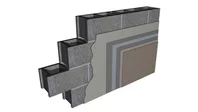
Parging is a 3/8 to 1/2 inch cementitious coat troweled onto the exposed concrete or block above grade. It does two jobs. It's a sacrificial layer against freeze-thaw, and it seals the porous foundation so water stops getting absorbed. On a Toronto house it is basic envelope maintenance, in the same category as clearing eavestroughs and grading soil away from the wall.
One thing parging is not: below-grade waterproofing. It protects the exposed wall above the soil line. Keeping moisture out of the foundation below grade is a separate job, dampproofing or waterproofing, covered under Section 9.13 of the Ontario Building Code. If the basement leaks, re-parging the outside won't fix it.
Toronto is brutal on exposed concrete. The City of Toronto counts 61.9 observed days a year where the temperature crosses 0C in both directions (City of Toronto, Toronto's Current and Future Climate, Appendices, retrieved 2026). Each crossing is one freeze-thaw cycle. Water inside concrete expands about 9% when it freezes and pushes the material apart from the inside out.
Across two decades of exterior painting Toronto quotes in the east end, foundations with intact parging show roughly half the spalling depth of bare-concrete neighbours the same age. The protection is real and it's cheap.
Road salt makes it worse. Salt water penetrates deeper than plain water, and salt crystals growing inside the pores add expansion pressure. Houses near intersections where the salt trucks turn take extra abuse, I've quoted a few on Kingston Road where the wall facing the street was eaten and the back of the house was fine.
Toronto averaged 61.9 observed freeze-thaw cycles per year over the 1971 to 2000 baseline, against a modelled median of 65.5 (City of Toronto, Toronto's Current and Future Climate, Appendices, retrieved 2026). Each cycle pushes water inside exposed foundation concrete to expand by roughly 9%, which is why parging fails earlier here than in a mild coastal market.
What happens to an unprotected foundation in Toronto?
Roughly 1 in 3 pre-1990 Toronto homes I walk shows visible above-grade spalling, from my own 2024 quote logs. The progression is predictable and the cost curve goes steep fast. Catch it in Year 1 to 3 and it's cheap. Let it ride to Year 7+ and you're out of parging work and into structural concrete repair.
Year 1-3: Surface damage. The outer concrete gets rough and pitted. Small flakes break off. This is spalling. Structure is fine. Cheapest stage to fix.
Year 3-7: Deeper erosion. Spalling deepens. Aggregate (the small stones in the mix) shows on the surface. Larger chunks break away. In block foundations, mortar joints between blocks deteriorate. Water now enters the wall in every rain.
Year 7-15: Structural concern. Concrete or block has lost enough cross-section that horizontal cracks may appear. Individual blocks can loosen. You are out of parging territory and into foundation repair, which starts around $5,000 and reaches $15,000+ depending on extent.
Worst one I quoted last year was a Scarborough bungalow. Bare concrete had been exposed for 12 years and a downspout dumped straight against the back corner. The bottom three courses of block were so soft I pushed my finger into the mortar joints. Repair came in at $8,500. Re-parging 12 years earlier would have been around $1,800.
How do you know your parging is failing?
Diagnosis is a 10-minute walk. Do the perimeter of the house in spring. Six signs tell you if it's a spot repair, a full re-parge, or a structural engineer. Failed parging is one of the most common exterior defects I find on a spring walkaround, and it is nearly always cheaper to catch in April than in October.
Cracks. Hairline cracks are normal and patchable. Cracks wider than 1/4 inch, or cracks that grow visibly year over year, may indicate foundation movement. Patch small ones. Have a pro look at the big ones. That same seasonal movement shows up indoors too, and if you see matching hairline cracks reopening on your interior walls and ceilings, our guide on why hairline cracks keep coming back explains the freeze-thaw and settlement link.
Flaking and chipping. Loose parging means the bond to the foundation has failed, usually from water behind it. That section comes off and gets rebuilt from scratch.
Hollow spots. Tap with your knuckle. A hollow sound means water is behind the parging even if the face looks fine. Comes off, gets redone.
Exposed concrete or block. Bare foundation is taking direct freeze-thaw damage. Fix before next winter.
White powder (efflorescence). Mineral salts deposited as water moves through the wall. Means water is getting through and parging is no longer doing its job. Often paired with a grading or drainage problem.
Basement dampness on the matching interior wall. If your basement smells musty and the damp spot is on the same wall where the exterior parging is failing, you have your answer. Check parging first before assuming plumbing.
From the job site: Walk your above-grade foundation once a year, in spring, after the frost is out. Three flags mean fix it before the next freeze-thaw season: spalling faces, sections that sound hollow when you tap them, and efflorescence bleeding white through the coat. Everything else can usually wait a year.
What does foundation parging cost in Toronto in 2026?
Real 2026 CAD numbers from our active Toronto quote book. All figures exclude HST, which adds 13% at the bottom of every Ontario invoice (Canada Revenue Agency, 2025). Price moves with foundation height, access, what's behind the failed parging, and whether we're on ladders or scaffold.
| Service | Cost (CAD, + HST) | Notes |
|---|---|---|
| New parging, per linear foot | $15-$25 | Foundation height and prep dependent |
| Minimum project charge | $500 | Applies to small jobs |
| Spot repair patches | $300-$800 | Per area, size dependent |
| Full re-parge (semi-detached) | $1,500-$5,000 | All four sides |
| Full re-parge (detached) | $2,500-$6,500 | All four sides |
| Parging + masonry paint combo | Add $8-$15/ft | Paint after 28-day cure |
| Stucco finish coat upgrade | Add $6-$12/ft | Harder surface, longer life |
| DIY materials (small patch) | $30-$60 | Hardware store bag + bonding agent |
If you prefer to sanity-check a quote by area instead of linear foot, the GTA market runs roughly $6 to $12 per square foot for a standard coat, and $8 to $18 per square foot when the old coat has to be stripped first.
The biggest swing in any quote is whether the old parging has to come off. Stripping a hollow-bond coat roughly doubles the labour versus patching solid work. If you wait until 60% of the foundation is detached, you're paying for demolition on top of application.
For deeper exterior cost context across the whole envelope, see our exterior house painting cost guide.
What is the right mortar mix for Toronto parging?
The standard is a polymer-modified parging mix or Type S-class mortar, applied over a bonding agent. Pre-blended Canadian mixes take the guesswork out of proportions: Sakrete Parging Mix, from King Packaged Materials, is mixed with about 4 litres of water per 25 kg bag and reaches 12.5 MPa at 28 days (Sakrete Canada, Parging Mix data sheet). That lines up with the commonly cited ASTM C270 minimum of about 12.4 MPa for Type S mortar, against about 5.2 MPa for Type N, and Type S-class strength is the right call for our climate. Strength isn't the whole story, though. On parging, bond and coat thickness decide whether it lasts.
What we actually load into the truck
- Quikrete Polymer Modified Structural Repair or equivalent acrylic-modified parging mix (Quikrete Canada TDS, 2025)
- Sika Latex R or Quikrete Concrete Bonding Adhesive brushed onto the cleaned substrate
- Fibreglass scrim mesh for repairs over a crack or seam
- Type S mortar for full-coverage applications on solid substrates
Polymer-modified bags cost more than plain Type S, but the acrylic bumps bond strength and freeze-thaw resistance enough that we use them on every Toronto exterior. The City of Toronto building code points to the Ontario Building Code for masonry, which in turn defers to CSA A179 for mortar specs (Ontario Building Code, 2024). CSA A179-14 was reaffirmed (R2024) and accepts Portland-limestone and blended hydraulic cements for masonry mortar, so a modern low-carbon bag still meets the standard (CSA Group, 2024).
Application window
May through October is the safe window. Sakrete's data sheet wants the mix and the wall between 5 and 30C for at least 24 hours before and 48 hours after application (Sakrete Canada, Parging Mix data sheet). Below that, hydration slows or stops and the parging cracks off by spring. Acrylic-modified mixes buy a few weeks on warm fall days, but I won't put fresh parging on a Toronto foundation in November without a forecast and a tarp plan locked in.
Sakrete's Parging Mix data sheet sets a 5 to 30C window from 24 hours before to 48 hours after application, a maximum of 10 mm per coat, at least three days of damp curing, and protection from freezing for the first 24 hours (Sakrete Canada, Parging Mix data sheet). Miss the temperature window and hydration stalls, and bond failure follows in the first winter.
Can you DIY a parging patch?
A patch under a couple of square feet is reasonable DIY. Bigger areas, repeat failures in the same spot, or visible substrate damage need a pro. Two things kill DIY patches: a dry substrate (the old wall sucks water out of the fresh mortar before it cures) and going too thick in one pass.
The honest step-by-step
1. Chip out the damage. Cold chisel and hammer. Go back to solid, well-bonded material. Undercut the edges so the patch is wider at the back than the front. This is a mechanical lock that keeps the patch from popping.
2. Clean and dampen. Wire brush the substrate. Spray with water until it's saturated but with no standing water. A dry substrate is the number one reason patches crack. If the old surface is painted or crumbling, fasten galvanized diamond mesh over it first, because parging won't hold to paint or loose material (Sakrete Canada, Parging Mix data sheet).
3. Bonding agent. Brush Sika Latex R or Quikrete Concrete Bonding Adhesive onto the damp substrate while it is still tacky. Skip this step and the patch will not bond.
4. First coat with mesh. Trowel a 1/4 inch base coat into the wet bonding layer. Press hard to force mortar into the substrate pores. Embed fibreglass mesh while the coat is wet. Score the surface so the second coat grips.
5. Wait 24 hours. Mist if it dries fast.
6. Second coat. Dampen, then apply the finish coat to match the surrounding texture. Two thin coats, never one thick one; Sakrete caps each coat at 10 mm. And mix it stiff. Adding extra water to make it easier to spread weakens the mortar and it cracks.
7. Cure 3 to 5 days. Mist twice a day. Cover with plastic in sun or wind. This step is boring and it's the difference between a patch that lasts 15 years and one that lasts 15 weeks.
For exterior cementitious repair beyond parging, our stucco repair guide covers the same prep principles applied to stucco systems. The same crews handle stucco repair and painting when the foundation runs up into a stucco wall above grade.
Should you paint over parging, and with what?
Yes, after 28 days of cure. Masonry paint adds another moisture barrier, buys you 5 to 10 more years of parging life, and hides the colour seams where new patches meet weathered original work. The 28-day window is non-negotiable. Fresh parging needs that long to release its cure moisture. Trap it under paint and the parging fails from the inside.
The right paint system
- Breathable acrylic masonry paint for general use. Lets residual moisture escape after cure.
- Elastomeric coatings for foundations with active hairline cracking, since they bridge small movement.
- Avoid alkyd or oil-based foundation paints, which seal moisture in and accelerate failure.
If you're on a schedule, there's a faster route than waiting the full 28 days. Benjamin Moore's Ultra Spec Masonry High Build Primer is made for high-alkali masonry and can go on once the surface has cured at least 7 days and tests at pH 13 or lower, applied at 10C or warmer (Benjamin Moore). A cheap pH pen settles it. Either way, wash off any efflorescence or chalk first, because paint over salts peels.
If the brick or stucco above the parging is getting done at the same time, sequence matters. Parging cures first, then brick or stucco gets prepped, then the whole wall gets coated in one paint visit. Our brick painting vs staining post covers the above-grade call.
We bundle parging and exterior painting at a discount because the second mobilization is what kills the budget on any small exterior job. Doing both in one window saves the client roughly 15% versus booking them six months apart.
When is the best time of year to parge in Toronto?
May through early October. Parging mix needs the wall and the air at 5C or warmer from the day before application through the first 48 hours to cure properly (Sakrete Canada, Parging Mix data sheet). For full exterior project timing across painting and parging together, our best time to paint exterior Toronto post lays out the Toronto calendar month by month.
What that means in practice:
- May to June: Ideal. Mild temperatures, low humidity, plenty of cure days before any cold snap.
- July to August: Workable, but heat means more aggressive misting to prevent flash drying.
- September to mid-October: Still safe most years. Watch the forecast for the first frost.
- Late October onward: Risky. We'll only quote if there's a stable warm window and we can tarp.
- November to April: Closed for parging in Toronto. Crack sealing with exterior caulk is the only winter move to stop the bleed.
Toronto building permits do not typically require inspection for above-grade parging repair under Ontario Building Code Article 9.20, but parging mix data sheets set a 5C minimum through the first 48 hours and full strength at 28 days (Ontario Building Code Reg 332/12, 2024).
How do you prevent parging damage in the first place?
Even premium parging fails early if the conditions around your foundation work against it. A few maintenance habits drive most of the difference between a 5-year and a 20-year parging job.
Fix your grading. Soil should slope away from the house. The Ontario Building Code requires grading so water doesn't collect at or near the building, and a common rule of thumb is about 6 inches of drop over the first 10 feet. If it slopes toward the foundation, rain pools against the wall and accelerates failure. Most common defect I see, by a wide margin.
Extend downspouts. Discharge well away from the foundation; we aim for at least 4 to 6 feet. The City's downspout rules don't set a distance, but they do require the water to flow away from your foundation and not onto a neighbour's property or a City sidewalk (City of Toronto). A short downspout is the fastest way to destroy parging in one season. I've quoted houses where three sides were perfect and one side was destroyed, and the destroyed side always had a short downspout.
Clear snow off the wall. Piled snow against the foundation means constant moisture all winter. When it melts and refreezes at the wall, the parging takes a beating. Shovel snow a few feet back.
Keep salt off the wall. Salt accelerates concrete deterioration. If you salt your walkway, sweep it away from the foundation in spring.
Inspect every fall. Walk the perimeter in September. Any crack you see now will be worse by April. One freeze-thaw cycle takes a hairline crack to a 1/4 inch gap. Thirty cycles take it to a missing chunk. A $300 crack in October is a $600 repair in April because the damage doubles over winter. If water gets through into the basement, you're suddenly into drywall, mould, and framing on top of parging.
Get your foundation checked before next winter
Walk around your house this spring. If you see cracks, flaking, exposed concrete, or hollow sections, get it fixed before October. Every freeze-thaw cycle compounds the damage, and Toronto hands you more than 60 of them every winter.
We assess foundation parging during any exterior painting quote at no extra charge. I'll tell you what needs repair now, what can wait one season, and what it costs in real CAD.
Call me at (416) 875-8706 or request a free quote. If I miss the call, I get back to you the same day.
About the author
Chad Caglak is co-owner of Home Painters Pro Toronto and a 20-year working painter. He's read and re-parged failing foundations across the east end, from soft-mortar Scarborough bungalows to settled semis in Leaside, and writes the craft-and-pricing content here so Toronto homeowners can catch spalling while it's still a cheap patch instead of a five-figure structural repair. Read more in the guide to why hairline cracks keep coming back or sealing the gap where siding meets foundation.
Frequently Asked Questions
Spot repairs run $300 to $800 CAD plus HST. A full re-parge on a Toronto semi-detached costs $1,500 to $5,000 plus HST. A detached typically runs $2,500 to $6,500 plus HST depending on foundation height and prep. Prices include Type S mortar, bonding agent, and finish work. Heavy demolition or scaffolded heights add cost.
Properly applied parging lasts 15 to 25 years in Toronto. Surface prep, mortar quality, application thickness (two thin coats, not one thick one), and drainage all matter. Parging done without bonding agent or proper prep often fails in 3 to 5 years. Painting with elastomeric or breathable masonry paint after the 28-day cure adds another 5 to 10 years.
Small cosmetic patches up to a couple of square feet are doable for a handy homeowner. Materials cost $30 to $60 from any hardware store. Anything larger, or parging that keeps failing in the same spot, needs a professional. Most DIY patches fail because of poor prep or applying mortar too thick. You need to chip back to solid material and apply in two thin coats.
Both. It hides the rough foundation top, but it also sheds water and shields the block or concrete from freeze-thaw. A bare, cracked foundation takes damage faster than a parged one.