
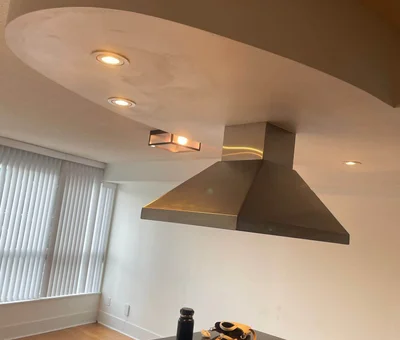




Do I actually need primer, or is that just an upsell?
Sometimes yes, sometimes no, and it depends entirely on the surface under your roller. In 20 years priming Toronto homes, most of the premature paint failures I get called back to fix trace to skipped or wrong surface prep, not the paint itself. Primer is prep. On bare, stained, or slick surfaces it is the difference between a finish that lasts and one that fails. On a sound repaint, you can often skip it.
Key Takeaways
- Primer is about the surface, not the paint can. Bare, stained, repaired, or slick surfaces need real primer; sound same-colour repaints often do not.
- "Paint-and-primer-in-one" only spot-covers minor patches on already-painted walls. It does not seal new drywall, block stains, or bond to gloss.
- New drywall and fresh joint compound flash without primer because they drink paint unevenly. Use PVA or Benjamin Moore Fresh Start.
- Water, smoke, and nicotine stains need a shellac stain blocker like Zinsser BIN. Latex primer re-wets them and they bleed back through.
- Glossy and oil-based surfaces need a bonding primer or a real scuff-sand, or the new coat peels.
- For a drastic colour change, a tinted primer saves you a coat. Two coats over prep, always; no premium paint covers in one.
I'm Chad Caglak, 20 years painting Toronto homes. "Do I need primer over this?" is one of the most common questions I get, and the honest answer annoys people because it's "it depends." It depends on what's under the brush. So instead of a yes or no, here's the whole map: surface by surface, when you prime, when you don't, and which primer to actually buy.
One line is worth remembering before we start. Primer solves a surface problem the topcoat can't. New drywall, a stain, bare wood, old gloss, a big patch, those are surface problems. A premium paint is a better finish, not a fix for any of them. For the prep that goes around all of this, see our complete wall prep checklist.
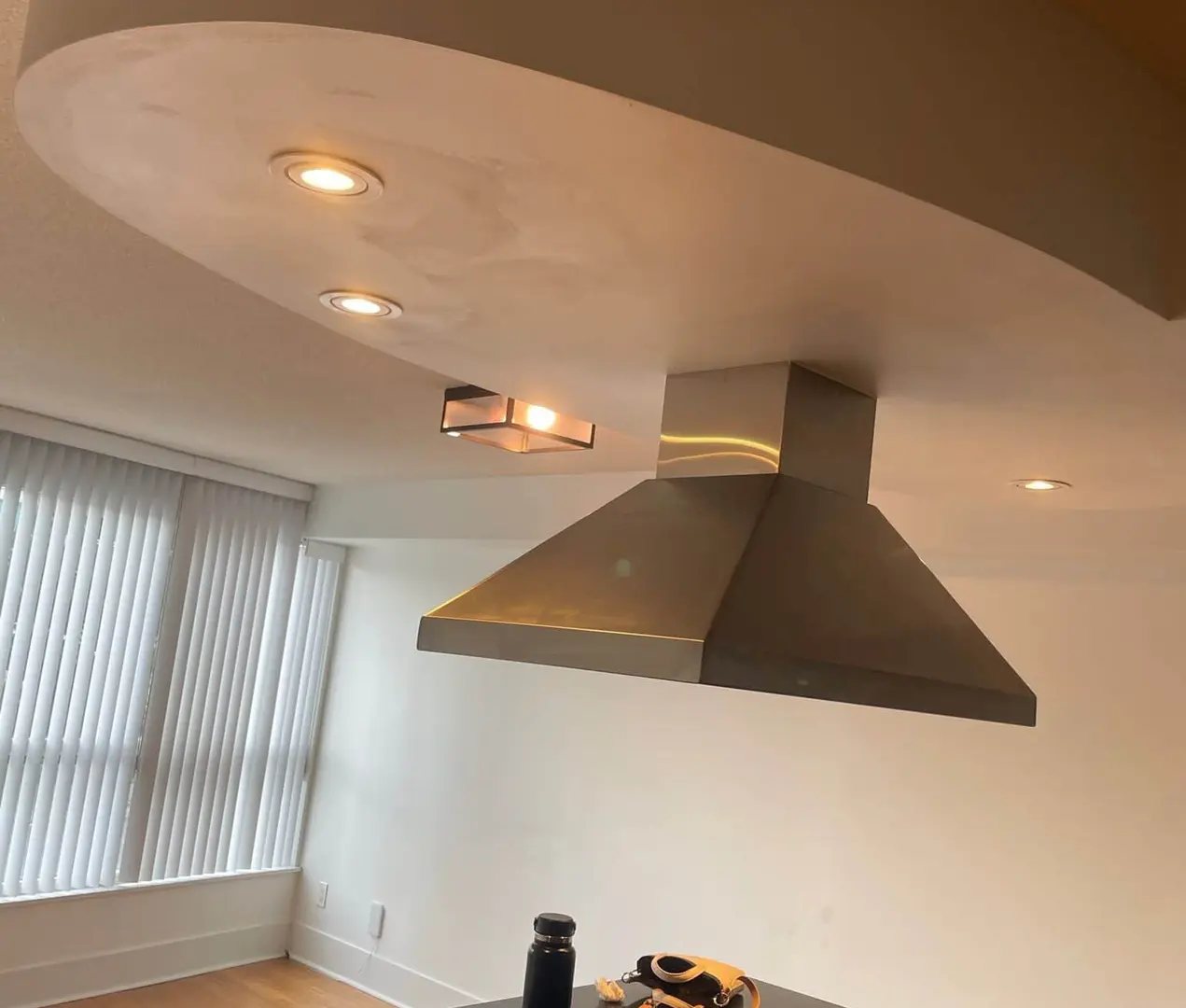
Do I need to prime new drywall and fresh joint compound?
Yes, every time. Bare drywall paper and the fresh joint compound on the seams are porous and drink paint at different rates, so the finish dries dull over the mud and shinier over the paper. That patchwork sheen is called flashing. The industry-standard fix is sealing first: USG's drywall finishing guidance assumes a uniform primer or sealer before finish paint in critical lighting (USG Drywall Finishing Levels, 2024).
Use a PVA drywall primer or a multi-purpose acrylic primer. Benjamin Moore Fresh Start multi-purpose primer is my default here, one coat over the whole surface, then two finish coats. Why not just two coats of self-priming paint? Because the porosity difference doesn't care what the can says. New drywall is exactly where the paint-and-primer-in-one claim falls apart fastest.
New drywall and fresh joint compound must be primed with PVA or a multi-purpose primer like Benjamin Moore Fresh Start before finish paint, because bare paper and dried mud absorb topcoat unevenly and produce a dull-versus-shiny flashing pattern. Self-priming paint cannot seal that porosity difference, so a dedicated primer coat is required on every new-board or freshly mudded surface (Chad Caglak, HomePaintersPro Toronto, 2026).
This is the most common spot people try to cut a corner. They skim-coat a basement, roll two coats of good paint, and stand there at night with a side lamp wondering why the wall looks blotchy. It's flashing. It was never going to dry even. For the repair side of this, see our drywall repair and painting service.
Do I need to prime bare wood?
Yes. Bare wood is porous, it raises grain when it gets wet with paint, and a lot of the wood in Toronto homes bleeds tannin or resin through a finish if you don't seal it. Softwoods are the worst offenders. Pine, cedar, fir, and raw MDF edges all stain through latex if you skip the primer. KILZ notes that tannin and water-soluble stains keep bleeding until a proper stain-blocking primer seals them (KILZ, 2024).
A dedicated wood primer does three jobs at once. It seals the grain so the topcoat doesn't soak in blotchy. It gives the paint something to grip. And it blocks tannin so you don't get brown ghosting through a white trim coat six weeks later. For knots that keep bleeding no matter what, a shellac primer like Zinsser BIN seals them permanently, knots are basically concentrated resin, and shellac is the one chemistry that locks them.
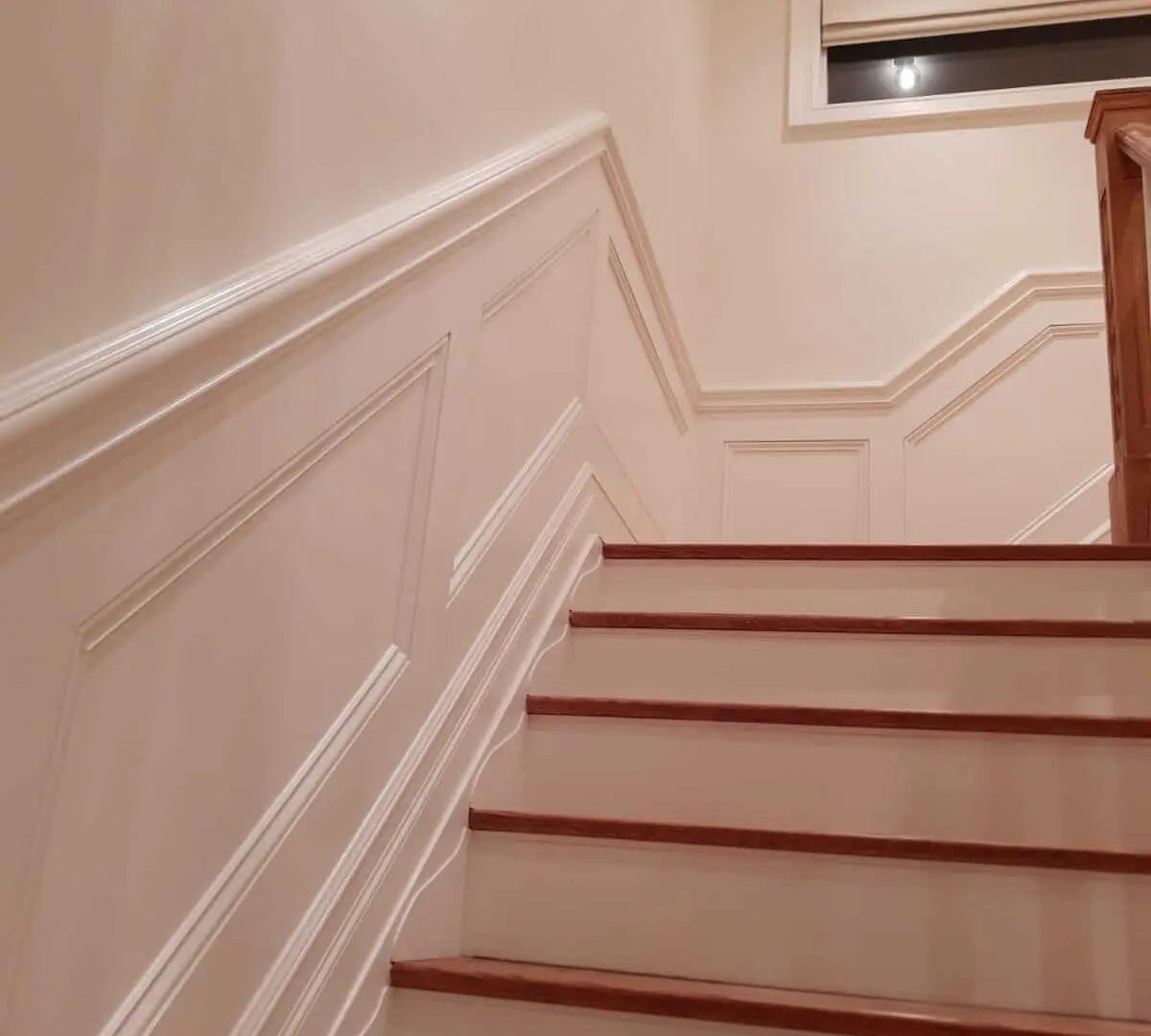
Painting bare wood with finish paint alone is a classic DIY redo. You get raised grain you have to sand back, blotchy coverage, and sometimes a knot that bleeds a brown halo through two coats of expensive paint. Prime it. The primer is cheaper than the redo.
Painting over water, smoke, or nicotine stains
Block them with a shellac primer, not a latex one. This is the surface where the wrong primer fails just as hard as no primer. Water, smoke, and nicotine stains are solvent-soluble, so a water-based latex primer re-wets the stain and it bleeds straight back through within weeks. KILZ is blunt about it: ordinary paint and water-based products won't hold these stains, you need a true stain-blocking primer (KILZ, 2024).
Zinsser BIN shellac-based primer is what I reach for on the tough ones. Shellac seals the stain under a film the water in your topcoat can't get to, so water rings, smoke shadow, and nicotine tar all stay locked down for good. Oil-based stain blockers work too, but for the worst stains, shellac is the one I trust to never come back.
Two warnings. First, if the water stain is from an active leak, fix the leak before you prime anything, or you're just painting over an ongoing problem. Second, nicotine is its own beast, a whole-room job, and the smell comes through with the stain. If you're tackling a smoked-in room, our full walkthrough on painting over nicotine and smoke stains covers the wash, the shellac seal, and the two finish coats step by step. If you're dealing with either of those head-on, our oil-versus-latex guide helps you read the surface first: how to tell if paint is oil or latex.
What I see on call-backs: The number one stain-bleed redo is someone who rolled a water-based "stain-blocking" primer over a ceiling water ring, painted it white, and watched the brown ghost reappear in two to three weeks. Same primer can, wrong chemistry. Shellac would have ended it in one coat.
Do I need to prime glossy or oil-based surfaces?
Yes, you prime or you properly scuff-sand, and ideally you do both. New paint will not grip a slick glossy or oil-based surface on its own. The classic Toronto failure is fresh latex peeling off old oil-based trim in sheets a month later because nobody gave it anything to bond to. A bonding primer is built for exactly this: it sticks to hard, slick coatings and gives your topcoat a grippable surface.
Glossy walls, old oil trim, glass-smooth doors, even tile in some cases, all of it needs a bonding primer or a thorough scuff-sand to break the sheen. On trim I do both: scuff with 150-grit to knock the gloss down, then a bonding primer, then two finish coats. That trim isn't coming off.
The catch is knowing what you're dealing with. Old Toronto trim is often oil-based, and you can't tell by looking. If you're not sure, test before you choose a primer, because latex over unbonded oil is the single most predictable peel in this trade. Our guide on why latex peels off old oil paint walks through the test and the fix.
Big patches and skim-coat repairs need primer too
Yes, or you get flashing over every repair. Fresh patching compound and skim coat are far more porous than the painted wall around them, so the topcoat dries dull over the patch and normal everywhere else. In my experience the unsealed repair is one of the most common reasons a wall I get called back to looks blotchy, so priming repairs is not optional if you want the wall to read as one surface. Spot-prime small patches; prime the whole wall on a big skim coat.
A multi-purpose primer like Benjamin Moore Fresh Start over the repairs evens the porosity so the finish coat lands uniform. Here's the judgment call: a couple of nail-pop patches get spot-primed. A wall you've skim-coated corner to corner gets primed in full, because at that point most of the surface is fresh compound and spot-priming just moves the flashing line around.
This is the boxing problem's cousin. People expect the patch to disappear under paint and it doesn't, because the patch was never sealed to match. Prime the repair and it vanishes. Skip it and you'll see every patch from across the room in raking light.
When can I skip primer entirely?
When you're repainting a sound, already-painted wall in good shape, same colour family, no stains, no bare patches, no big repairs. That's the one clear case. Industry guidance is consistent that an existing sound coating in good condition can be recoated directly with a quality paint, no separate primer (Benjamin Moore, 2026). On that surface, two coats of a good self-priming paint is genuinely fine.
This is the honest other half of the answer, and it's where paint-and-primer-in-one actually does its job. A quality self-priming paint has enough build to spot-cover the odd minor patch on a wall that's already painted and stable. That's the real, narrow claim. It was never sold to seal new drywall or block a stain, the marketing just blurred the line.
So the test is simple. Is the surface bare, stained, repaired, or slick? Prime. Is it a sound painted wall you're freshening up in a similar colour? Skip the primer and put your two coats on. Don't overthink a wall that's already in good shape, and don't underthink a wall that isn't.
Paint-and-primer-in-one, does it actually count as primer?
Not on any surface that needs real primer. This is the spine of the whole question, so let me be plain. Paint-and-primer-in-one is a quality paint with enough body to bridge minor imperfections on an already-painted surface. That is the entire promise. The word "primer" on the label does no actual priming work on bare, stained, or glossy surfaces.
Here's where the marketing and the trade part ways. On new drywall it flashes. Over a water stain it bleeds through. On old oil trim it peels. None of those are the topcoat's job to fix, no matter how good or expensive the paint is. A premium paint is a better finish, not a substitute for a can of primer.
So treat paint-and-primer-in-one as what it is: good paint. Use it freely on sound repaints. Do not ask it to seal, block, or bond, because on those surfaces it can't, and the failure shows up after you've already put two coats on and called it done.
Do I need primer? The surface-by-surface decision tree
Matching the right primer to the surface
Match the primer to the problem, because the three main types are not interchangeable. PVA and multi-purpose primers seal porosity. Stain blockers, ideally shellac, lock stains. Bonding primers grip slick surfaces. Using a bonding primer on a water stain, or a latex sealer on old gloss, fails as surely as skipping primer. Shellac primers in particular block solvent-soluble stains that water-based products simply re-wet (KILZ, 2024).
Here's the cheat sheet I'd hand a friend at the paint store (all CAD, plus HST):
| Surface / problem | Primer type | What I reach for | Why |
|---|---|---|---|
| New drywall, fresh joint compound | PVA / multi-purpose | BM Fresh Start or PVA | Seals porosity so the finish doesn't flash |
| Big skim-coat repairs, patches | Multi-purpose | BM Fresh Start | Evens porosity over fresh compound |
| Bare wood, softwood, MDF | Wood / shellac | Wood primer; Zinsser BIN on knots | Seals grain, blocks tannin, grips topcoat |
| Water, smoke, nicotine stains | Shellac stain blocker | Zinsser BIN | Locks solvent-soluble stains for good |
| Glossy / oil-based / slick | Bonding | Bonding primer + scuff-sand | Sticks to slick surfaces so paint won't peel |
| Drastic colour change | Tinted multi-purpose | BM Fresh Start, tinted to ~50% | Saves a finish coat, stops old colour ghosting |
| Sound same-colour repaint | None | Quality self-priming paint | No surface problem to solve, just paint it |
On that last row about colour: a tinted primer is the cheap trick most people miss. Going dark over light, or into a hard-to-cover saturated colour, a grey-tinted primer gets you to full coverage in two finish coats instead of three or four. You can tint most primers, including Fresh Start, toward your topcoat. Ask the store to tint it when they mix your paint. For choosing the colour in the first place, see how to choose paint colours that last.
Whatever primer you land on, it doesn't change the finish rule: two coats over the primed surface, always. No primer and no premium paint covers a real wall in one. For how this fits the rest of an interior job, see our Toronto interior painting cost overview and our ceiling painting guide, where stain-blocking comes up constantly.
Get a Toronto painting quote (with the prep done right)
Twenty years priming Toronto walls, ceilings, trim, and the redo jobs where someone skipped it. On every job we read the surface first, then prime what needs priming: PVA or Fresh Start on new drywall and big repairs, shellac on stains and bleeding knots, a bonding primer on old gloss and oil trim. Then two finish coats. No paint-and-primer shortcuts on surfaces that need the real thing.
Get your free painting quote or call (416) 875-8706. Quotes inside 24 hours, fixed CAD pricing, HST disclosed.
We handle priming and painting as part of full interior painting projects, including the drywall repair that so often comes before the primer coat.
About the author
Chad Caglak is co-owner of Home Painters Pro Toronto and a 20-year working painter. He's primed everything from new-build drywall in Liberty Village to 80-year-old oil trim in Leaside, and writes the craft-and-pricing content here so Toronto homeowners can decide with real numbers instead of a guess. Read more from Chad in our wall prep checklist or the oil-versus-latex identification guide.
Frequently Asked Questions
You can skip primer when you are repainting a sound, already-painted wall in the same colour family and good shape, with no stains, no bare patches, and no big repairs. On that surface a quality self-priming paint in two coats is fine. The moment you hit bare drywall, fresh joint compound, bare wood, a stain, a glossy surface, or a large skim-coat patch, you need a real primer. The rule is about the surface, not the paint can.
Fresh joint compound and bare drywall paper soak up paint at completely different rates, so the topcoat dries dull and patchy over the mud and shinier over the paper. That uneven sheen is called flashing, and you see it the moment light rakes across the wall. A coat of PVA or a multi-purpose primer like Benjamin Moore Fresh Start seals both surfaces to the same porosity, so the finish paint dries uniform. Skip it and no number of topcoats fully hides the patchwork.
Match the primer to the problem. PVA (or a multi-purpose acrylic) seals new drywall and fresh joint compound so the topcoat does not flash. A stain-blocking primer, ideally shellac like Zinsser BIN, locks water, smoke, and nicotine stains so they do not bleed through. A bonding primer grips slick surfaces like glossy or oil-based paint, glass-smooth trim, and tile so the new coat actually sticks. Using the wrong type is as bad as skipping primer entirely.
Not on a surface that needs real primer. Paint-and-primer-in-one is a quality paint with enough build to spot-cover minor patches on an already-painted wall. That is the whole claim. It does not seal new drywall, block stains, or bond to glossy and oil surfaces. On those the marketing word primer does no actual primer work, and the job fails: flashing, bleed-through, or peeling. Treat it as good paint, never as a primer substitute on bare, stained, or slick surfaces.
For a drastic change, especially dark over light or a deep saturated colour, a tinted primer saves you coats and money. The primer gets tinted toward your finish colour, so the topcoat reaches full, even coverage in two coats instead of three or four. It also stops the old colour ghosting through. For a small or same-family colour shift on a sound wall, you usually do not need primer, two coats of quality paint covers it. The bigger the jump, the more a tinted primer earns its keep.
Yes, and for big colour changes you should. Most quality primers, including Benjamin Moore Fresh Start, can be tinted toward your finish colour, usually to about 50 percent of the topcoat shade. A grey-tinted primer under a deep or hard-to-cover colour cuts the number of finish coats you need. Shellac stain primers like Zinsser BIN can be tinted to a degree too. Ask the paint store to tint it when they mix your topcoat so the whole system works together.
Yes. Bare drywall and the fresh joint compound on the seams are porous and drink paint unevenly, so without primer the finish flashes and you waste topcoat trying to even it out. Use a PVA drywall primer or a multi-purpose primer like Benjamin Moore Fresh Start, one coat, then two coats of finish. Self-priming paint does not replace a real primer on new drywall. This is the single most common spot where the paint-and-primer-in-one claim falls apart.
No, and this is where a lot of DIY ceilings go wrong. Water, smoke, and nicotine stains are solvent-soluble, so a water-based latex primer re-wets them and the stain bleeds straight back through within weeks. You need a shellac-based stain blocker like Zinsser BIN, which seals the stain in a coat the water in your topcoat cannot reach. Oil-based stain blockers work too. For tough stains, shellac is the one that holds permanently.
Yes. Bare wood is porous, raises grain, and on softwoods and knotty boards it can bleed tannin and resin through the finish. A dedicated wood primer seals the grain, gives the topcoat something to grip, and blocks tannin staining, especially on pine, cedar, and MDF edges. For knots that keep bleeding, a shellac primer like Zinsser BIN seals them for good. Painting bare wood with finish paint alone gives you raised grain, blotchy coverage, and often a stained-through topcoat.
You need to either prime or properly scuff-sand, ideally both, because new paint will not grip a slick glossy or oil surface on its own. A bonding primer is built to stick to hard, slick coatings and give your topcoat a surface it can hold. The classic failure is latex peeling off old oil trim in sheets because nobody bonded it. If you are not sure whether your trim is oil or latex, test it before you choose your primer.
Small patches and skim-coat repairs need primer if you want the finish to match. Fresh patching compound is far more porous than the surrounding painted wall, so the topcoat flashes dull over every patch unless you spot-prime it first. A multi-purpose primer like Benjamin Moore Fresh Start on the patches evens the porosity so the wall reads as one surface. On a big skim coat across a whole wall, prime the entire wall, not just the patched areas.
No. A premium paint is a better finish, not a primer. It still flashes over new drywall, still lets stains bleed, still peels off glossy oil surfaces, because none of those are problems a topcoat is designed to solve. Spending more on paint to avoid buying a can of primer is a false economy that usually ends in a redo. Buy the right primer for the surface, then put your good paint on top of it.