




Key Takeaways
- The best caulk for brick, block, concrete, and foundation joints is a one-component polyurethane or a hybrid (silane-modified) sealant, not silicone or acrylic window caulk
- Masonry is porous, alkaline, and moves hard with freeze-thaw, so it needs an ASTM C920 Class 35 sealant that flexes about 35 percent of the joint and still takes paint
- Stucco cracks want a textured or sanded product that matches the surface, not a smooth bead that telegraphs under raking light
- Foundation cracks under about 1/4 inch take polyurethane sealant; wider, offset, or leaking cracks are a repair, not a caulk job
- Never caulk weep holes or the bottom of a brick veneer wall, because those openings drain the cavity and sealing them traps water
I'm Chad Caglak, and after 20 years sealing Toronto brick, stucco, and foundations, the mistake I see most is a homeowner reaching for the same tube they used around the bathtub. Masonry is a different animal from a window frame, and the chemistry that survives on smooth trim tears itself apart on a rough wall that moves hard every winter. This guide ranks what actually belongs on brick and concrete, sorts out textured caulk for stucco, and tells you the one joint on a brick veneer wall you must leave open. For the frames, casings, and siding seams themselves, the product list is different, and I cover it in best caulk for windows, doors, and siding.
Why window caulk fails on brick and masonry
The tube in your bathroom drawer is built for smooth, stable, non-porous surfaces. Brick, block, stucco, and concrete are the opposite: porous, textured, and alkaline, and they move more than any window frame as the temperature crosses zero. Toronto averages roughly 62 freeze-thaw cycles a year, and every one of them opens and closes the joints in your masonry a little.
Two chemistries handle that combination, and both belong in a caulking gun on a masonry job. Polyurethane bonds tenaciously to concrete and brick, stays flexible in the cold, and takes paint once cured. Hybrid sealants, sold as silane-modified polymer or SMP, do the same with less odour and a faster window to paint. What does not belong is either extreme. Pure silicone bonds beautifully, but paint will not stick to it, and most Toronto masonry is either painted now or needs to stay paintable later. Ordinary acrylic latex caulk is paintable but too rigid for the movement a brick or concrete joint sees, so it splits across the gap in a couple of winters.
The full chemistry-by-chemistry breakdown lives in silicone vs polyurethane vs acrylic caulk. The short version for masonry: reach for polyurethane or hybrid, skip the rest.
Best caulk for brick and masonry, ranked
Here is how the categories sort out on a Toronto wall, priced in CAD per standard tube at GTA stores.
| Sealant type | Best for | Movement (ASTM C920) | Paintable | GTA price/tube |
|---|---|---|---|---|
| One-part polyurethane | Brick, block, concrete, foundation joints | Class 35 (about ±35%) | Yes, after full cure | ~$13 to $22 |
| Hybrid / SMP | Mixed substrates, quick repaint | Class 35 to 50 (up to ±50%) | Yes, sooner than PU | ~$9 to $16 |
| Textured / sanded acrylic | Stucco hairlines, low-movement cracks | Class 12.5 (about ±12.5%) | Yes | ~$8 to $14 |
| Pure silicone | Glass, non-porous, no paint | High | No | ~$8 to $13 |
Movement classes follow ASTM C920, the standard specification for elastomeric joint sealants; product ratings from manufacturer technical data sheets (Sika, Master Builders/Sonolastic, OSI), retrieved 2026.
One-part polyurethane: my default for brick and concrete
For most brick, block, and concrete joints I load a one-component polyurethane like Sika Sikaflex-1a or Sonolastic NP 1. Both cure with atmospheric moisture, both are rated ASTM C920 Class 35, and both grip damp or green concrete better than anything else in the gun. The trade-off is that polyurethane skins slowly and wants a full cure before paint, so I plan the joint a day ahead of the finish coat rather than the same afternoon.
What I usually spec: Sikaflex-1a on foundation and concrete joints, a light backer rod in anything wider than about 6 mm so the bead bonds to two sides and not three, and a tooled concave face so water sheds instead of pooling.
Hybrid / SMP: when you want to paint sooner
When the schedule is tight or the joint bridges two different materials, a hybrid such as OSI Quad Max earns its place. Silane-modified polymers hold onto almost every substrate, carry low odour, and reach a paintable state faster than polyurethane. Some hybrids rate to Class 50, which means they stretch to half the joint width, useful on a long control joint that opens wide in January.
Textured or sanded acrylic: stucco and quiet cracks
For narrow, low-movement hairlines, especially on stucco, a textured or sanded acrylic sealant matches the wall better than any premium smooth bead. It carries fine aggregate so the cured line blends into the surface instead of gleaming across it. Keep it to genuinely low-movement joints, because at Class 12.5 it does not flex like polyurethane.
Best caulk for stucco: match the texture
The best caulk for stucco is the one you cannot see afterward, which means matching both flexibility and texture. On traditional cement stucco, a textured acrylic handles tight hairlines and an elastomeric polyurethane handles wider working cracks. On EIFS synthetic stucco, stay with the finish manufacturer's approved sealant so you do not build a moisture trap in the foam behind the coat.
The failure I get called to fix is a smooth, glossy bead run across a rough stucco field. Under Toronto's low afternoon sun, raking light throws a shadow off every ridge, and a slick caulk line stands out like a scar. Texture the bead, knock down the shine, and paint the whole field so the repair disappears. Which coat goes over that bead matters just as much, and I lay out the systems in best paint for stucco in Toronto.
On a Toronto job: I inherited a North York stucco wall where the last crew filled every hairline with clear silicone. Nothing would paint over it, so we ended up cutting each bead out by hand before we could coat the wall. A textured acrylic would have taken paint the same day and saved the whole exercise.
Foundation cracks and mortar joints: seal, repoint, or repair?
Match the fix to the crack rather than defaulting to caulk. A non-structural crack under roughly 1/4 inch in a poured concrete foundation is a fair sealant job: a self-leveling polyurethane on horizontal surfaces, a non-sag grade on a vertical wall. For a crack that is actively weeping water, switch to hydraulic cement, which sets even against a running leak where sealant would float off.
Some cracks are not caulk work at all. A crack that is widening, offset, wider than about 1/4 inch, or stair-stepping through block is a structural signal, and the answer is a foundation contractor with low-pressure polyurethane or epoxy injection, not a bead on the surface. Sealing the face of a moving structural crack hides the symptom and buys you one season.
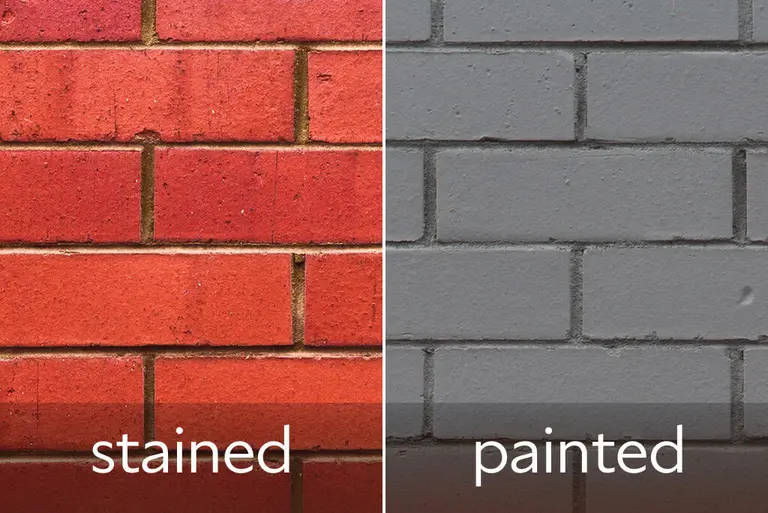
Mortar is its own case. When the joint itself is cracked, crumbling, or missing, the repair is repointing with fresh mortar, not caulk. A caulk bead in a mortar joint looks wrong, does not breathe like the wall around it, and pulls loose within a few seasons because it was never meant to stand in for mortar. Reserve sealant for the movement joints and the seams where brick meets something else. If you are weighing a full refinish on that brick instead, painting versus staining brick walks through the trade-off.
The brick veneer weep-hole rule: never caulk these
This is the one that does real damage, so read it before you pick up a gun. A brick veneer wall is a drainage wall, not a solid barrier. There is a cavity behind the brick, and water that gets in runs down the back face and exits through small open joints called weep holes, spaced along the bottom course and above the flashing over windows and doors. Caulk those shut and you trap water in the cavity, which drives efflorescence, spalling, and freeze-thaw damage, and eventually pushes moisture inside the house.
So leave three things open on brick veneer: the weep holes themselves, the bottom horizontal joint where the veneer sits above its flashing, and any drainage gap below a window or door head flashing. Weep holes are meant to stay clear and typically sit no more than 24 inches apart, per Brick Industry Association technical guidance.
Where you do caulk on a brick wall is the perimeter of window and door frames where they meet the masonry, purpose-built control joints (with backer rod behind the bead), and the seams where brick abuts a different material. The pillar guide maps every joint on the building in exterior caulking in Toronto, including the ones that must stay open.
The bottom line on masonry caulk
The best caulk for brick and masonry is rarely the tube you already own. Brick, block, and concrete want a one-part polyurethane; a hybrid buys you a faster repaint; stucco wants a textured, paintable bead; and a foundation crack wants the grade matched to how the crack behaves. The one rule that outranks product choice: know which joints drain your wall, and leave those open no matter what.
If you cannot tell a movement joint from a weep hole, or a caulk crack from a structural one, get the wall looked at before you seal anything. Call me at (416) 875-8706, or book a free painting quote in Toronto. I read every masonry wall in person, mark what gets sealed and what stays open, and put the product and the prep in the quote before any number is final.
Chad Caglak, Co-Owner, Home Painters Pro
Frequently Asked Questions
A one-component polyurethane sealant such as Sika Sikaflex-1a or Sonolastic NP 1, or a hybrid (silane-modified polymer) like OSI Quad Max. Both are rated to ASTM C920 Class 35, meaning they flex about 35 percent of the joint width without tearing, they bond to porous alkaline masonry, and they accept paint once cured. Silicone bonds well but will not take paint, and ordinary acrylic latex caulk is too rigid for the movement brick and concrete see through a Toronto winter.
You can, but usually you should not. Pure silicone will not accept paint, and most Toronto brick and stucco is either painted or expected to stay paintable for future work. Silicone also attracts dirt on a textured masonry surface and cannot be tooled as cleanly into a rough joint. For a joint you will paint over, a polyurethane or hybrid sealant is the better match. Save silicone for glass and non-porous surfaces you never intend to coat.
Use a paintable, flexible sealant that matches the wall texture: a textured or sanded acrylic for narrow, low-movement hairlines, or an elastomeric polyurethane for wider, working cracks. A smooth bead of standard caulk stands out badly on a rough stucco field under low afternoon light. On EIFS synthetic stucco, stay with the finish maker''s approved sealant so you do not trap moisture in the foam. Structural cracks in stucco point to a problem behind the wall and need diagnosis, not a bead of caulk.
For a non-structural crack under roughly 1/4 inch in a poured concrete foundation, a polyurethane sealant works: self-leveling grade on horizontal surfaces, non-sag grade on vertical walls. For an actively leaking crack use a hydraulic cement instead, which sets even against running water. A crack that is widening, offset, wider than about 1/4 inch, or stair-stepping through block is a structural matter for a foundation contractor, often fixed by low-pressure polyurethane or epoxy injection, not surface caulk.
No, never. The small open joints along the bottom course of a brick veneer wall and above window and door flashings are weep holes, and they drain the cavity behind the brick. Sealing them traps water against the back of the brick, which drives efflorescence, spalling, and freeze-thaw damage, and can push moisture inside. Weep holes should stay open and are typically spaced no more than 24 inches apart per Brick Industry Association guidance. Caulk the window and door perimeters, not the drainage openings.
When the mortar joint itself is cracked, crumbling, or missing, the fix is repointing with fresh mortar, not a bead of caulk. Caulk in a mortar joint looks wrong, does not breathe, and fails within a few seasons because it was never meant to replace mortar. Reserve sealant for movement joints, control joints, and the gaps where brick meets a different material such as a window frame. Deteriorated mortar is a masonry repair, and pretending it is a caulking job just delays the real work.