
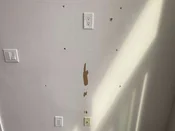




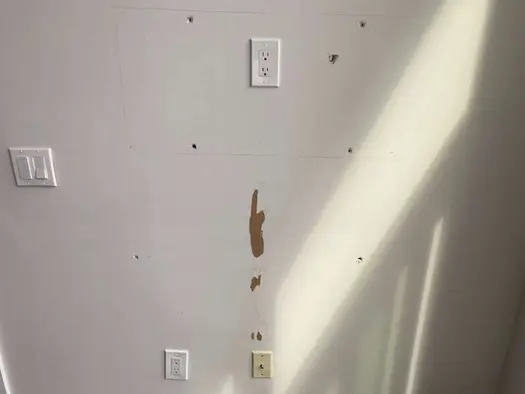
Toronto tenants’ guide to drywall repairs: what you need to know
Quick Answer: In Ontario, landlords are responsible for drywall repairs from normal wear and tear, water damage, or structural issues under the Residential Tenancies Act (RTA). Tenants must repair damage they or their guests caused. Small nail holes (under 1 inch) can be DIY repaired with spackling paste, but inform your landlord first and always report damage in writing with photos.
If you’re renting in Toronto, drywall damage will happen. Probably has already. A nail hole from that shelf you hung. A scuff from moving the couch. A mysterious crack that appeared one winter and now you’re staring at it wondering who’s actually on the hook for fixing it.
Good news: most minor drywall repairs are straightforward. Cheap, too. The tricky part? Knowing what’s your responsibility versus your landlord’s, and understanding your rights so you don’t end up paying for something you shouldn’t.
This guide covers it all: when to report damage, who pays for what, how to fix small stuff yourself, and how to protect your deposit when you move out.
Common causes of drywall damage
Drywall is tough. But it’s not bulletproof. Here’s what I see most often in Toronto rentals:
- Nail or screw holes from hanging art, shelves, TV mounts, or doorstops
- Pet damage. And yes, cats and dogs do real harm. Scratching, chewing, repetitive pawing near doors and corners. I’ve seen a cat scratch a groove half an inch deep next to a bedroom door
- Furniture scuffs and impact dents, especially during moves or rearranging
- Moisture or water damage, particularly in basements, kitchens, or bathrooms (which then need to be repaired and professionally painted)
- Cracks from the building settling or shifting over time
- Everyday accidents: doorknob impacts, kids roughhousing indoors, the usual rental wear and tear
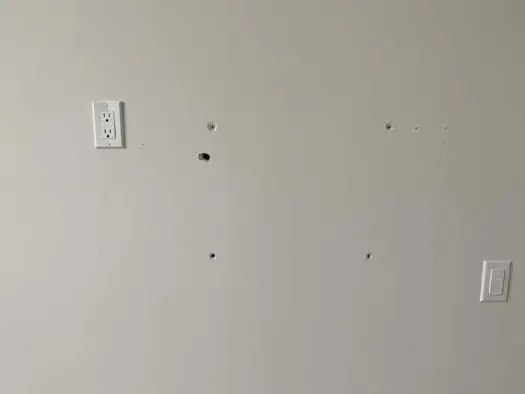
Tenant vs. landlord: who’s responsible?
In Ontario, the Residential Tenancies Act (RTA) lays out who’s on the hook for what. Here’s how it usually breaks down:
Landlord responsibilities
- Damage from leaks, water infiltration, or structural problems
- Pre-existing damage from before your tenancy started
- Keeping the unit up to health and safety codes
- Normal wear and tear, which includes periodic painting maintenance
Tenant responsibilities
- Damage you or your guests caused, whether accidental or intentional
- Preventing damage through reasonable use of the space
- Reporting serious issues like mould or water damage as soon as you spot them
The gray area? It’s always "normal wear and tear." A few nail holes from hanging pictures? Normal. Putting your fist through the wall during a heated hockey game? Not normal. Most disputes land somewhere in between.
When should you report drywall damage?
Report it in writing as soon as you notice it. Even if it seems minor. Your landlord has a legal obligation to keep the unit in good repair, and you want a paper trail. Use email or your rental platform’s messaging tool. There’s a record. It matters.
Include these details:
- A clear description of the damage
- Photos, if possible
- The date you first noticed it
- Any concerns about mould, water, or structural issues
I’ve seen tenants lose disputes because they reported damage verbally and their landlord "didn’t recall the conversation." Put it in writing. Always. Email. Text. Rental portal. Whatever. Just make sure it’s documented.
How to repair drywall (for tenants)
Small drywall issues are totally fixable on your own with basic tools and materials. Just give your landlord a heads up before you start. Even for minor repairs. It protects you.
Repairing small nail holes or dents
Good for nail holes, minor furniture dents, and picture hook damage.
What you need:
- Drywall patch kit (includes mesh patch, compound, tools)
- Putty knife
- Sandpaper (120–220 grit)
- Touch-up paint
I’d recommend grabbing a complete repair kit from any hardware store. If you already have tools at home, just grab the spackle.
drywall-repair-patch-key{.center}

Steps:
- Remove any plugs or screws from the wall, then lightly tap around the hole to smooth out the edges.
- Apply spackling paste with a putty knife, smoothing it flush with the wall. Repeat until the hole is filled.
- Let it dry completely (usually 1–2 hours).
- Sand gently until the patch is smooth.
- Apply primer, then touch-up paint to match the wall.
(Ask your landlord for the paint color name or a small sample. Paint stores also do color matching, but you’ll need to peel off at least a 1 inch square chip from an inconspicuous spot to get a match.)
Repairing medium holes (1–3 inches)
Good for accidental punctures like doorknob impacts.
What you need:
- Drywall patch kit (includes mesh patch, compound, tools)
- Sandpaper
- Paint and primer
Steps:
- Place the patch over the hole (self-adhesive mesh is the easiest option).
- Apply joint compound over the mesh in thin layers with a putty knife.
- Let each layer dry fully, sanding between coats.
- Once smooth and dry, prime and paint.
Avoid DIY for large or complex damage
Don’t try to fix it yourself if the damage:
- Is bigger than 4-5 inches
- Involves water or mould
- Shows cracks going in multiple directions
- Affects the ceiling or structural integrity
Report it to your landlord right away. Large drywall repairs need professional work. Both for safety and to make sure underlying problems—leaks, mould—are actually resolved. A bad DIY patch over a moisture problem just hides the issue until it gets worse.
Tips to avoid drywall trouble
- Use removable hooks or adhesive strips instead of nails when you can. They exist for renters for a reason.
- Put bumpers behind doors to prevent handle impacts. This is the number one source of unnecessary holes I see in rentals.
- Don’t push furniture flush against walls. Leave a little space. Small change, big difference.
- Run the bathroom fan during and after showers to prevent moisture buildup.
- Document everything with photos during move-in and move-out. Take pictures of every wall, every room. Ten minutes of work. Could save you hundreds.
End of lease: will drywall damage affect your rent deposit?
Here’s something a lot of Toronto tenants don’t realize: Ontario landlords cannot legally collect a "security deposit." Under the RTA, the only deposit they can take is a rent deposit for last month’s rent. Period.
So your landlord cannot deduct repair costs from your deposit. That’s not how Ontario law works. If you caused damage beyond normal wear and tear, your landlord has to go through the Landlord and Tenant Board (LTB) to pursue costs. They can’t just keep your money.
To protect yourself:
- Fix minor damage before you move out (with your landlord’s permission).
- Photograph the unit thoroughly, including any repairs you made, before handing over the keys.
- Notify your landlord in writing of any unresolved issues.
- If your landlord tries to withhold part of your last month’s rent for damages? File an application with the LTB to dispute it. You have the right.
Final thoughts
Drywall damage happens to every renter eventually. The difference between it being a small hassle and a big headache? How you handle it. Know your responsibilities. Report problems early. Fix minor stuff yourself (with your landlord in the loop). Document everything. Once repairs are done, a fresh coat of paint makes the unit look like new again.
Frequently Asked Questions
In Ontario, landlords are responsible for repairs caused by normal wear and tear, pre-existing damage, structural issues, water leaks, or building defects. Tenants are responsible for damage they or their guests caused (accidental or intentional), damage from negligence, and pet damage (scratching, chewing). If unsure, report the damage to your landlord in writing with photos. They retain the legal obligation to maintain the unit in good repair under the Residential Tenancies Act (RTA).
In Ontario, landlords cannot deduct repair costs from your rent deposit (which can only be used for last month''s rent). Small nail holes from hanging pictures are generally considered normal wear and tear and are the landlord''s responsibility. However, if you caused excessive damage beyond normal use, your landlord can pursue costs through the Landlord and Tenant Board (LTB), not by withholding your deposit. To protect yourself, repair minor damage before move-out (with landlord approval) and take photos documenting the condition.
Tenants can safely repair small nail holes and minor dents (under 1 inch) using spackling paste and a putty knife. Medium holes (1–3 inches) like doorknob damage can be repaired with mesh patch kits and joint compound. Do not attempt DIY repairs for large holes (4+ inches), water or mold damage, multiple cracks, ceiling damage, or structural issues. Always inform your landlord before making any repairs, even minor ones, and report serious damage immediately in writing.
Yes, it is advisable to inform your landlord before making any repairs, even small ones. While minor touch-ups (filling a few nail holes) are generally acceptable, getting written approval protects you from disputes and ensures your landlord knows the current condition. For anything beyond basic spackling, request permission in writing (email or rental platform messaging). Your landlord may prefer to handle repairs themselves or hire a professional, especially for larger damage.
Ontario landlords cannot legally collect a "security deposit." Under the Residential Tenancies Act (RTA), they can only collect a rent deposit for the last month''s rent. Landlords cannot deduct repair costs from this deposit. If you caused damage beyond normal wear and tear, your landlord must pursue costs through the Landlord and Tenant Board (LTB), not by withholding rent. To protect yourself: repair minor damage before move-out (with landlord approval), take photos of repairs and unit condition, report all issues in writing, and file an LTB application if your landlord withholds any rent improperly.
Matching existing wall color can be tricky. Best approach: ask your landlord for the paint color name or a small sample, take a 1-inch square paint chip from an inconspicuous area (inside closet, behind furniture) to a paint store for color matching, or use touch-up paint if your landlord provides it. Many paint stores (Benjamin Moore, Sherwin-Williams, Home Depot) offer color matching services. Apply primer first, then 1–2 coats of matched paint. Note that older paint may have faded, so an exact match can be difficult—consider painting the entire wall for uniform color.