
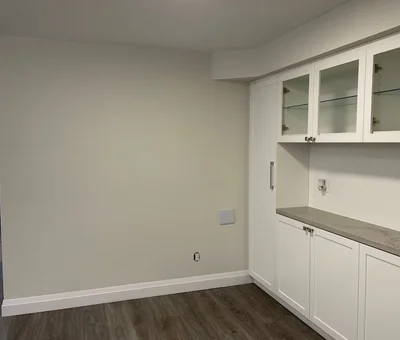




Quick Answer: Basement painting in Toronto costs $1,500–$6,000 in 2026. A finished basement (drywall) runs $1,500–$4,000, while an unfinished basement (concrete/block) costs $2,000–$6,000. Prices include waterproof primer, two coats of moisture-resistant paint, and prep work. We use Benjamin Moore and Sherwin-Williams moisture-proof products on every basement job. Get a free quote in 24 hours.
I have painted hundreds of Toronto basements over the past 20 years. Finished rec rooms, raw concrete walls, leaky block foundations, basement apartments, home gyms—you name it. And I will tell you straight: basement painting is not the same as painting your living room.
I'm Chad, co-owner of Home Painters Pro. When you call us, you're talking to me — not a call centre, not a sales rep. I've personally handled over 1,500 painting projects across Toronto in 20+ years. I walk through every quote myself and make sure the work gets done right.
Miss the moisture step and your paint peels in six months. Use the wrong primer on concrete and it flakes off by spring. Skip the mould treatment and you are repainting next year.
Most painters treat basements like any other room. We do not. Every basement job starts with a moisture check, uses waterproof primers, and finishes with paint that is specifically designed to handle below-grade conditions. That is why our basement paint jobs last 7-10 years while the DIY job from the hardware store lasts maybe two.
Let me walk you through exactly what basement painting costs in Toronto, what products actually work, and what to watch out for.
Basement painting cost in Toronto (2026 pricing)
Real numbers. No "contact us for pricing" runaround.
Finished basement (drywall walls)
| Basement Size | Cost Range (+ HST) | What's Included |
|---|---|---|
| Small (under 500 sq ft) | $1,500–$2,200 | Walls, basic prep, 2 coats moisture-resistant paint |
| Medium (500–1,000 sq ft) | $2,200–$3,200 | Walls, prep, primer, 2 coats, trim touch-ups |
| Large (1,000–1,500 sq ft) | $3,200–$4,000 | Walls, full prep, primer, 2 coats, all trim |
| Extra large (1,500+ sq ft) | $4,000+ | Full scope, custom quote required |
Unfinished basement (concrete or block walls)
| Basement Size | Cost Range (+ HST) | What's Included |
|---|---|---|
| Small (under 500 sq ft) | $2,000–$3,000 | Masonry prep, waterproof primer, 2 coats |
| Medium (500–1,000 sq ft) | $3,000–$4,500 | Crack repair, waterproof primer, 2 coats |
| Large (1,000–1,500 sq ft) | $4,500–$5,500 | Full masonry prep, waterproof system, 2 coats |
| Extra large (1,500+ sq ft) | $5,500–$6,000+ | Full scope, custom quote required |
Add-on costs
| Service | Cost |
|---|---|
| Ceiling painting (drywall) | $1.50–$2.50/sq ft |
| Ceiling painting (exposed joists, sprayed) | $2.00–$3.50/sq ft |
| Floor coating (epoxy/polyurethane) | $2.00–$5.00/sq ft |
| Drywall repair (minor) | $200–$800 |
| Drywall repair (major/water damage) | $800–$2,500+ |
| Mould treatment and sealing | $300–$1,000 |
Disclaimer: All prices are estimates based on typical Toronto basement projects. We provide fixed pricing within 24 hours after assessing your space. HST is extra.
Why unfinished basements cost more
This confuses some homeowners. The basement with no drywall costs more to paint? Yes. Here is why:
Concrete and block walls require masonry-grade waterproof primer—that product alone costs 3-4 times more than standard drywall primer. The prep is heavier too: cleaning efflorescence, patching cracks with hydraulic cement, treating moisture spots, and sometimes grinding rough concrete smooth enough for paint to bond properly.
Drywall basements need moisture-resistant primer and paint, but the prep is closer to standard interior painting—fill holes, sand, prime, paint.
Moisture and waterproofing: the make-or-break step
This is where 90% of basement paint failures happen. I cannot stress this enough: you cannot paint over moisture and expect it to hold.
Before we touch a brush
Every basement job starts with a moisture assessment. We check:
- Visible water stains or tide marks — tells us water has been there before
- Efflorescence — those white, chalky mineral deposits on concrete mean moisture is migrating through the wall
- Musty smell — mould or mildew growing somewhere, even if you cannot see it
- Condensation on walls — indicates humidity levels too high for standard paint
- Active leaks or seepage — this must be fixed before any paint goes on
What we do about it
If the moisture is manageable (no active leaks, just typical basement dampness), our waterproof primer system handles it. We use products like Zinsser Watertite that seal the surface against moisture vapour transmission up to 34 PSI of hydrostatic pressure.
If we find active water intrusion—cracks leaking, water pooling, obvious seepage—we will tell you honestly: fix the water problem first. That might mean exterior grading, weeping tile repair, or foundation crack injection. We are happy to recommend contractors we trust. Painting over active water is throwing money away, and we will not do it.
For water damage that has already been repaired, our water damage repair and painting service handles the restoration.
Paint recommendations for basements
Not all paint works in basements. Here is what we actually use and why.
For drywall basement walls
| Product | Type | Why We Use It |
|---|---|---|
| Benjamin Moore Aura Bath & Spa | Mould-resistant, low VOC | Purpose-built for high-moisture environments. Self-levelling, excellent coverage |
| Sherwin-Williams Duration Home | Moisture-resistant interior | Antimicrobial properties, scrub-resistant, great for basements |
| Benjamin Moore Regal Select | Premium interior | Good moisture resistance in drier finished basements |
For concrete and masonry walls
| Product | Type | Why We Use It |
|---|---|---|
| Zinsser Watertite | Waterproof masonry primer | Seals against hydrostatic pressure, bonds to concrete |
| Drylok Extreme | Waterproof masonry paint | 3x more waterproofing than standard Drylok |
| Benjamin Moore Fresh Start Masonry Primer | Masonry primer | Excellent adhesion on block and poured concrete |
Finish recommendations
- Eggshell — best for basement walls. Slight sheen resists moisture better than flat, hides imperfections, easy to clean
- Satin — good for basements prone to dampness or used as living space. More moisture-resistant than eggshell
- Semi-gloss — use for trim, doors, and high-moisture areas. Most washable and moisture-resistant
- Never use flat/matte in basements. Flat paint absorbs moisture and shows every water spot and scuff
Our basement painting process
Step 1: Assessment and quote
We come to your basement, check moisture levels, assess wall condition (concrete vs. drywall), measure the space, and discuss your goals. You get a fixed-price written quote within 24 hours. No surprises.
Step 2: Prep work
This is where basement painting differs from regular interior work.
For concrete/block walls:
- Clean all surfaces, remove loose paint and debris
- Scrape and treat efflorescence deposits
- Patch cracks with hydraulic cement
- Grind rough spots for smooth paint adhesion
- Treat any mould or mildew with mould-killing solution
For drywall walls:
- Repair all damage—cracks, holes, water-damaged sections
- Sand patched areas smooth
- Caulk gaps along trim, corners, and ceiling lines
- Clean walls of dust, cobwebs, and grime
Need significant drywall repair? We handle that too—it is common in basements with past water issues.
Step 3: Waterproof primer
Every basement gets primer. On concrete, we apply masonry-grade waterproof primer. On drywall, we use moisture-resistant primer. This step is non-negotiable—it is the foundation of a lasting basement paint job.
Step 4: Two coats of finish paint
We apply two full coats of moisture-resistant paint. We brush-cut edges and roll walls for an even, professional finish. On concrete, we sometimes spray for better coverage in rough textures.
Step 5: Trim, ceiling, and details
If your basement has trim, baseboards, doors, or a finished ceiling, we paint those too. Semi-gloss on trim for durability and contrast. Ceilings get flat or matte white to maximize light reflection.
Step 6: Final walkthrough
We walk the space with you, check every wall and corner under proper lighting, and touch up anything that needs it. You do not pay until you are satisfied.
Common basement issues we deal with
Efflorescence
Those white, powdery deposits on concrete walls. It is mineral salt left behind when moisture evaporates through the masonry. We scrape it off, treat the surface, and seal with waterproof primer. If efflorescence keeps coming back aggressively, it is a sign of ongoing moisture intrusion that needs addressing at the source.
Moisture and condensation
Toronto basements sit below the water table in many neighbourhoods. Even "dry" basements can have 60-70% humidity. We use dehumidifier-friendly paint systems and always recommend running a dehumidifier after painting to help the finish cure properly.
Low ceilings
Many Toronto basements have 7-foot ceilings or lower. We use light colours (whites, pale greys) and paint the ceiling the same colour as the walls to create a seamless look that makes the space feel taller. Vertical colour blocking can also help. Dark colours in low-ceiling basements make the space feel like a cave—we steer clients away from that mistake.
Old, peeling paint
Previous paint jobs that were done without proper primer or moisture protection peel and flake. We scrape all loose paint, sand edges smooth, spot-prime bare areas, and apply our full waterproof system. It is more prep work, but the only way to get a lasting finish over failed paint.
Mould and mildew
If we find mould during our assessment, we treat it with mould-killing primer (Zinsser Mould Killing Primer) before any paint goes on. For widespread mould, we recommend professional mould remediation first. We will not paint over mould—it just grows back behind the paint.
Basement apartment painting in Toronto
Toronto's rental market makes basement apartments a significant investment. We paint a lot of them—for landlords turning over units, for homeowners finishing a legal secondary suite, and for tenants who got permission to refresh their space.
Why it matters for landlords
A freshly painted basement apartment with clean, light walls and crisp trim photographs better, shows better, and rents faster. In Toronto's competitive rental market, the difference between a dingy basement and a bright, freshly painted one is real money:
- Higher rent — $100–$200/month more for a well-presented unit
- Faster turnover — painted units rent 1-2 weeks faster in our experience
- Better tenants — people who care about where they live choose the nicer unit
- Lower maintenance — quality paint with proper primer does not peel or need repainting every year
What we recommend for basement apartments
- Light colours everywhere — Sherwin-Williams Alabaster or Benjamin Moore Simply White
- Satin finish on walls — more durable and washable than eggshell for rental turnover
- Semi-gloss on all trim and doors — professional look, easy to clean between tenants
- Bright white ceilings — maximizes light in low-ceiling spaces
- Moisture-resistant products throughout — protects your investment long-term
A typical basement apartment (500-800 sq ft) runs $2,000–$3,500 to paint properly with moisture-resistant products. That investment pays for itself within the first year of higher rent.
Basement colour recommendations
Basements are not the place for trendy dark accent walls (unless you have 9-foot ceilings and great lighting). Here is what actually works:
- Warm whites and off-whites — Benjamin Moore Simply White, Sherwin-Williams Alabaster. Brightest option for dark basements
- Light warm greys — Benjamin Moore Revere Pewter, Sherwin-Williams Agreeable Gray. Contemporary and forgiving of imperfections
- Pale greige tones — Warm enough to feel cosy, light enough to reflect light
- Soft blue-greys — For finished basements with decent lighting. Adds personality without darkening the space
Avoid: dark colours on all walls, pure stark white (shows every flaw on concrete), and any colour with strong undertones that shift under fluorescent basement lighting.
When to call us
- Peeling or flaking paint — the old job failed, and moisture is likely the reason
- Water stains or discolouration — evidence of moisture that needs proper treatment
- Finishing a renovation — new drywall needs proper primer and paint
- Turning a basement into living space — rec room, home gym, office, playroom
- Preparing a basement apartment — rental unit needs to look its best
- Selling your home — a painted basement adds perceived value and photographs better
- Unfinished concrete — raw basement that needs sealing and finishing
Get your basement quoted
I have seen too many homeowners waste money on basement paint jobs that fail because the painter skipped the moisture step or used the wrong products. We do not cut those corners.
Every basement quote includes a moisture assessment, product recommendations specific to your situation, and a fixed price in writing. No surprises, no extras, no "we did not realize it would need primer" add-ons after the fact.
Call me directly at (416) 875-8706 or request your free quote. If I don't answer right away, I'll get back to you as soon as I can.
For a full breakdown of interior painting costs across your entire home, check out our interior painting cost guide.
Frequently Asked Questions
Basement painting in Toronto costs $1,500-$6,000 in 2026. A finished basement with drywall runs $1,500-$4,000 depending on size. An unfinished basement with concrete or block walls costs $2,000-$6,000 because waterproof primers and masonry prep add labour and materials. Small basements under 500 sq ft start around $1,500. Large basements over 1,500 sq ft can reach $5,000-$6,000+. Prices include labour, two coats, primer, and basic prep. HST is extra.
For basement drywall, Benjamin Moore Aura Bath and Spa or Sherwin-Williams Duration Home are top choices—both are moisture-resistant and mould-resistant. For concrete or block walls, use a waterproof masonry primer like Zinsser Watertite first, then a quality latex topcoat. Never use flat paint in basements—eggshell or satin finishes resist moisture and clean easier. Avoid oil-based paints in basements with poor ventilation.
Always waterproof first, paint second. If you have active water leaks or serious moisture intrusion, painting over the problem is a waste of money—the paint will peel within months. Fix the source (grading, weeping tile, foundation cracks) first. Once the basement is dry, we apply waterproof primer and moisture-resistant paint for a finish that actually lasts.
Yes. We paint bare concrete and block walls regularly. The process requires more prep than drywall—cleaning, patching cracks, treating efflorescence (white mineral deposits), and applying masonry-grade waterproof primer before topcoats. It costs more than painting drywall but transforms a raw basement into a clean, bright space. Expect $2,000-$6,000 depending on size and condition.
We test moisture levels before starting. If moisture is within acceptable range, we apply waterproof primer (Zinsser Watertite or equivalent) to seal the surface, then two coats of moisture-resistant paint. If we find active mould, we treat it with mould-killing primer before painting. If moisture is severe, we recommend fixing the water source first—we will not paint over a problem that will ruin the job in six months.
A finished basement with drywall takes 2-4 days depending on size and prep needed. An unfinished concrete basement takes 3-5 days because masonry prep, waterproof primer, and concrete patching add time. If we need to do drywall repairs before painting, add 1-2 days. We always confirm timelines in writing before starting.
Absolutely. A fresh, bright basement apartment attracts better tenants and justifies higher rent. In Toronto rental market, a well-painted basement unit with light colours and clean trim can command $100-$200 more per month compared to a dingy, unpainted one. That pays for the paint job in under a year. We paint a lot of basement apartments for Toronto landlords—it is one of the best returns on investment in rental properties.
Yes. Basement ceilings can be painted white to brighten the space—we spray exposed joists and pipes for an industrial-modern look, or paint drywall ceilings traditionally. For floors, we apply epoxy or polyurethane coatings that resist moisture, staining, and foot traffic. Floor coating adds $2-$5 per square foot but transforms bare concrete into a finished surface.